


Listen to the article
Canadian Intelligence Agency Attempts to Rebuild Trust with Indigenous Communities Amid Legacy of Surveillance
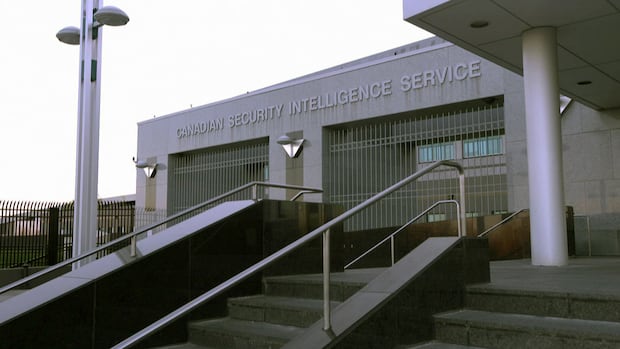
Officials at the Canadian Security Intelligence Service (CSIS) have acknowledged that the agency’s historical surveillance of Indigenous people has created deep-seated mistrust that continues to affect relationships today. During a recent interview at CSIS headquarters in Ottawa, agency officials speaking on condition of anonymity told CBC Indigenous that the organization is working to repair these damaged relations.
The officials emphasized that CSIS’s controversial “Native extremism” program, which broadly targeted Indigenous activists as potential domestic terrorists and extremists during the 1990s, is no longer operational. “What you saw in the 1990s is not the situation today,” one official stated, describing recent CBC Indigenous reporting on the program as “a portal to the past” and “a learning experience for us.”
Newly declassified documents have revealed the extent of this surveillance program, which operated between 1988 and 1999. The program became increasingly intrusive over time and included previously undisclosed involvement during the contentious Ipperwash and Gustafsen Lake standoffs in 1995. As late as 1998-99, the agency maintained “a network of directed sources, protected contacts and police liaison,” according to one document. Academic analysts have criticized the program as overreaching and biased.
CSIS representatives outlined their current approach, which they describe as focused on rebuilding trust and developing partnerships with Indigenous organizations like the Assembly of First Nations (AFN) and Inuit Tapiriit Kanatami. This outreach initiative began in 2022 with efforts to engage Inuit leaders amid concerns about foreign interference and espionage in Canada’s North.
The officials noted a significant shift in methodology. Where CSIS would have previously employed “an intelligence-collection approach” — essentially surveilling Indigenous communities — they now claim to prioritize information sharing and collaboration. However, they admitted that reception to these overtures has been “quite mild,” particularly with First Nations communities, where progress in building relationships has been limited.
Katsi’tsakwas Ellen Gabriel, a Kanien’kehá:ka (Mohawk) activist who served as spokesperson during the 1990 Oka Crisis, expressed profound skepticism about CSIS’s claims of transformation. “I don’t believe them,” Gabriel stated bluntly. “It’s just another form of propaganda. This is their specialty.”
Gabriel, who was surveilled in the aftermath of the Oka Crisis, alleges that CSIS shared a dossier on her with the Japanese consulate in Montreal in an attempt to prevent her international travel. She questioned whether meaningful change is possible given the agency’s mandate. “The national interest has always been the excuse for the violence and brutality conducted by the state. So we have no reason to trust CSIS or the government of Canada,” she said.
She also criticized CSIS’s strategy of engaging with national Indigenous organizations rather than grassroots activists. “To go through the national Aboriginal organization means nothing because they’re not the ones on the front line,” Gabriel noted. “It’s the grassroots activists who are on the front line.”
CSIS officials countered that their primary message to Indigenous organizations is one of partnership, asserting that national security is no longer “just the purview of guys in grey suits” in Ottawa. They mentioned that while they have extended a standing invitation to meet with the AFN, National Chief Cindy Woodhouse Nepinak has not yet accepted. The AFN did not respond to requests for comment on whether such a meeting might occur.
When asked what prompted this shift in approach, CSIS officials cited several developments over the past decade, including Prime Minister Justin Trudeau’s reconciliation agenda, the Truth and Reconciliation Commission in 2015, and the influence of the late Murray Sinclair. They also pointed to the global reckoning with racism following George Floyd’s murder in 2020 and the discovery of potential unmarked graves at former residential schools in 2021 as catalysts for change.
The officials highlighted commitments made by CSIS under the Trudeau government’s legislation implementing the UN Declaration on the Rights of Indigenous Peoples, claiming this makes CSIS the only intelligence agency worldwide to adopt such progressive policies.
Gabriel, however, noted significant omissions in CSIS’s position: no formal apology, no voluntary transparency regarding past surveillance activities, and no guarantees against future backsliding should political priorities change.
“Everything that CSIS has done and said is unforgivable,” she concluded. “There’s no apology from CSIS for invading our privacy, for labelling us as criminals or terrorists.”
Fact Checker
Verify the accuracy of this article using The Disinformation Commission analysis and real-time sources.

14 Comments
Interesting update on CSIS’s New Approach to Indigenous Relations Met with Skepticism from Activist. Curious how the grades will trend next quarter.
Nice to see insider buying—usually a good signal in this space.
Exploration results look promising, but permitting will be the key risk.
Good point. Watching costs and grades closely.
Good point. Watching costs and grades closely.
Nice to see insider buying—usually a good signal in this space.
Good point. Watching costs and grades closely.
Uranium names keep pushing higher—supply still tight into 2026.
Silver leverage is strong here; beta cuts both ways though.
Nice to see insider buying—usually a good signal in this space.
Good point. Watching costs and grades closely.
Good point. Watching costs and grades closely.
I like the balance sheet here—less leverage than peers.
I like the balance sheet here—less leverage than peers.