


Listen to the article
In the decades following Adolf Hitler’s death, filmmaker Leni Riefenstahl maintained a steadfast defense of her work, repeatedly denying that the documentaries she created under his regime served as propaganda. She similarly claimed ignorance about the Holocaust, despite her close proximity to Nazi leadership.
This stance has long troubled film historians and critics who point to the undeniable impact of her most famous work, “Triumph of the Will.” Released in 1935, the documentary showcased the 1934 Nuremberg Rally with technical brilliance that would influence cinematography for generations to come.
What makes Riefenstahl’s denials particularly problematic is the timing of her collaboration. She began working with Hitler after he had already published “Mein Kampf” and implemented discriminatory policies against Jewish Germans. The Nazi party’s intentions were hardly obscure when she accepted her commissions.
“Triumph of the Will” employed revolutionary filmmaking techniques including aerial photography, tracking shots, and careful composition to present Hitler and the Nazi Party as powerful, unified, and supported by adoring masses. The film never explicitly states its propagandistic aims, which perhaps gave Riefenstahl the technical cover for her later denials.
Film scholars have noted how the documentary’s visual language works to elevate Hitler to mythic proportions. The camera consistently shoots upward toward the Führer, making him appear larger than life. Massive crowds are filmed from angles that emphasize their scale and uniformity, creating the impression of overwhelming popular support for the regime.
These techniques mirror methods that had been developed in fictional filmmaking to aggrandize male protagonists, but Riefenstahl applied them to a real political figure with devastating effectiveness. The documentary’s aesthetic brilliance—with its sweeping vistas of orderly formations, dramatic lighting, and carefully choreographed sequences—created an image of Nazi Germany as disciplined, powerful, and inevitable.
The film’s impact extended far beyond Germany’s borders. International audiences, even those opposed to Nazi ideology, recognized its technical achievements. The American film industry, in particular, borrowed heavily from Riefenstahl’s visual vocabulary in subsequent decades, often without acknowledging the source.
Riefenstahl’s post-war career was defined by her attempts to distance herself from the Nazi regime. She repositioned herself as merely an artist concerned with beauty and form rather than political content. After several denazification proceedings, she turned to photography, producing acclaimed work on the Nuba people of Sudan and underwater photography in her later years.
Yet her protestations never fully convinced critics or historians. The evidence of her close relationship with Nazi leadership and the unmistakable function of her work in glorifying the regime remains too substantial to dismiss.
The case of Riefenstahl raises uncomfortable questions about the responsibility of artists working under authoritarian regimes. Where is the line between artistic expression and political complicity? Can technical brilliance be separated from moral culpability when the subject matter serves to normalize a genocidal regime?
The continuing fascination with Riefenstahl’s work also highlights the complicated relationship between aesthetics and ethics in documentary filmmaking. Her technical innovations have influenced generations of filmmakers, including those documenting political movements and historical events from very different ideological positions.
As documentary and propaganda techniques grow increasingly sophisticated in the digital age, Riefenstahl’s legacy serves as a cautionary tale about how visual artistry can be harnessed to make even the most abhorrent political movements appear majestic and inevitable. The power of her imagery reminds us that propaganda often works not through explicit statements but through emotional manipulation and aesthetic seduction.
Despite her lifelong denials, Riefenstahl’s work demonstrates how artistic choices—camera angles, editing rhythms, music—can serve political ends without requiring explicit messaging. This subtlety may be precisely what made “Triumph of the Will” so effective as propaganda, and what makes it remain such a troubling artifact of cinema history today.
Fact Checker
Verify the accuracy of this article using The Disinformation Commission analysis and real-time sources.

8 Comments
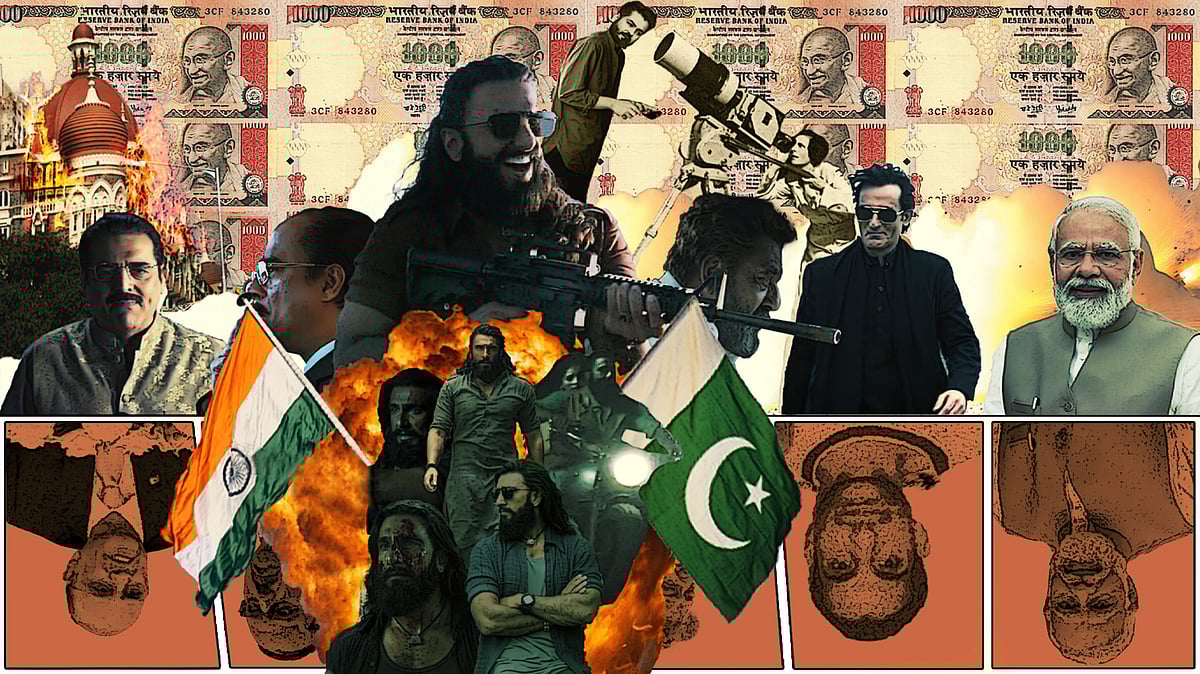
The critique of Aditya Dhar’s films is an interesting parallel to the legacy of Leni Riefenstahl’s work. Both cases demonstrate the power of cinema to convey ideological messages, whether intentionally or not. It’s a sobering reminder of the need for critical media literacy.
Fascinating analysis of how Riefenstahl’s work served as propaganda for the Nazi regime, despite her denials. It’s a sobering reminder of how powerful filmmaking can be in shaping narratives and perceptions, even when the intentions are obscured.
Agreed, the technical brilliance of her films makes their propagandistic nature all the more troubling. It’s a complex legacy that still sparks debate among film historians and critics.
This article raises important questions about the blurred lines between art and propaganda, and the responsibility of artists to consider the broader sociopolitical context of their work. It’s a complex issue that deserves careful examination.
Agreed, the lasting impact of Riefenstahl’s films highlights the need for artists to be mindful of how their work can be used to shape narratives and perceptions, even unintentionally.
While the technical achievements of Riefenstahl’s work are undeniable, the fact that she continued to defend it despite the atrocities of the Nazi regime is deeply troubling. This speaks to the power of propaganda and the need for critical analysis of media, even acclaimed masterpieces.
This critique raises important questions about the responsibilities of artists and filmmakers, especially when working with authoritarian regimes. Where do we draw the line between artistic expression and complicity in spreading harmful ideologies?
It’s a challenging balance, as art can have such a profound impact, both positive and negative. This case study highlights the need for ethical considerations and self-reflection in the creative process.