


Listen to the article
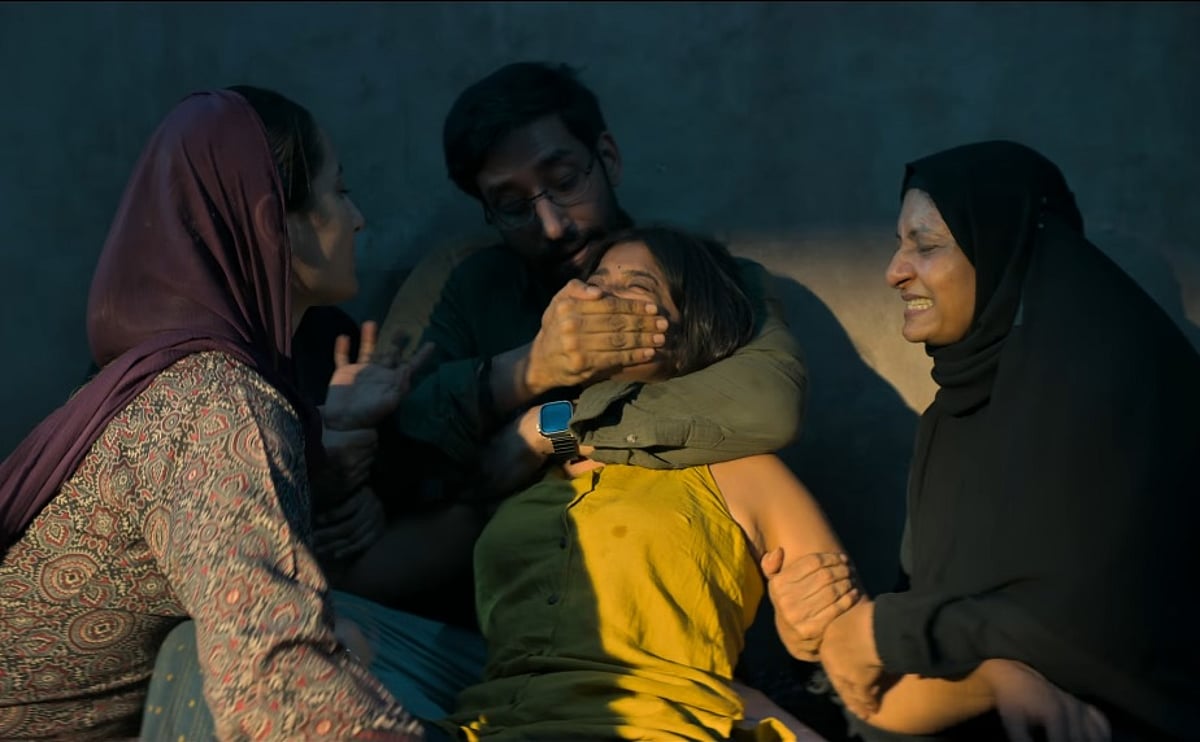
The announcement of a sequel to the controversial film “The Kerala Story” has sparked renewed concerns about the portrayal of religious communities and regions in Indian cinema. Critics warn that “The Kerala Story 2” could potentially surpass its predecessor in spreading harmful stereotypes, particularly if it employs more subtle narrative techniques.
The original film faced widespread criticism for allegedly distorting history and portraying Kerala in a demeaning light. Despite these concerns, the production received endorsement from the Union government, including a National Award, effectively legitimizing its contentious content in the public record.
Director Kamakhya Singh recently told NDTV that while the first film focused primarily on Kerala, the sequel will expand its narrative to show how “forced conversions” are allegedly spreading throughout India. Singh maintains that all content in the films is factual and based on police records and court judgments, despite numerous fact-checks that disputed key claims made in the original production.
The use of cultural media to disseminate ideological messages is not a new phenomenon. Throughout history, cinema, literature, and theater have served as powerful vehicles for propaganda. In Nazi Germany, for instance, every creative work required approval from the propaganda ministry before public release. However, as journalist William L. Shirer documented in “The Rise and Fall of the Third Reich,” poorly executed propaganda often backfired, with German audiences openly rejecting state-approved films in favor of foreign productions.
India’s contemporary right-wing movement appears to have learned from these historical lessons. Unlike the crude propaganda of authoritarian regimes, recent politically charged Indian films have employed talented filmmakers and writers to create technically proficient and engaging content that more effectively conveys ideological messages.
Films like “Uri: The Surgical Strike,” “Article 370,” and “Dhurandhar” have received critical acclaim for their production values, even as observers note their apparent political agendas. Unlike the more overtly propagandistic “The Kashmir Files” or the original “Kerala Story,” these well-crafted productions potentially reach and influence mainstream audiences more effectively.
Media analysts suggest that if “The Kerala Story 2” follows this trend toward more sophisticated filmmaking while maintaining its controversial messaging, it could pose an even greater risk of normalizing prejudice against specific communities.
The situation raises important questions about the boundaries between creative expression and harmful stereotyping in Indian cinema. Critics point to what they see as a double standard in how nationalism is defined in contemporary India. They argue that while dissenting voices are frequently labeled “anti-national,” productions that portray entire states or religious communities in a negative light face little official scrutiny or condemnation.
This controversy emerges against the backdrop of India’s increasingly polarized media landscape, where questions of religious identity and regional representation have become deeply politicized. Kerala, with its distinct political history and demographic composition, has often found itself at the center of these cultural tensions.
As “The Kerala Story 2” moves toward production, civil society organizations and media watchdogs have called for greater responsibility from filmmakers when depicting sensitive social issues. They emphasize that creative freedom must be balanced with accountability, particularly when narratives risk inflaming intercommunal tensions or promoting harmful stereotypes.
The film’s development will likely be watched closely by both supporters who view it as revealing hidden truths and critics who see it as dangerous propaganda dressed as entertainment.
Fact Checker
Verify the accuracy of this article using The Disinformation Commission analysis and real-time sources.

18 Comments
Claiming ‘factual’ content based on police records and court judgments is not enough. Thorough, impartial analysis is needed to ensure accurate representation of complex issues. I hope the filmmakers will rise to that challenge.
Agreed. Selective use of official sources does not guarantee objectivity. A balanced, nuanced approach that incorporates diverse perspectives is essential when tackling sensitive social topics.
While I appreciate the desire to tackle important issues, I’m concerned that this film may perpetuate harmful stereotypes and distort history. Nuanced approaches are needed to address complex topics like religious conversions.
I agree. Simplistic narratives rarely capture the full truth. Thorough, fact-based reporting and diverse perspectives are crucial when addressing sensitive societal issues.
While the desire to address important issues is understandable, the use of cultural media to spread ideological messages is deeply troubling. I hope the filmmakers will reconsider their approach and prioritize truthful, balanced representation.
Agreed. Propagandistic use of the arts is a concerning trend. Nuanced, fact-based storytelling that encourages dialogue and understanding should be the goal, not ideological messaging.
The announcement of a sequel raises red flags. Distorting history and demonizing regions is a dangerous path. I hope the filmmakers will approach this topic with greater care and objectivity.
Agreed. Responsible storytelling on sensitive topics requires extensive research, empathy, and a commitment to truth. Anything less risks causing more harm than good.
The endorsement of the first film by the government is concerning. Objectivity and independence are vital when examining complex societal issues. I hope the sequel will be more thoughtfully and responsibly produced.
Governmental endorsement of potentially biased content is problematic. True progress requires open, honest dialogue and a willingness to challenge one’s own assumptions. I’m skeptical this sequel will achieve that.
The expansion of the narrative to other regions raises further concerns. Portraying ‘forced conversions’ as a widespread issue requires rigorous, unbiased investigation. I hope the filmmakers will exercise greater care and nuance.
Sensationalizing complex social issues through cinema is a risky approach. Responsible storytelling should strive for balance, accuracy, and a genuine attempt to foster understanding, not division.
While creative works can play a role in social discourse, they must be grounded in rigorous research and a commitment to truthful representation. I’m skeptical this sequel will achieve that.
Agreed. Fact-checking and diverse perspectives are crucial when addressing sensitive topics like this. Anything less risks further dividing communities instead of fostering understanding.
Spreading harmful stereotypes under the guise of ‘facts’ is unacceptable. I’m curious to see how the filmmakers will address the concerns raised about the first film. Transparency and accountability are essential.
A thoughtful, nuanced approach is needed here. Simplistic narratives often oversimplify complex realities. I hope the sequel will strive for greater balance and accuracy.
The concerns raised about the first film’s distortion of history and demeaning portrayal of a region are valid. I hope the filmmakers will take these criticisms seriously and strive for a more responsible, balanced approach in the sequel.
Responsible, objective filmmaking on sensitive topics requires extensive research, empathy, and a genuine commitment to truth-telling. I’m skeptical this sequel will meet that high standard.