


Listen to the article
Congressional Republicans Call for Defunding of NPR and PBS Over Alleged Bias
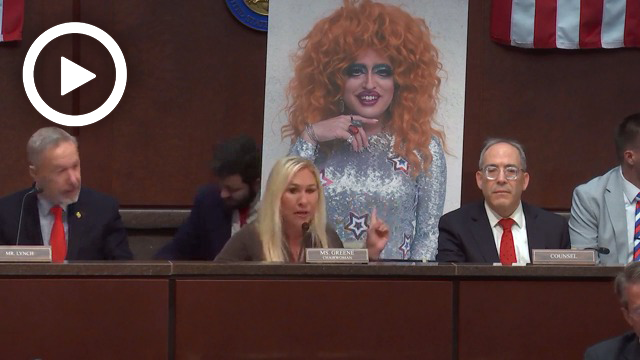
Republican members of the House Oversight Committee’s Subcommittee on Delivering on Government Efficiency (DOGE) held a contentious hearing Tuesday, questioning the leadership of National Public Radio (NPR) and the Public Broadcasting Service (PBS) over what they characterized as left-leaning bias in their coverage.
The hearing, titled “Anti-American Airwaves: Holding the heads of NPR and PBS Accountable,” featured testimony from NPR CEO Katherine Maher and PBS CEO Paula Kerger, as Republican lawmakers challenged their organizations’ use of federal funding.
Subcommittee Chairwoman Marjorie Taylor Greene (R-Ga.) set the tone in her opening statement, arguing that public broadcasting has become disconnected from much of America. “The audience of public radio and television is declining,” Greene said. “NPR and PBS have increasingly become radical, left-wing echo chambers for a narrow audience of mostly wealthy, white, urban liberals and progressives, who generally look down on and judge rural America.”
The hearing represents the latest flashpoint in a decades-long debate about public broadcasting’s role in America’s media landscape. NPR and PBS receive federal funding through the Corporation for Public Broadcasting, which was allocated $525 million in fiscal year 2024. Though this represents a fraction of their overall budgets, Republicans have repeatedly targeted this funding in recent years.
Greene directly confronted Maher about her past social media posts and public statements, including criticism of former President Donald Trump and comments about free speech. “Ms. Maher, the federal funding that your outlet receives comes from all American taxpayer dollars, not just from your viewers who support such statements as these,” Greene said.
Michael Gonzalez, a senior fellow at the conservative Heritage Foundation who testified at the hearing, described public broadcasting as showing “scorn for conservative views on a consistent basis.” He argued that continued federal funding constitutes “a regressive tax” and “an obnoxious forced wealth transfer from working families to the most affluent pockets of society.”
Throughout the hearing, Republican members cited specific examples of what they viewed as biased coverage, with House Oversight Committee Chairman James Comer (R-Ky.) particularly focusing on NPR’s coverage of COVID-19 origins, the Russia investigation, and the committee’s probe into the Biden family’s business dealings.
“If people in Alaska, if all they have is public radio, then all they know is what these headlines say,” Comer stated. “And [these headlines] were wrong about COVID-19… Wrong Russian Collusion… Wrong about the Hunter Biden laptop.”
Rep. Brandon Gill (R-Texas) questioned Maher about NPR content choices, citing a story about “gender queer dinosaur enthusiasts” as an example of what he considered inappropriate use of taxpayer funding. When Maher began to respond about the range of content NPR produces, Gill interjected: “I’ll take that as a yes, you do believe that that’s appropriate.”
The hearing also touched on broader fiscal concerns, with Rep. William Timmons (R-S.C.) connecting the issue to national debt. “We don’t want to shut down NPR and PBS, but we have $36 trillion in debt, and we have run a $1.8 trillion annual deficit,” Timmons said. “We are scouring all government spending, not just Democrat priorities, but Republican priorities too.”
Democratic members of the committee defended public broadcasting, though their comments were not included in the excerpts provided from the hearing.
The public broadcasters have consistently maintained that their coverage adheres to journalistic standards of fairness and accuracy. NPR and PBS also emphasize their educational programming and service to rural communities where media options are more limited.
The hearing concluded with Chairwoman Greene calling for “the complete and total defund and dismantling of the Corporation for Public Broadcasting,” while Chairman Comer stated, “I’ve lost confidence in public radio. I don’t think they should get a penny.”
Any actual defunding would require congressional action through the appropriations process, which would face significant hurdles in the currently divided Congress.
Fact Checker
Verify the accuracy of this article using The Disinformation Commission analysis and real-time sources.

9 Comments
I’m concerned this hearing is more about political grandstanding than substantive oversight. Public media plays a crucial role, and funding decisions should be based on objective analysis, not partisan accusations of bias.
I agree. Allegations of bias should be rigorously investigated, but defunding public broadcasters entirely is an extreme and counterproductive response. We need to protect the independence of our public media institutions.
Cutting funding for NPR and PBS is short-sighted. These outlets provide valuable educational content and in-depth news coverage that commercial media often overlooks. Bias claims should be scrutinized, but not used as a pretext to eliminate public media.
Well said. NPR and PBS give voice to perspectives that may not get airtime elsewhere. Defunding them would deprive the public of an important diversity of views and information sources.
While I’m open to scrutinizing potential bias in public media, this hearing appears more about political theater than constructive reform. NPR and PBS play an important role, and their funding shouldn’t be held hostage to partisan agendas.
This congressional hearing on NPR and PBS funding seems highly partisan. While reasonable people can debate media bias, defunding public broadcasting would undermine an important source of independent journalism and educational programming.
I agree that public media plays a vital role in our democracy, even if their coverage doesn’t always align with certain political views. We should strive for objective, fact-based reporting, not political retaliation.
This hearing seems more focused on scoring political points than improving public media. While NPR and PBS should strive for impartiality, their funding serves a vital civic purpose that shouldn’t be threatened by partisan warfare.
Exactly. Public broadcasting provides educational and cultural programming that commercial media often neglects. Defunding them based on unproven bias claims would be a disservice to the American people.