


Listen to the article
Colombian Guerrilla Groups Expand Digital Footprint, Target Youth Online
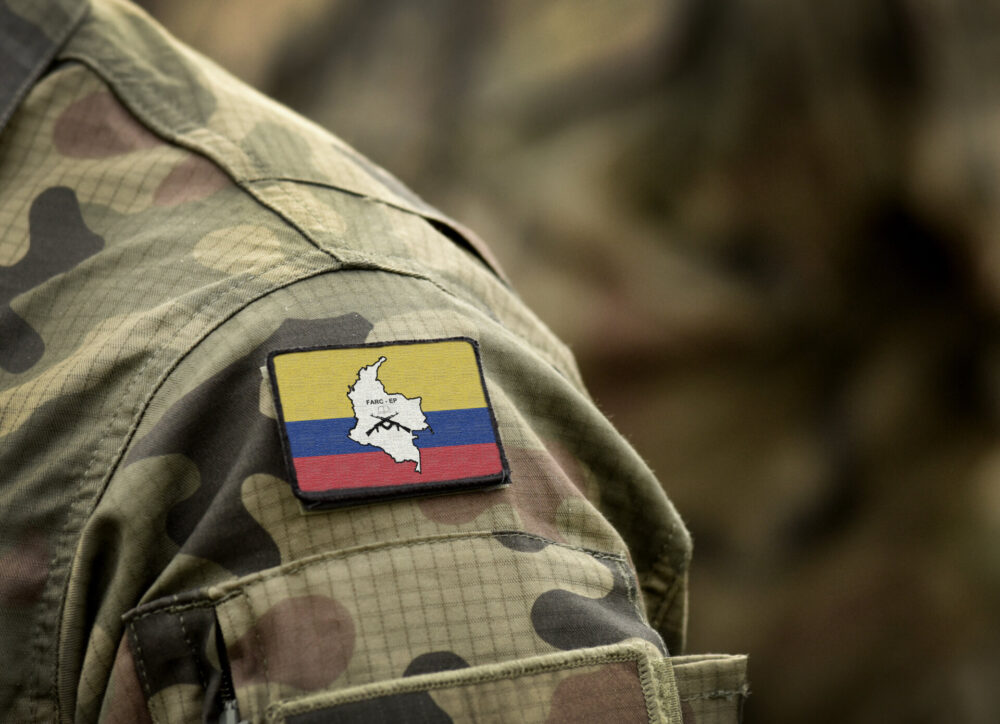
Nine years after Colombia’s historic peace agreement with the FARC-EP, armed conflict has evolved into the digital domain, with guerrilla groups increasingly using social media platforms for propaganda, territorial control, and youth recruitment.
The 2016 peace accord, which ended more than five decades of armed conflict with Colombia’s largest insurgent organization, has not delivered the promised peace. Violence persists in several regions, with thousands of social leaders and hundreds of former combatants assassinated since the agreement was signed.
Multiple armed groups continue to operate across Colombia. FARC-EP dissident factions, including the Estado Mayor Central and Segunda Marquetalia, rejected the peace process and remain active. Together with the National Liberation Army (ELN), a guerrilla group founded in 1964, and various narco-paramilitary organizations, they continue fighting for control over territories and illicit economies.
Violence has intensified in 2025, partly due to increased cocaine production and territorial disputes. In June, southwestern Colombia experienced 24 coordinated terrorist attacks in a single day, claimed by FARC-EP dissidents. Since January, the Catatumbo region has witnessed escalating confrontations between FARC-EP dissidents—particularly the 33rd Front—and the ELN, creating a humanitarian crisis that has displaced tens of thousands and led to the suspension of peace talks with the ELN.
These armed groups have expanded their influence beyond physical territories into digital spaces, using various platforms to maintain visibility, spread propaganda, and recruit younger audiences in areas with limited state presence.
Digital Communication Strategies
Each social media platform serves a distinct purpose in the guerrillas’ digital arsenal. WhatsApp and Facebook are primarily used for territorial control and communication with local populations, while TikTok targets younger audiences.
The ELN maintains a structured digital strategy reflecting its disciplined organizational hierarchy. In contrast, the fragmented FARC-EP dissident groups show less coordinated online activity, with members often maintaining public profiles where they share content from camps, including images with uncovered faces and visible weapons—practices that would have been unthinkable under the original FARC-EP’s strict security protocols.
Traditional printed pamphlets have largely been replaced by digital communications. Armed groups now use platforms like WhatsApp and Facebook to issue statements, impose mobility restrictions, and announce “armed strikes” or curfews. In June 2025, during confrontations between rival FARC-EP dissident groups in Guaviare, the Amazonas Bloc declared a five-day “armed strike” via social media, prohibiting movement between 6:00 p.m. and 6:00 a.m.
WhatsApp has become a critical tool for controlling civilian populations, especially in rural areas where the app is widely available. Armed groups use WhatsApp chains—messages forwarded repeatedly to spread information widely—to amplify fear, circulate threats, and distribute recruitment messages. Local leaders, journalists, and activists are frequently targeted with intimidation via text or voice messages, often warning of violence or death.
The consequences of these digital threats are sometimes tragically real. On July 2, 2025, authorities discovered a mass grave in Guaviare containing the bodies of eight missing religious and social leaders who had disappeared three months earlier. Evidence suggests they were killed by a FARC dissident group that had previously circulated threatening messages via WhatsApp.
Telegram: Propaganda and Messaging
The ELN maintains a coordinated communication strategy on Telegram, operating multiple channels for propaganda and operational purposes. They share guerrilla-themed music, tributes to revolutionary figures, and updates on security force movements. They also post videos of captured rival fighters—particularly from the 33rd Front—framing them as drug traffickers without ideological motivation, in contrast to the ELN’s self-portrayal as a political movement.
FARC-EP dissidents lack such organized communication on Telegram. Segunda Marquetalia appears most active, sharing propaganda materials, music, and videos of camp life—often reposted from TikTok. However, their main Telegram channels ceased activity in 2021 following police intervention after Commander Jesús Santrich used one of these accounts to threaten the Colombian president and journalists before he was killed in combat.
Youth Recruitment Crisis
The Colombian Ombudsman’s Office reported 533 cases of forced recruitment in 2024 alone, though actual numbers are likely higher due to underreporting. The department of Cauca in southwestern Colombia remains the epicenter, with 50% of recruited minors being of Indigenous origin—highlighting the selective and structural nature of this violence.
FARC-EP dissidents are primarily responsible for these recruitment efforts, mainly using Facebook and TikTok. They target vulnerable minors affected by school dropout, dysfunctional family environments, and extreme poverty. Material incentives—income, social status, power, and access to goods like motorcycles—are the primary attractions, with ideological indoctrination typically coming later.
A troubling emerging trend is the recruitment of “technological recruits”—minors with digital skills who operate drones and manage propaganda and communications, often receiving special status within the organizations.
Despite ongoing investigations by journalists and law enforcement, recruitment practices persist. Social media platforms have failed to effectively address the proliferation of associated accounts, which often resurface under new names after being removed. Moreover, engagement with guerrilla content leads to algorithmic amplification of similar material, deepening exposure and normalizing armed group narratives.
Some groups now mimic online “challenges,” encouraging minors to post videos in exchange for small payments, gradually drawing them into drug-related tasks or recruitment. Particularly concerning is the use of already recruited minors to lure others, often under pressure to meet recruitment quotas by promising jobs or economic opportunities.
Platform Moderation Failures
Although Facebook and TikTok limit search results for guerrilla organizations’ main names to news content, more specific queries reveal large volumes of material directly related to these groups. Users frequently share content depicting weapons, uniforms, guerrilla insignia, and camp settings.
On Facebook, many users openly declare their affiliation with dissident groups in their profiles, specifying units or fronts. During a single day of targeted searching, researchers identified 97 accounts whose usernames referenced dissident fronts. These accounts share official statements and videos explicitly calling on young people to join their ranks.
On TikTok, where official statements are absent, the platform’s youth-oriented design may play a critical role in recruitment. Videos often attract comments from users asking how to join organizations or find work in coca cultivation, with these questions receiving answers in comment sections. Content creators use encrypted symbols and emoji combinations as informal markers of affiliation, while music glorifying guerrilla life serves as a gateway to broader guerrilla-related content ecosystems.
These patterns raise serious questions about platform moderation effectiveness, especially given that such content appears to violate community guidelines. Both TikTok and Facebook prohibit violent organizations, including extremist and criminal groups, yet enforcement remains inconsistent, likely due to unclear designations and implementation practices.
As Colombia’s armed conflict extends beyond physical territories into digital spaces, more effective, contextualized moderation is urgently needed—led by individuals with deep local knowledge and supported by better-trained human moderators and automated tools. Protecting vulnerable users will require coordinated action from technology companies, government authorities, researchers, educators, and communities.
Fact Checker
Verify the accuracy of this article using The Disinformation Commission analysis and real-time sources.

12 Comments
The analysis of the tactics used by FARC-EP dissidents and the ELN provides valuable insights for security and intelligence agencies working to address this ongoing threat. Continuous monitoring and adaptation of countermeasures will be essential.
Agreed, a comprehensive, multifaceted approach that combines technological, legal, and societal interventions will be necessary to effectively counter the evolving strategies of these armed groups.
The report’s insights into the FARC-EP dissidents and ELN’s tactics of recruitment, propaganda, and control through social media platforms provide valuable intelligence. Understanding these evolving strategies is essential for developing effective countermeasures.
Indeed, the digital front in this conflict requires a multifaceted approach combining technological, legal, and societal responses to curb the spread of these groups’ influence online.
The report’s emphasis on the guerrilla groups’ targeting of youth through online platforms is concerning. Effective counter-radicalization programs and educational initiatives are needed to prevent the next generation from being drawn into this cycle of violence.
Absolutely, investing in the empowerment and resilience of Colombian youth will be crucial in breaking the cycle of conflict and building a more secure and prosperous future for the country.
The assassination of social leaders and former combatants is a troubling indicator of the ongoing instability in Colombia. Protecting vulnerable populations must be a top priority in any efforts to achieve lasting peace.
Agreed, safeguarding human rights and ensuring the security of all Colombians should be the foundation for any sustainable solution to this complex and long-standing conflict.
This report highlights the concerning evolution of Colombia’s armed conflict into the digital space. The use of social media for propaganda, recruitment, and control by guerrilla groups is a worrying trend that requires close monitoring and response.
Agreed, the persistence of violence despite the 2016 peace accord is a sobering reminder of the complexities involved. Curbing the online activities of these groups must be a priority.
The intensification of violence in 2025, driven by increased cocaine production and territorial disputes, is a troubling development. Tackling the illicit economies fueling this conflict should be a key focus for the Colombian government.
Absolutely, disrupting the financial networks and supply chains of these armed groups will be crucial in weakening their capabilities and influence.