


Listen to the article
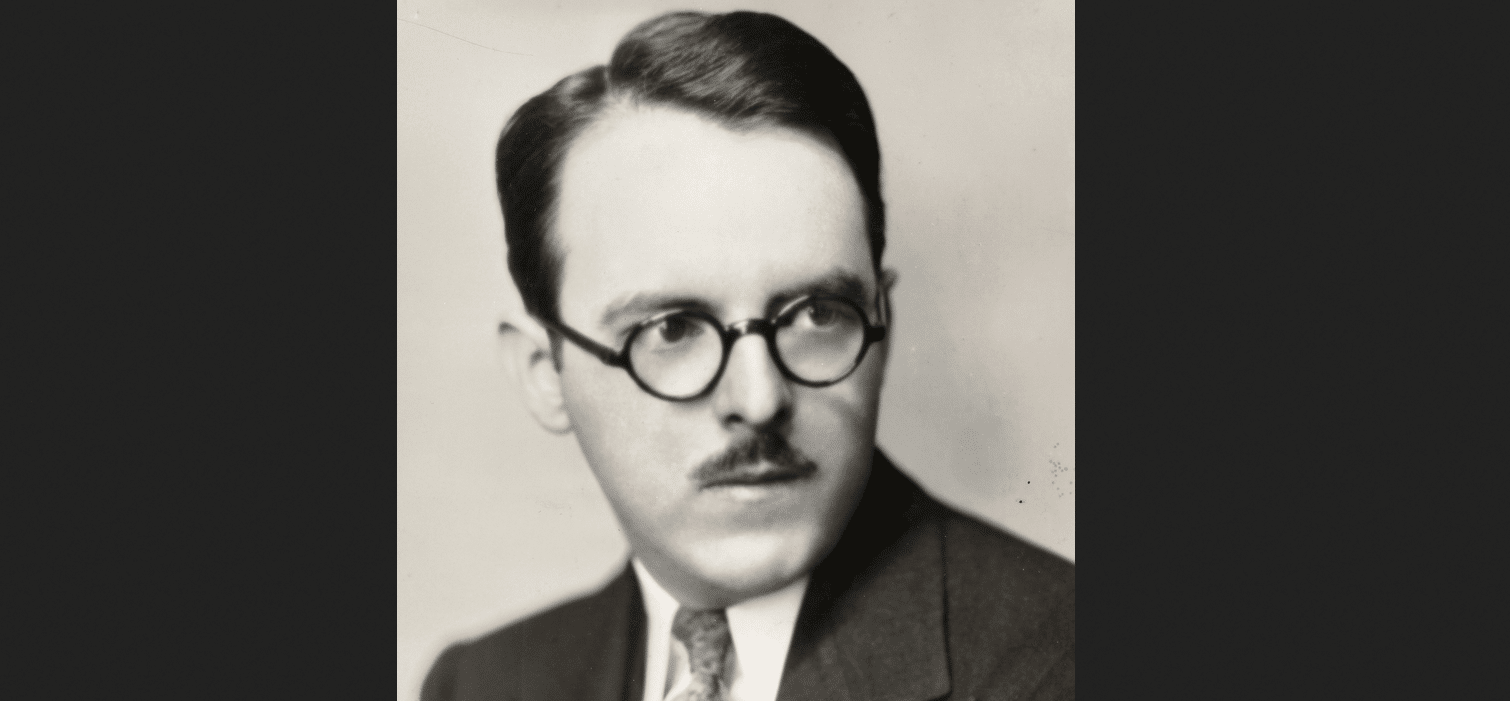
The intellectual journey of C. Hartley Grattan serves as a stark warning about the perils faced by antiwar voices during times of escalating global conflict. As the United States found itself positioned between warring powers in 1939, much like its situation in 1917, Grattan emerged as one of the prominent critics cautioning against American entry into World War II.
In his 1939 book “The Deadly Parallel,” rushed to publication after Germany’s invasion of Poland, Grattan argued forcefully that America had no national interest in opposing German aggression. He was particularly concerned about the influence of British propaganda, which he systematically analyzed and critiqued.
Grattan identified seven key characteristics of British propaganda efforts, including name-calling (labeling enemies as “Huns” or “Nazis”), employing glittering generalities like “defending civilization” or “democracy,” and discrediting critics by associating them with the enemy. He also highlighted how such campaigns used testimonials from Allied-sympathetic Americans, folksy appeals like royal visits, manipulated evidence, and created bandwagon effects through fear of being labeled a fascist.
His proposed solutions included both practical measures, such as demanding clear statements of U.S. military policy and defining America’s strategic borders in accessible language, alongside more controversial recommendations like restricting American travel on belligerent nations’ ships and imposing tighter controls on arms exports.
However, Grattan’s outspoken opposition to the war eventually made him a target. As many antiwar activists faced severe repression, Grattan’s government positions made him particularly vulnerable. In 1942, while serving as an economic advisor on Pacific affairs for the American Board of Economic Warfare, he was forced to resign amid mounting accusations.
The House Un-American Activities Committee (HUAC), under Chairman Martin Dies Jr., led the charge against him. In a particularly damaging episode, Representative Jerry Voorhis accused Grattan of disloyalty on the House floor, where such speech was protected from legal consequences. The committee bizarrely labeled him both a communist sympathizer and a Nazi supporter – contradictory allegations that nonetheless effectively undermined his standing.
The New York Times documented Grattan’s resignation, noting his desire to “fight these charges without the restraint placed upon me as a government employee.” Though Voorhis eventually withdrew the accusations, the damage was irreparable. As Grattan himself stated in the Australian newspaper Canberra Times, “The accusations cancelled me out of the war effort at a critical moment in relations involving Australia and the United States.”
Forced back into freelance journalism, Grattan struggled financially until finding employment with the Ford Foundation in the 1950s. His professional rehabilitation continued with an honorary doctorate from Clark University in 1953 and the publication of his widely respected two-volume work on the Southwest Pacific in 1963.
The University of Texas at Austin acquired Grattan’s extensive collection of Australiana and South Pacificana in 1964, bringing him onto their faculty. He eventually became a full professor before retiring in 1974, and died in Austin on June 25, 1980.
Grattan’s experience remains relevant today, illustrating how antiwar movements face their greatest challenges during the “preface to chaos” – the period when war seems imminent but has not yet fully engulfed a nation. During such times, the military-industrial complex often works aggressively to control information and silence dissenting voices through propaganda and persecution.
Yet paradoxically, the intense backlash Grattan faced also demonstrates the power of honest analysis and truth-telling. That powerful interests felt compelled to silence him suggests his arguments posed a genuine threat to the prevailing narrative – a testament to the enduring importance of critical voices during times of international crisis.
Fact Checker
Verify the accuracy of this article using The Disinformation Commission analysis and real-time sources.

10 Comments
Fascinating to learn about Grattan’s perspectives on the propaganda efforts surrounding America’s entry into WWII. His insights into the use of emotional appeals, selective evidence, and attempts to discredit critics seem highly relevant to contemporary discourse around foreign policy and military interventions. This is an important historical case study.
Grattan’s insights into the mechanics of wartime propaganda are fascinating. His dissection of techniques like name-calling, glittering generalities, and bandwagon effects provides a useful framework for analyzing contemporary information warfare. I wonder how his analysis might be applied to more recent conflicts.
Grattan’s detailed analysis of British propaganda tactics during the lead-up to WWII offers valuable lessons for navigating information environments shaped by competing narratives. His emphasis on maintaining space for critical voices, even in times of crisis, is an important counterpoint to the often jingoistic rhetoric of war.
Grattan’s critique of British propaganda tactics is a valuable contribution to the historical record. Examining how governments try to sway public opinion through emotive appeals, selective facts, and smear campaigns remains crucial today. His work serves as an important reminder to approach wartime narratives with a critical eye.
Fascinating examination of Grattan’s important work on propaganda. His insights into British efforts to sway American public opinion seem highly relevant even today. I wonder what other critiques he offered of the drive to war that we could learn from.
Grattan’s analysis of British propaganda tactics is quite compelling. Calling out the use of emotionally-charged language, selective evidence, and association smears is a helpful reminder to be skeptical of wartime rhetoric. His warnings about the dangers of stifling dissent are also thought-provoking.
Absolutely. We would do well to heed Grattan’s cautions about the risks of suppressing critical voices during times of escalating global tensions. History has a way of repeating itself if we don’t learn from the past.
Interesting to see Grattan’s perspective on the lead-up to WWII. His concerns about American intervention seem prescient, given the immense costs and consequences that followed. I wonder how his analysis might inform current debates around US foreign policy and military interventionism.
This is a thought-provoking examination of Grattan’s important anti-war critiques. His warnings about the dangers of stifling dissent and the risks of American intervention are particularly timely given ongoing debates about the country’s global role. His work deserves closer examination.
Grattan’s warnings about the dangers of wartime propaganda and the suppression of dissent are a sobering reminder of the high stakes involved. His detailed critique of British tactics provides a useful framework for scrutinizing the narratives that often emerge during periods of heightened global tensions. This is a valuable historical analysis.