


Listen to the article
The reputation of Cleopatra, ancient Egypt’s most famous female ruler, continues to suffer from distortions created by her Roman enemies more than two millennia ago, according to historians working to separate fact from fiction.
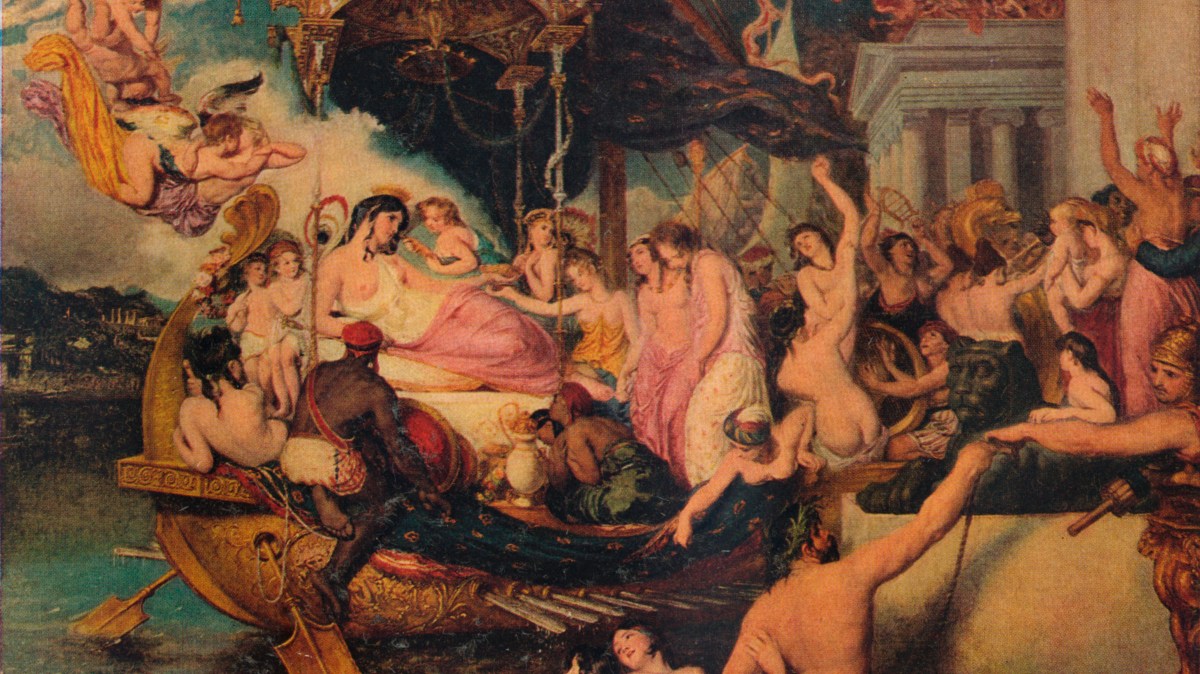
Experts point to a systematic Roman campaign that transformed Cleopatra from a politically astute and intellectually brilliant leader into a seductive manipulator who used her feminine wiles to threaten Rome’s power. This characterization, which took root in the ancient world, persists in popular culture today.
“What many people think they know about Cleopatra comes primarily from Roman sources that had every reason to vilify her,” explains Dr. Sarah Reynolds, professor of ancient Mediterranean history at Oxford University. “Octavian, who would later become Emperor Augustus, specifically targeted her reputation as part of his propaganda campaign against Mark Antony.”
Following her death in 30 BCE, Cleopatra’s image was deliberately tarnished by Octavian, who emerged victorious in the power struggle that followed Julius Caesar’s assassination. Ancient writers like Plutarch, Dio Cassius, and Suetonius—all working under Roman influence—helped cement this unflattering portrait for posterity.
Archaeological evidence and contemporary Egyptian accounts paint a significantly different picture. Cleopatra spoke as many as nine languages and authored several treatises on subjects ranging from weights and measures to cosmetics and medicine. She revitalized Egypt’s economy during her 21-year reign and maintained the kingdom’s independence through shrewd diplomatic maneuvering in an era when Roman power was expanding rapidly across the Mediterranean.
“She was Egypt’s last independent pharaoh and managed to preserve her country’s autonomy far longer than might have been expected against Roman expansionism,” notes Dr. Khalid Mahmoud, curator of Ptolemaic antiquities at the Egyptian Museum in Cairo. “Her political acumen deserves far more recognition than her romantic relationships.”
The Roman portrayal of Cleopatra as a seductress who bewitched both Julius Caesar and Mark Antony served specific political purposes. By characterizing her influence as sexual rather than intellectual, Roman writers diminished her legitimate power and presented her as a foreign threat to Roman virtue.
“This gendered attack on her character was quite deliberate,” says Dr. Elena Martinelli, ancient historian at the University of Rome. “Roman propaganda effectively erased her diplomatic skills, multilingualism, and administrative competence in favor of a reductive caricature that was easier to dismiss.”
Hollywood has largely perpetuated this Roman perspective. The 1963 film starring Elizabeth Taylor cemented the image of Cleopatra as primarily a romantic figure rather than a ruler of consequence. More recent depictions, while attempting greater historical accuracy, still struggle to escape the shadow of Roman propaganda.
Recent archaeological discoveries continue to reshape our understanding of the queen. A 2010 underwater excavation in Alexandria uncovered artifacts believed to be from Cleopatra’s palace, while ongoing work at the temple complex of Taposiris Magna may eventually reveal her final resting place.
“We’re still piecing together the real Cleopatra,” explains Dr. Zahi Hawass, former Egyptian Minister of Antiquities. “Every new discovery helps us move beyond Roman caricatures and toward a more complete picture of one of history’s most capable rulers.”
Academics point to Cleopatra’s economic reforms, building projects, and religious initiatives as evidence of her effectiveness as a sovereign. Under her leadership, Egypt remained prosperous despite a severe drought that affected agricultural production throughout the Mediterranean. She strategically aligned with Rome when necessary while maintaining Egyptian independence and cultural identity.
The rehabilitation of Cleopatra’s reputation represents a broader trend in historical scholarship, as researchers work to reexamine ancient sources with greater attention to political motivations and gender bias. Similar reassessments are underway for other historical figures whose legacies have been shaped by their enemies or by cultural prejudices.
“What happened to Cleopatra’s image is a powerful reminder that history is often written by the victors,” concludes Dr. Reynolds. “Two thousand years later, we’re still working to disentangle the propaganda from the reality of this remarkable ruler who managed to hold her own against the greatest superpower of the ancient world.”
Fact Checker
Verify the accuracy of this article using The Disinformation Commission analysis and real-time sources.

28 Comments
Uranium names keep pushing higher—supply still tight into 2026.
Good point. Watching costs and grades closely.
Silver leverage is strong here; beta cuts both ways though.
Exploration results look promising, but permitting will be the key risk.
Good point. Watching costs and grades closely.
Good point. Watching costs and grades closely.
Exploration results look promising, but permitting will be the key risk.
The cost guidance is better than expected. If they deliver, the stock could rerate.
Good point. Watching costs and grades closely.
Good point. Watching costs and grades closely.
The cost guidance is better than expected. If they deliver, the stock could rerate.
Good point. Watching costs and grades closely.
Good point. Watching costs and grades closely.
Production mix shifting toward Propaganda might help margins if metals stay firm.
The cost guidance is better than expected. If they deliver, the stock could rerate.
Silver leverage is strong here; beta cuts both ways though.
Good point. Watching costs and grades closely.
Good point. Watching costs and grades closely.
If AISC keeps dropping, this becomes investable for me.
Good point. Watching costs and grades closely.
Good point. Watching costs and grades closely.
If AISC keeps dropping, this becomes investable for me.
Good point. Watching costs and grades closely.
Good point. Watching costs and grades closely.
Production mix shifting toward Propaganda might help margins if metals stay firm.
Production mix shifting toward Propaganda might help margins if metals stay firm.
Good point. Watching costs and grades closely.
Good point. Watching costs and grades closely.