


Listen to the article
The legacy of Queen Cleopatra VII, the last active ruler of Egypt’s Ptolemaic Kingdom, continues to be shrouded in misconceptions largely stemming from ancient Roman propaganda, according to historians and archaeological evidence.
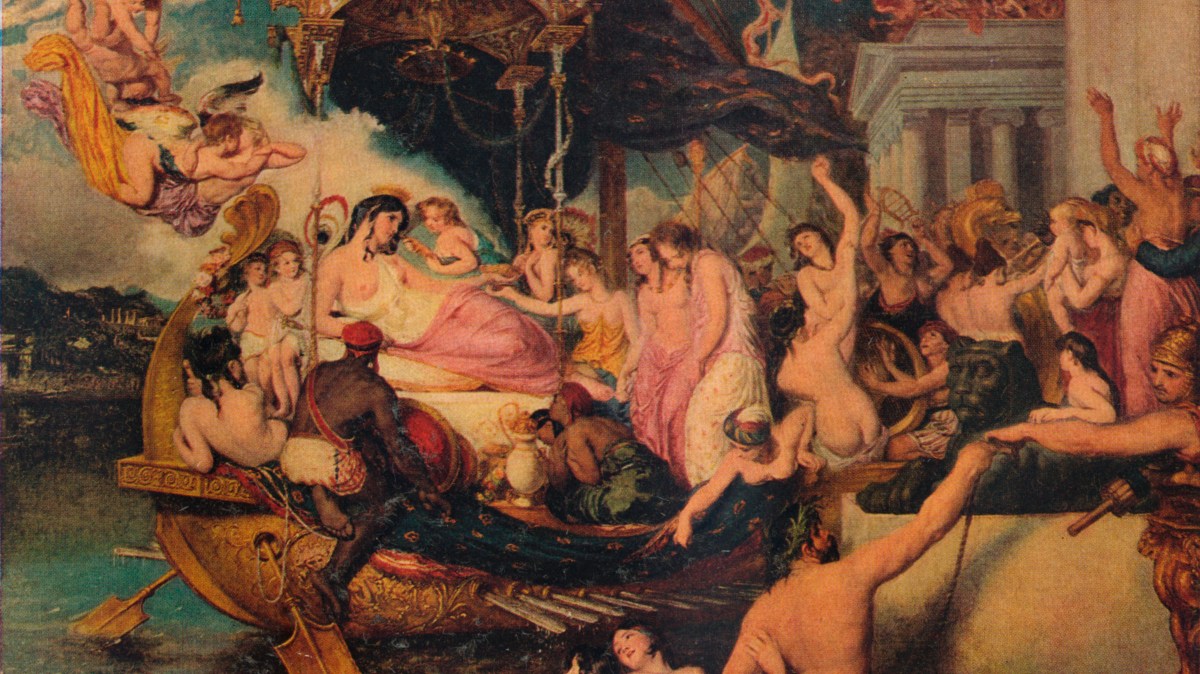
Experts point out that the popular image of Cleopatra—portrayed as merely a seductive temptress who used her feminine wiles to influence powerful Roman leaders—represents a significant distortion of historical reality. This characterization, which has dominated Western literature, art, and film for centuries, originated primarily from Roman sources with clear political motivations.
“What most people think they know about Cleopatra comes filtered through the lens of her enemies,” explains Dr. Emily Rothwell, professor of ancient Mediterranean history at Oxford University. “The Romans, particularly Octavian, who would later become Emperor Augustus, deliberately crafted a narrative that diminished her political acumen and intellectual capabilities.”
Historical records paint a far more complex picture of the Egyptian queen who ruled from 51 to 30 BCE. Fluent in at least nine languages and educated in mathematics, astronomy, philosophy, and oratory, Cleopatra demonstrated exceptional diplomatic skills throughout her reign. She successfully navigated Egypt through tremendously challenging political waters at a time when Rome’s expanding empire threatened to engulf the entire Mediterranean world.
Archaeological evidence indicates that Cleopatra implemented economic reforms, maintained religious traditions important to her Egyptian subjects, and invested in agricultural infrastructure. Papyri documents discovered in Alexandria reveal her administration’s focus on grain production and trade networks that helped maintain Egypt’s position as a vital economic power.
“Rome’s propaganda machine transformed a politically astute, multilingual intellectual into a one-dimensional seductress,” says Dr. Hassan Ibrahim, director of Ptolemaic studies at Cairo University. “This mischaracterization has proven remarkably durable, persisting in popular culture from Shakespeare to Hollywood.”
The Roman narrative gained particular momentum after Cleopatra’s alliance with Mark Antony and their ultimate defeat by Octavian at the Battle of Actium in 31 BCE. Following their suicides, Octavian annexed Egypt and initiated a campaign to reshape Cleopatra’s image, portraying her as a foreign threat to Roman virtue and stability.
Roman poets like Virgil, Horace, and Propertius—all beneficiaries of Augustan patronage—contributed to this narrative by depicting Cleopatra as a debauched Oriental queen. Their works emphasized her alleged moral corruption while minimizing her political and administrative accomplishments.
Recent archaeological discoveries continue to challenge these Roman-centric accounts. Excavations at underwater sites near Alexandria have uncovered remnants of monumental buildings commissioned during Cleopatra’s reign, suggesting significant public works projects that enhanced Egypt’s infrastructure and maritime capabilities.
Additionally, numismatic evidence—coins minted during her reign—reveals how Cleopatra presented herself to her subjects. These coins show her in traditional pharaonic regalia, emphasizing continuity with Egyptian traditions rather than the Hellenistic imagery favored by her Ptolemaic predecessors.
“The archaeological record increasingly supports the view that Cleopatra was a capable administrator focused on strengthening Egypt economically and politically,” notes Dr. Sophia Martinez, archaeologist at the Mediterranean Institute in Barcelona. “Her relationships with Julius Caesar and Mark Antony were strategic political alliances, not merely romantic entanglements.”
The persistence of Rome’s propagandistic version of Cleopatra has significant implications beyond historical accuracy. It has reinforced harmful stereotypes about female leadership and continues to influence how powerful women are perceived in political contexts today.
Several recent museum exhibitions, documentaries, and scholarly publications have attempted to present a more balanced view of Cleopatra. The British Museum’s upcoming exhibition, “Cleopatra: Beyond the Myth,” promises to showcase archaeological findings that contradict the Roman narrative, while Netflix has commissioned a documentary series examining the political realities of her reign.
“Reassessing Cleopatra’s legacy isn’t merely an academic exercise,” concludes Ibrahim. “It’s about understanding how propaganda functions, how history gets written by the victors, and how gender biases shape our understanding of the past. The real Cleopatra was neither saint nor sinner—she was a pragmatic ruler fighting to preserve her nation’s independence in a world increasingly dominated by Rome.”
As new archaeological evidence continues to emerge and scholarly perspectives evolve, our understanding of this iconic historical figure may finally begin to escape the shadow of Roman propaganda that has defined her image for over two millennia.
Fact Checker
Verify the accuracy of this article using The Disinformation Commission analysis and real-time sources.

9 Comments
This is a great reminder that we need to be cautious about accepting historical accounts at face value, especially when they come from adversarial sources with clear agendas. Cleopatra deserves to be remembered for her true talents and accomplishments, not just the caricature created by her Roman foes.
Couldn’t agree more. Revisiting the historical record with a critical eye is essential to gaining a more balanced and accurate understanding of important figures like Cleopatra. Kudos to the researchers working to correct these long-held misconceptions.
Fascinating to see how Cleopatra’s legacy has been distorted over the centuries due to Roman propaganda. It’s a good lesson in the importance of examining multiple perspectives and primary sources when studying history, rather than relying on the dominant narratives.
Interesting to learn that the popular image of Cleopatra was deliberately crafted by her Roman enemies to diminish her political and intellectual abilities. Always good to question the dominant narratives and dig deeper into historical realities.
Absolutely. Propaganda and biased accounts have a way of obscuring the true nature of historical figures and events. It’s important we try to separate fact from fiction when studying the past.
Really interesting to see how Roman propaganda has clouded our understanding of Cleopatra for so long. It’s a good reminder to always question the dominant historical narratives and seek out alternative perspectives, especially when dealing with figures who challenged the power structures of their time.
This is a great example of how powerful political forces can shape the historical narrative to suit their own agendas. Glad to see historians working to uncover the true complexities of Cleopatra’s life and reign. Looking forward to learning more about this remarkable figure.
Absolutely. Peeling back the layers of propaganda and bias is essential to gaining a more nuanced understanding of history. It’s encouraging to see the effort being made to restore Cleopatra’s rightful place as a skilled ruler and intellectual leader.
Fascinating look at how the legacy of Cleopatra has been distorted by Roman propaganda. It’s clear she was a highly capable ruler and intellectual – far more than just a seductive temptress. Glad to see historians setting the record straight.