


Listen to the article
In a striking development that has raised concerns about political discourse and foreign influence, the Indian National Congress party has been accused of amplifying Chinese propaganda during India’s premier artificial intelligence event earlier this month.
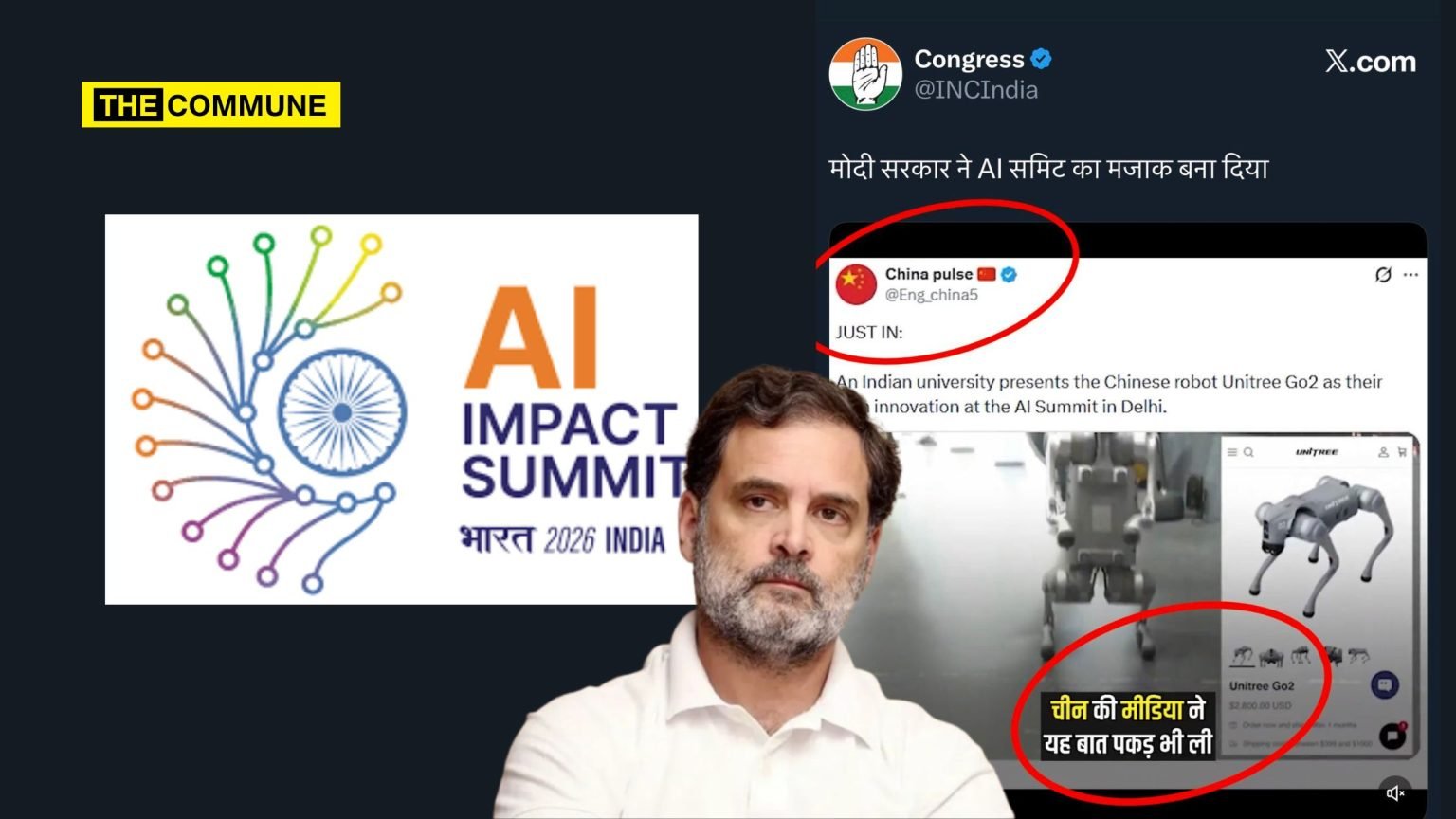
According to reports from The Commune magazine, the official social media accounts of the Indian National Congress, along with prominent party figures including Rahul Gandhi, allegedly shared and promoted misleading narratives that originated from a Chinese propaganda account during the recently concluded India AI Impact Summit 2026.
The summit, held in Delhi from February 16-20, was designed to showcase India’s growing capabilities in the artificial intelligence sector and foster international partnerships in this strategically important technology domain. However, the event became entangled in controversy when Congress party leaders began circulating information from a Chinese social media account known as “@Eng_china5” or “China Pulse.”
This account, which boasts over 254,000 followers and displays verification credentials on the X platform (formerly Twitter), reportedly disseminated false information about the summit with what appears to be deliberate intent to undermine India’s international standing in the technology sector.
The Commune’s report suggests that instead of verifying the accuracy of these claims, Congress leaders allegedly leveraged the unsubstantiated information for domestic political advantage. This action, the publication contends, has potentially damaged India’s credibility in the global technology ecosystem.
The incident highlights the increasingly complex intersection of technology, geopolitics, and domestic politics in India. The AI summit represented an important milestone in India’s ambitious plans to position itself as a global leader in artificial intelligence development and implementation. The country has been working to establish a robust AI ecosystem, with significant investments in research, startups, and policy frameworks over the past several years.
Relations between India and China have remained strained since the 2020 border clashes, with technology emerging as another front in their geopolitical rivalry. Both nations view AI dominance as critical to future economic and strategic advantage. China has made substantial progress in AI development, while India has been leveraging its software expertise and talent pool to carve out its own niche in the global AI landscape.
Political analysts note that this incident reflects the challenges of maintaining national unity on strategic technology initiatives amid intense domestic political competition. The alleged willingness to use foreign propaganda for political purposes raises questions about the boundaries of acceptable political discourse when it comes to matters of national technological development and international standing.
Cybersecurity experts have long warned about the sophisticated information operations conducted through social media accounts affiliated with foreign governments. These operations often aim to exploit political divisions within democratic societies and undermine confidence in public institutions and initiatives.
The controversy comes at a particularly sensitive time for India’s technology sector, which has been working to establish global leadership in specific AI domains while navigating complex regulatory and ethical challenges. The India AI Impact Summit 2026 was intended to demonstrate the country’s progress in developing responsible AI frameworks and applications across healthcare, agriculture, education, and manufacturing.
Industry observers have expressed concern that political controversies could distract from substantive discussions about AI policy and implementation challenges facing the country. They emphasize that cross-party consensus on technology development goals would strengthen India’s position in the increasingly competitive global AI landscape.
Neither the Indian National Congress nor the individuals named in The Commune’s report have issued formal responses to the allegations as of this writing. The full implications of this incident for India’s technology diplomacy and domestic political discourse remain to be seen.
Fact Checker
Verify the accuracy of this article using The Disinformation Commission analysis and real-time sources.

10 Comments
If the allegations are true, this is a serious breach of India’s democratic processes. The government should take strong action to identify the sources of this foreign interference and prevent similar incidents in the future.
India’s AI ambitions are important not just for the country, but for the broader tech landscape. Attempts to sow discord around this summit are worrying and need to be addressed transparently and decisively.
The Indian government should take these claims seriously and conduct a comprehensive review. Protecting the integrity of strategic tech events from foreign interference is critical for the country’s long-term interests.
This is a delicate situation that requires a nuanced, evidence-based approach. While the allegations are troubling, we should reserve judgment until a thorough investigation is conducted. Maintaining objectivity is key.
This is quite concerning if true. The Indian government should investigate these allegations of foreign influence and misinformation surrounding their AI summit. Maintaining the integrity of strategic tech events is crucial for India’s future.
India’s growing AI capabilities are no doubt a strategic priority, so any attempts to undermine or discredit their efforts through propaganda are worrying. Maintaining transparency and public trust will be key going forward.
The Indian AI summit sounds like a significant event showcasing the country’s technological advancements. It’s concerning to hear about potential propaganda efforts trying to disrupt or discredit this progress. Fact-checking will be crucial.
I’m curious to learn more about the specific claims and the evidence behind them. Political discourse can sometimes get muddied by partisan accusations, so I’d like to see a thorough, fact-based analysis of what transpired.
Agreed, we need to understand the full context and details before drawing conclusions. Responsible reporting that avoids sensationalism is important on sensitive issues like this.
Allegations of propaganda influencing important national events are always concerning. I hope the Indian authorities can get to the bottom of this issue and ensure the AI summit remains a platform for productive international cooperation.