


Listen to the article
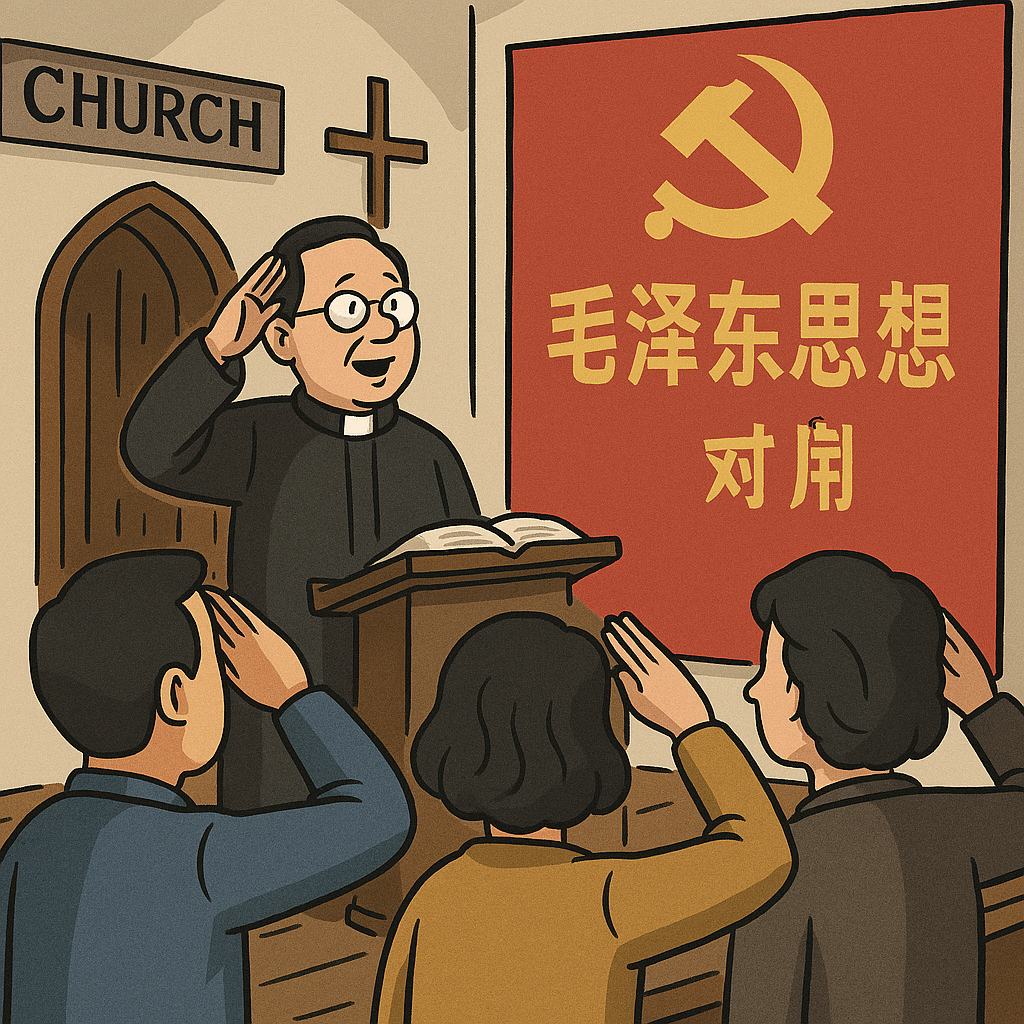
In an unprecedented move that underscores the deepening relationship between state-controlled religion and political authority, China’s Three-Self Church has enthusiastically embraced the Chinese Communist Party’s new “Regulations on Ideological and Political Work.” The document, which demands total ideological alignment with Xi Jinping Thought, has been met with immediate compliance from the official Protestant organization.
Vice-chairman of the Three-Self Patriotic Movement, Shan Weixiang, described the regulations in glowing terms during a January 21 interview, calling them a “milestone,” a “guiding principle,” and a “new height” for the Party’s understanding of ideological work. His language notably resembled political reverence rather than religious devotion.
According to Shan, the Three-Self Church has made Xi Jinping Thought the “first agenda item” at its meetings, indicating a prioritization of political ideology over theological matters. This represents a significant shift in how official Christianity is practiced within China’s borders.
The integration of Party doctrine extends deeply into religious education. Seminary students now receive extensive instruction in “political consciousness” alongside their theological training. Fujian Theological Seminary has been singled out for praise after developing specialized political textbooks to ensure Christianity’s “Sinicization” – the process of making the religion conform to Chinese cultural and political expectations.
Physical church spaces are being transformed as well. Churches are now required to display national flags, play the national anthem, and prominently feature the Constitution and socialist core values. Some have established “China-style bases” with exhibition rooms dedicated to Party themes, while others host activities promoting traditional Chinese culture like calligraphy and Confucian lectures.
This transformation reflects a broader strategy to redefine religious spaces as “immersive ideological environments” where political messaging is unavoidable. The visual and experiential aspects of worship are increasingly designed to reinforce state narratives rather than focus exclusively on spiritual matters.
For clergy, the new regulations translate into mandatory participation in “law and policy study months.” During these sessions, religious leaders learn to identify what authorities consider “religious extremism” and “foreign infiltration” – terms frequently applied to unregistered house churches and international religious influences. They must also demonstrate their commitment to “rectifying church practices” and maintaining a “pure and solemn image,” effectively eliminating independent religious expression.
The Three-Self Church’s future plans reveal an even more comprehensive approach to ideological integration. The organization has committed to developing a new theological framework that aligns Christian doctrine with socialist values, creating evaluation systems that tie funding to political loyalty, and producing interpretive works that reconcile Christianity with state priorities.
Church leadership has also pledged to expand education on national security issues, ostensibly to help believers resist foreign influences, and to incorporate Christian faith into the broader narrative of “national rejuvenation” – a central theme in Xi Jinping’s vision for China.
Analysts note that this level of political conformity represents a significant departure from Christianity’s historical character as a faith often independent from, and sometimes at odds with, state power. The Three-Self Church appears to have accepted its position as primarily a political entity with religious characteristics, rather than a religious institution with political obligations.
The eagerness with which church leadership has embraced these regulations suggests a calculated strategy of survival. By positioning themselves as enthusiastic supporters of Party doctrine, the Three-Self Church demonstrates its utility to authorities while securing its continued, if constrained, existence.
This development highlights the ongoing tension between religious faith and political control in modern China, where authentic religious expression increasingly requires alignment with state ideology. For China’s Christians, particularly those within official structures, devotion to Party principles has become a prerequisite for practicing their faith in public spaces.
Fact Checker
Verify the accuracy of this article using The Disinformation Commission analysis and real-time sources.

4 Comments
This news highlights the Chinese government’s ongoing efforts to assert control over all aspects of society, including religious institutions. It’s concerning to see the Three-Self Church being compelled to align so closely with the Party’s political agenda.
While the regulations aim to ensure ‘ideological alignment’ with the Party, this appears to be a concerning erosion of religious freedom. Requiring seminaries to extensively teach Party doctrine raises questions about the church’s ability to maintain its own theological focus.
I’m curious to learn more about how these new propaganda regulations will impact the Three-Self Church’s ability to operate freely and serve its congregants. Aligning so closely with the Party’s political agenda seems to go against the core principles of independent religious practice.
This is concerning news about the further integration of state control over religious practice in China. It seems the Three-Self Church is being compelled to prioritize political ideology over spiritual matters, which undermines the independence and integrity of the church.