


Listen to the article
China’s Space Carrier Ambitions: Military Showmanship or Strategic Signal?
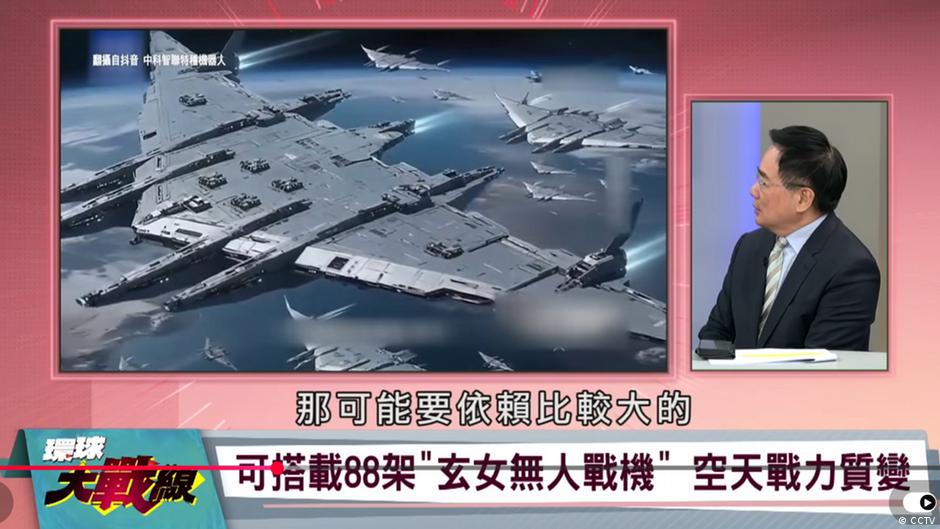
China has unveiled plans for what would be the largest aircraft carrier ever built—not for the seas, but for space. The proposed flying aircraft carrier, dubbed Luanniao, is part of China’s ambitious Nantianmen (“Heavenly Gate”) integrated air and space defense system, according to recent reports from Chinese state media.
The massive spacecraft would reportedly measure 242 meters in length with a wingspan of 684 meters, weighing up to 120,000 tons at takeoff. For comparison, the USS Gerald R. Ford, currently the world’s largest naval aircraft carrier, measures 337 meters in length, 78 meters in width, and weighs approximately 100,000 tons fully loaded.
According to China’s state broadcaster CCTV, which featured the project in its military program “Lijian,” the Luanniao would serve as a platform for launching unmanned space fighters called Xuannu. These craft would be capable of firing hypersonic missiles and striking targets both within Earth’s atmosphere and in orbit.
The spectacular nature of the project has prompted skepticism among international experts, who view it more as a strategic message than a feasible engineering endeavor.
“China has long been number two in space—behind the United States, but well ahead of Europe,” noted Juliana Süß, a space security expert at the German Institute for International and Security Affairs (SWP). She told Deutsche Welle that Beijing has invested “extremely large sums of money” in its space program, which plays both a prestige role for Chinese leadership and is “extremely important for military capabilities.”
From a technical perspective, the proposed carrier faces seemingly insurmountable challenges. Its weight alone far exceeds what current launch systems could feasibly place into orbit. Even SpaceX’s Starship, the most advanced heavy-lift rocket in development, lacks the capacity to launch anything close to the Luanniao’s projected mass.
Other technical hurdles include power supply, propulsion, cooling systems, and protection from space debris—all complicated by the extraordinary costs such a project would entail. While modular assembly in space might theoretically be possible, the engineering challenges remain daunting.
German diplomat and space analyst Heinrich Kreft described the project as “completely unrealistic” from today’s perspective, while acknowledging that “many things that were science fiction 20 or 30 years ago are real today.” He views China’s announcement as joining a space race increasingly driven by figures like Elon Musk and Jeff Bezos with their visions of lunar and Martian colonization.
U.S. analysts have reached similar conclusions about the Luanniao’s feasibility. The National Interest published an article titled “Beijing Wants You to Believe It’s Building Flying Aircraft Carriers,” with author Brandon J. Weichert arguing that the vision is part of a “wider propaganda push” designed to make Western nations nervous and waste resources.
For Kreft, the announcement functions primarily as a deliberately placed message in the ongoing power competition with the United States, particularly against the backdrop of tensions over Taiwan. “To my ears, this sounds as if China has put something out into the world with Taiwan very much in mind, in order to leave a marker,” he said.
This falls into a pattern of Chinese “superweapon” announcements—from purported submarine-hunting technology to space-based systems—that regularly appear unrealistic to Western experts but contribute to a narrative of deterrence.
SWP expert Süß contextualizes the project within broader security policy, viewing such initiatives “more through a deterrence lens” aimed at “demonstrating strength and projecting power across multiple domains.” She interprets the presentation partly as China’s response to U.S. missile defense plans in space, such as the “Golden Dome” proposed during the Trump administration.
“What is crucial for successful deterrence is above all credibility,” Süß noted. “To what extent such an ambitious and oversized project as this space carrier is actually credible is an entirely different question.”
It is precisely in this gray zone of credibility that the Luanniao concept appears to operate—an outsized threat that serves political utility regardless of its technical feasibility.
Kreft bluntly describes the project as “humbug, psychological warfare,” while simultaneously cautioning against dismissing China’s technological ambitions entirely. China, he emphasizes, is actively working “on all conceivable future projects and weapons systems,” particularly in areas like laser technology, where Beijing “appears to be further ahead than anyone else.”
Fact Checker
Verify the accuracy of this article using The Disinformation Commission analysis and real-time sources.

8 Comments
Fascinating concept, but the scale and technical details seem highly ambitious, even for China’s space program. I wonder if this is more about sending a geopolitical signal than a realistic near-term capability.
China is certainly not shy about showcasing its technological ambitions, but this space carrier proposal raises a lot of questions. I’m curious to see if it translates into real-world progress or remains more of a speculative concept.
A space aircraft carrier is a bold and ambitious idea, but the logistics and engineering required seem daunting. I’ll be watching to see if this project gains traction or remains more of a conceptual showcase.
Interesting concept, but I have a hard time believing China has the capability to field a space carrier of that scale anytime soon. Feels more like posturing than an actual strategic program.
This seems more like propaganda than a practical military system. The technical challenges of building and operating a space-based aircraft carrier of that size must be immense. I’ll be skeptical until we see tangible progress.
A space-based aircraft carrier is a fascinating idea, but the technical hurdles involved seem enormous. I’ll be interested to see if China can turn this into a functional system or if it remains more of a propaganda piece.
A space aircraft carrier? That’s certainly an eye-catching idea. I’ll be curious to see how this project develops and what the actual military applications could be, if any.
Agreed, it’s hard to assess the feasibility of such an enormous and complex system. Likely more about projecting power than an immediate operational reality.