


Listen to the article
In a heated exchange of narratives, civil society coalition Atin Ito has strongly condemned what it describes as Chinese propaganda regarding a recent maritime incident in the West Philippine Sea. The controversy centers on China’s claims of providing humanitarian assistance to a Filipino fisherman on Christmas Day.
The Chinese Embassy had reported that its Navy ship 174 delivered “essential food and water to a fisherman who had been stranded for three days due to engine failure” in the South China Sea. According to the embassy’s account, they also coordinated follow-up support with the Philippine Coast Guard (PCG).
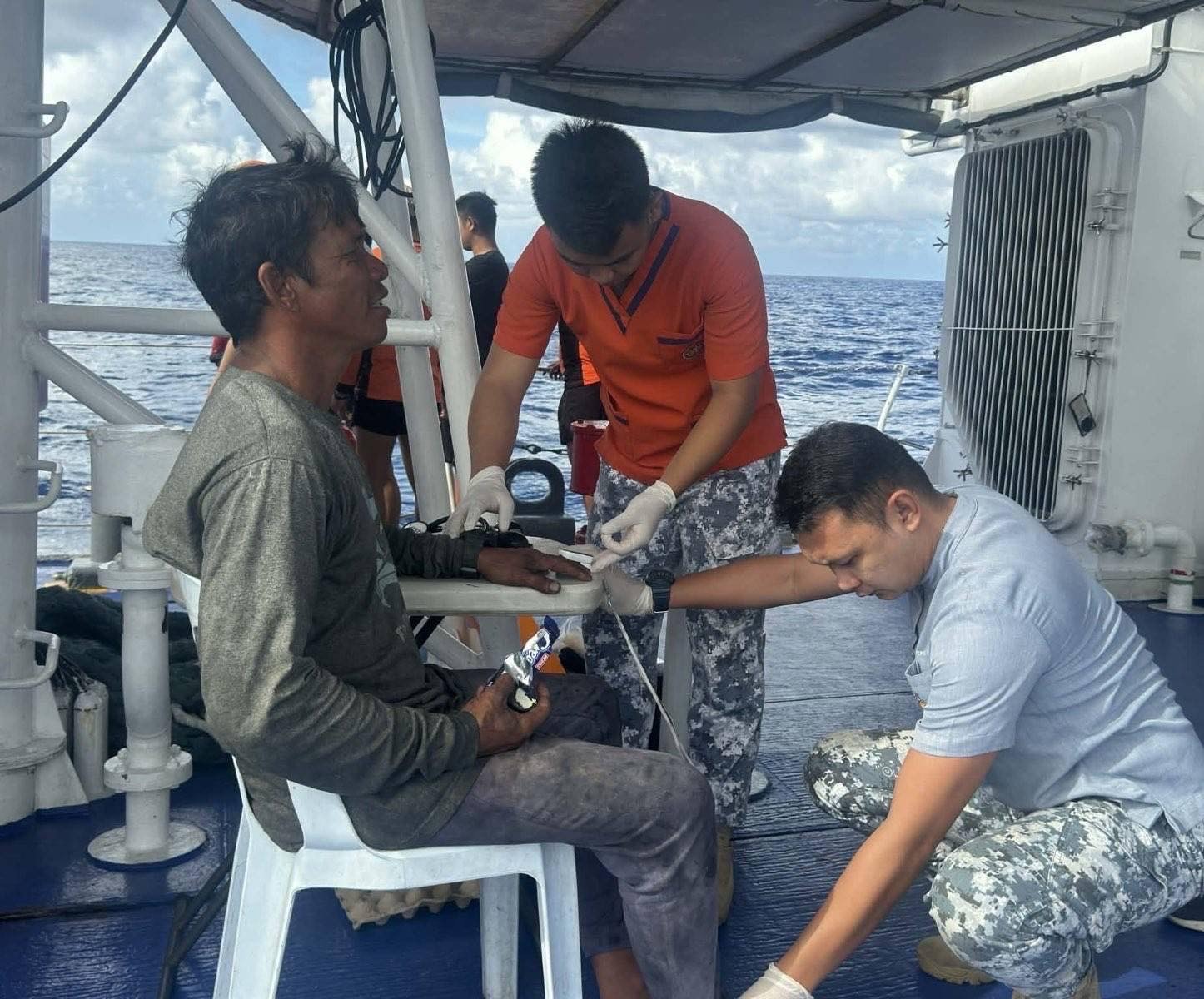
However, PCG spokesperson for the West Philippine Sea, Commodore Jay Tarriela, directly contradicted this narrative, stating that the agency never received prior information from the Chinese Navy about the location or condition of the fisherman in question.
Atin Ito, a coalition dedicated to protecting West Philippine Sea rights and Filipino fishers’ welfare, has categorically rejected China’s version of events, describing it as “deceptive, self-serving, and propaganda-driven.”
“What China did was not humanitarianism, it is image management. It is propaganda-driven assistance meant to distract us from years of harassment, violence and illegal incursions,” said Rafaela David, co-convenor of Atin Ito and president of Akbayan Party.
The timeline of events has become a particular point of contention. While China claimed the fisherman had been missing for three days, PCG officials clarified that he had been safely anchored to a payao—a fish aggregating device—for less than 24 hours and was simply waiting for retrieval by his mother boat.
Tarriela elaborated on this discrepancy, explaining that “the service boat departed on a fishing trip on December 24 around 3:00 p.m., and the fisherman was located by the PCG and the mother boat the following afternoon—less than 24 hours later.”
The incident takes place against the backdrop of escalating tensions in the West Philippine Sea, part of the broader South China Sea, where territorial disputes between China and several Southeast Asian nations, including the Philippines, have intensified in recent years. China claims almost the entire South China Sea, including areas recognized by a 2016 international tribunal ruling as belonging to the Philippines’ Exclusive Economic Zone.
David raised a fundamental question about the incident: “Why was China patrolling inside the Philippines’ Exclusive Economic Zone in the first place? No act of assistance, however welcome, grants permission to trespass. No gesture of kindness erases repeated acts of harassment and violence in our waters.”
The Atin Ito representative also referenced recent confrontational incidents, noting that just days earlier, China Coast Guard vessels had reportedly water-cannoned Filipino fishers at Escoda Shoal and conducted aggressive maneuvers that damaged two Philippine fishing boats.
“China should stop pretending that a bottle of water and a pack of snacks can wipe away years of harassment,” David said. “Propaganda-driven assistance does not negate violation of international law, launder aggression, or absolve China of continuing encroachment… The Filipino people will not be gaslit into gratitude for an obvious PR spectacle from a foreign aggressor.”
This incident highlights the ongoing strategic communication battle playing out alongside physical confrontations in the disputed waters, with both sides attempting to control the narrative around maritime encounters. The Philippines has increasingly publicized what it considers Chinese aggression in the region, while China has portrayed its actions as lawful and occasionally humanitarian.
GMA News Online reported that it reached out to the Chinese Embassy for comment on Atin Ito’s statements, but no response had been received at the time of reporting.
Fact Checker
Verify the accuracy of this article using The Disinformation Commission analysis and real-time sources.

16 Comments
The allegations of ‘propaganda-driven’ aid from China are serious and warrant further investigation. Maintaining trust and credibility is essential, especially in sensitive geopolitical regions like the West Philippine Sea.
This incident highlights the complex dynamics at play in the West Philippine Sea. While China’s motives are being questioned, the most important thing is ensuring the safety and support of Filipino fishermen caught in the middle of these disputes.
The West Philippine Sea is a sensitive geopolitical area, and it’s important that all parties involved act in good faith and prioritize the safety and well-being of local fishermen. Accusations of propaganda are serious and merit further investigation.
Absolutely. Humanitarian aid should never be used as a tool for political gain or image management. The focus should be on ensuring the effective and timely assistance of those in need.
This incident highlights the ongoing tensions and competing interests in the West Philippine Sea. While the provision of humanitarian aid is commendable, the lack of coordination and accusations of propaganda are deeply troubling.
I agree, the contradictory accounts from China and the Philippine Coast Guard are very concerning. Transparency and open communication are essential to build trust and ensure effective assistance for those in need.
This incident underscores the need for clear and consistent communication between all parties involved in the West Philippine Sea disputes. Accusations of propaganda undermine efforts to provide timely and effective assistance to those in need.
I agree, the lack of coordination and conflicting narratives is deeply concerning. Transparency and accountability should be the top priorities when it comes to maritime incidents in this region.
This incident underscores the complex dynamics at play in the West Philippine Sea. While the provision of humanitarian aid is commendable, the lack of coordination and accusations of propaganda are deeply troubling and merit further scrutiny.
I agree, the conflicting narratives from China and the Philippine authorities are very concerning. Transparency and open communication are essential to ensure that any humanitarian assistance is provided in a genuinely impartial manner.
It’s concerning to see the Philippine Coast Guard directly contradicting China’s account of events. Transparency and coordination between all parties are crucial to prevent further escalation and ensure the protection of local fishermen’s rights.
I agree, the lack of communication between China and the Philippine authorities is very troubling. This issue deserves close scrutiny to determine the facts and ensure that any humanitarian assistance is provided in a genuinely impartial manner.
The West Philippine Sea is a complex and contentious area, and it’s crucial that all parties involved act with integrity and prioritize the well-being of local fishermen. Allegations of ‘propaganda-driven’ aid need to be thoroughly investigated.
This situation seems to highlight the ongoing tensions and conflicting narratives around maritime disputes in the West Philippine Sea. It’s concerning to see accusations of ‘propaganda-driven’ aid from China, which could undermine genuine humanitarian efforts.
I agree, the lack of coordination between China and the Philippine Coast Guard is troubling. Transparency and open communication are crucial when it comes to maritime incidents in this region.
The West Philippine Sea is a sensitive geopolitical region, and it’s crucial that all parties involved act with integrity and prioritize the safety and well-being of local fishermen. Allegations of ‘propaganda-driven’ aid need to be thoroughly investigated.