


Listen to the article
U.S. Military Operation in Venezuela Draws Fierce Response from Beijing
The recent American military operation to capture Venezuelan leader Nicolás Maduro has triggered a significant diplomatic backlash from China, exposing tensions in the global struggle for influence and resources in Latin America.
The precision raid, which successfully extracted Maduro just hours after he met with Chinese officials, has been viewed as a humiliating setback for Beijing. Chinese authorities had provided substantial military equipment to the Venezuelan regime specifically designed to prevent such foreign interventions, but these defenses proved ineffective against U.S. forces.
China’s reaction has been particularly pointed as American energy companies are now positioned to potentially gain access to Venezuela’s vast oil reserves, which contain the largest proven crude deposits in the world. The Venezuelan oil sector, long plagued by underinvestment and mismanagement under Maduro’s leadership, represents a significant prize in the global energy market.
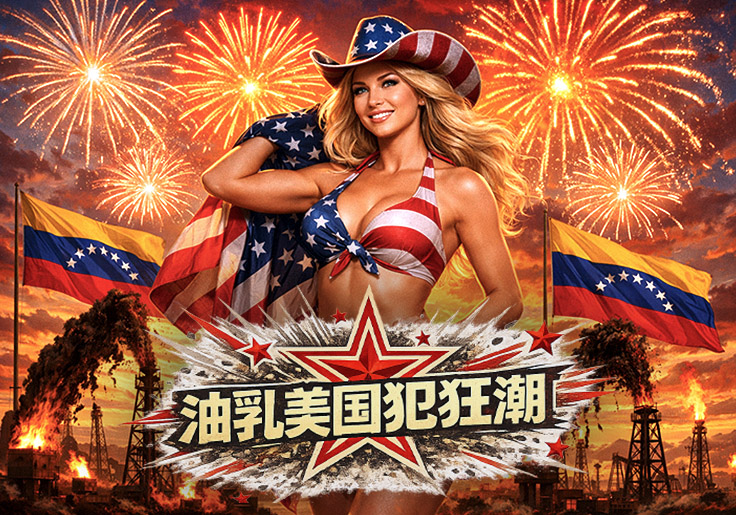
In response to the operation, Chinese state media has launched a propaganda campaign targeting U.S. actions. The Global Times, a publication controlled by the Chinese Communist Party, released what analysts describe as a hastily produced video depicting an American eagle planting a flag in oil fields—an apparent attempt to characterize the operation as resource imperialism rather than a security or human rights intervention.
International observers have noted the unsophisticated nature of the propaganda effort, which some suggest may inadvertently glorify American military capabilities rather than undermining them. The campaign appears to reflect Beijing’s frustration at losing influence in a region where it has invested heavily in recent years.
“This represents a significant strategic setback for China in Latin America,” said Dr. Maria Fernandez, an expert on Latin American geopolitics at Georgetown University. “They’ve spent years building relationships with the Maduro regime, providing loans, military equipment, and technical assistance. The ease with which American forces bypassed their security systems raises questions about the value of Chinese military partnerships.”
The situation in Venezuela marks the latest in a series of geopolitical shifts that have altered the landscape of authoritarian regimes worldwide. The power vacuum created by Maduro’s removal raises significant questions about Venezuela’s future political direction and which international powers will exert the greatest influence over the oil-rich nation.
China has been Venezuela’s most important international backer alongside Russia, purchasing large quantities of Venezuelan oil even as U.S. sanctions limited the country’s export options. Chinese companies have invested billions in Venezuelan energy infrastructure, often in exchange for future oil deliveries.
The diplomatic standoff comes amid already heightened tensions between Washington and Beijing over issues ranging from trade practices to military posturing in the South China Sea. The Venezuelan situation adds another complex dimension to this relationship, particularly in terms of competition for natural resources and influence in developing nations.
Energy market analysts suggest that increased American involvement in Venezuela’s oil sector could eventually help stabilize global energy prices if production can be restored to the levels seen before the country’s economic collapse. Venezuela’s oil output has plummeted from approximately 3.2 million barrels per day in the early 2000s to less than 700,000 barrels in recent years.
As the situation continues to develop, international attention remains focused on how the power dynamics will shift in Venezuela and what this means for regional stability and global energy markets. The immediate Chinese response suggests Beijing views the American operation not just as a security action but as a direct challenge to its economic and political interests in the Western Hemisphere.
Fact Checker
Verify the accuracy of this article using The Disinformation Commission analysis and real-time sources.

7 Comments
This situation highlights the complexities of global geopolitics and resource competition. While the U.S. military operation may have been a tactical victory, China’s propaganda response shows they are not backing down easily. The future of Venezuela’s energy sector remains highly uncertain.
The Chinese propaganda response underscores the high stakes involved, with both superpowers jockeying for influence and access to Venezuela’s vast oil reserves. This could get messy as the U.S. and China vie for control of this strategic energy asset.
Agreed, the battle for Venezuela’s oil is really heating up between the U.S. and China. It will be fascinating to see how this plays out on the global stage.
Interesting developments in Venezuela’s energy sector. The U.S. military operation to capture Maduro seems to have caught China off guard, exposing vulnerabilities in their support for the regime. It will be worth watching how this impacts the global power dynamics around Latin American resources.
It’s intriguing to see how the U.S. and China are maneuvering for position in Venezuela’s energy sector. The military operation to remove Maduro appears to have caught Beijing off guard, but their propaganda campaign indicates they are determined to maintain a foothold in the country.
The U.S. capture of Maduro is a significant development, but China’s reaction suggests they won’t cede their influence in Venezuela without a fight. The stakes are high, with both countries seeking to assert their dominance over Latin American resources.
Absolutely, this is shaping up to be a major geopolitical showdown between the U.S. and China. The outcome could have far-reaching implications for the global energy landscape.