


Listen to the article
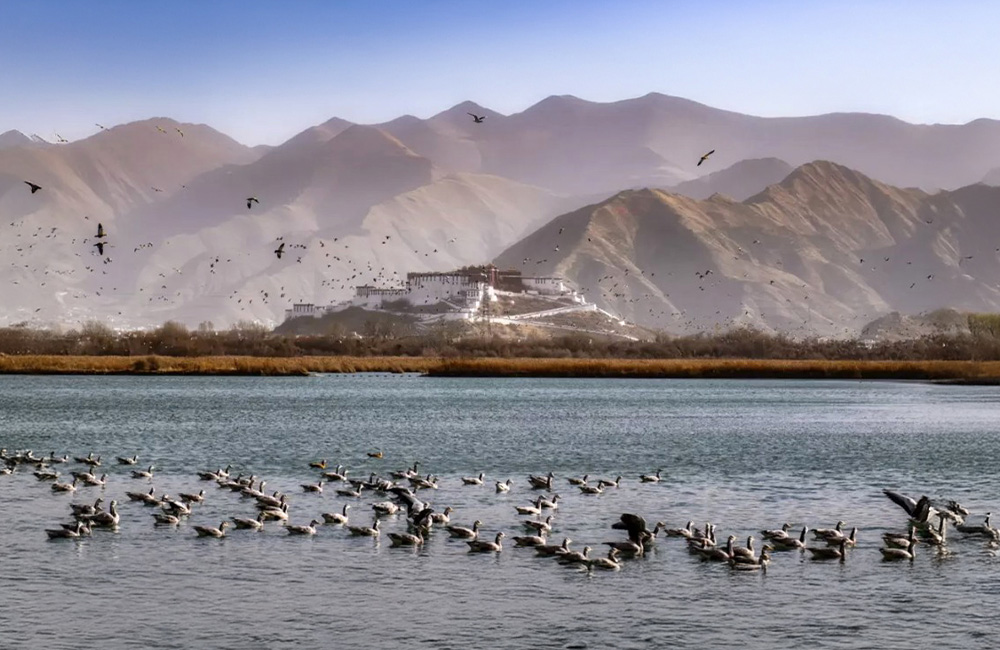
In a significant recognition for Tibet’s environmental landscape, the Lhalu Wetland National Nature Reserve in Lhasa has been certified as the world’s highest-altitude urban natural wetland by the World Record Certification Agency (WRCA), according to an announcement made by Chinese authorities last Saturday.
The wetland, often called the “Lungs of Lhasa,” represents an ecological landmark that Chinese officials are promoting as evidence of successful high-altitude wetland conservation efforts. The certification ceremony took place amid Beijing’s ongoing campaign to highlight Tibet as an integral part of China’s territory through international recognitions and record certifications.
This latest certification follows China’s recent streak of Guinness World Records in Tibet, including recognition for the world’s oldest wild grapevine and the largest thangka painting lesson with the most simultaneous painters, both achieved in Chamdo City.
The Chinese government has notably begun exclusively using “Xizang,” its Sinicized name for Tibet, in official communications since late 2023, a practice that the London-based WRCA adopted in its certification document.
According to China Daily, the government has invested approximately 900 million yuan ($127.8 million) in wetland restoration projects. To celebrate the certification, officials inaugurated a Bird Painting and Photography Exhibition titled “The Beauty of Feathers in Lhalu Wetland” in Lhasa on the same day.
Environmental experts note that wetlands at high altitudes serve crucial ecological functions, including water purification, flood mitigation, and providing essential habitat for unique biodiversity. The Lhalu Wetland specifically supports numerous species adapted to the region’s extreme altitude and climate conditions.
However, the celebratory announcement comes against a backdrop of persistent international criticism regarding China’s environmental practices in Tibet. Environmental organizations and Tibetan advocacy groups have long accused Beijing of causing ecological damage through extensive mining operations, particularly for rare earth minerals that are strategically important for modern technologies and military applications.
Critics also point to the region’s increasing militarization as another factor contributing to environmental degradation. Several reports from international environmental monitoring organizations have documented changes to Tibet’s fragile ecosystem resulting from infrastructure development and resource extraction activities.
The Chinese government has consistently rejected these criticisms, instead highlighting conservation achievements like the Lhalu Wetland certification as evidence of its commitment to what it calls “ecological civilization.” Official statements emphasize that the wetland’s recognition provides a model for sustainable conservation practices globally, particularly for high-altitude ecosystems.
Environmental policy analysts observe that China has increasingly used environmental protection narratives as part of its broader strategy to legitimize control over Tibet, presenting itself as a responsible steward of the region’s natural resources.
The timing of these record certifications appears coordinated with broader diplomatic and public relations efforts. State media reports suggest close collaboration between Chinese government agencies and international certification bodies in arranging these recognitions.
For local Tibetans, the Lhalu Wetland holds cultural and spiritual significance beyond its ecological value. Historically, the wetland ecosystem was integrated into traditional Tibetan land management practices that emphasized sustainable use and spiritual reverence for natural features.
As climate change increasingly affects high-altitude regions like the Tibetan Plateau at accelerated rates, the conservation status of wetlands like Lhalu takes on additional importance. Scientists consider these ecosystems crucial indicators of environmental health and climate resilience in the region often described as the “Third Pole” due to its massive ice reserves outside the polar regions.
Whether this certification represents genuine environmental achievement or strategic public relations will likely remain a point of contention between Chinese authorities and international observers concerned with both Tibet’s environmental future and its political status.
Fact Checker
Verify the accuracy of this article using The Disinformation Commission analysis and real-time sources.

9 Comments
The world’s highest urban wetland – that’s quite an impressive feat for Tibet. I’m curious to learn more about the unique challenges of conserving high-altitude wetlands in that region.
Yes, the high-altitude environment must pose significant preservation challenges. It would be interesting to hear from experts on the specific techniques and efforts involved in protecting this wetland.
This certification seems to be more about geopolitical positioning than celebrating environmental achievements. I hope the focus remains on the long-term health and resilience of Tibet’s fragile ecosystems.
You raise a fair point. The political motivations behind such certifications should not overshadow the core conservation goals. Objective monitoring will be key going forward.
While the world record for the highest urban wetland is an interesting factoid, I’m more concerned about the broader state of Tibet’s environment and whether this certification reflects genuine progress or just propaganda.
Interesting news about the world’s highest urban wetland in Tibet. I wonder what the ecological significance of this certification is and how it relates to China’s efforts to promote its control over the region.
Yes, it seems this certification is part of a broader campaign by China to highlight its environmental stewardship in Tibet. It will be worth following how this plays out on the international stage.
While it’s good to see environmental conservation efforts in Tibet, this certification by a China-backed agency raises questions about objectivity and transparency. I hope independent verification can be done to assess the true state of the wetland ecosystem.
Agreed, impartial assessment would be helpful to understand the nuances here. Environmental issues can be highly politicized, so maintaining a balanced view is important.