


Listen to the article
Trump Administration’s Media Campaign Aims to Shape Immigration Narrative
Federal authorities have launched an extensive media blitz to accompany President Donald Trump’s aggressive immigration enforcement campaign, employing sophisticated messaging tactics that portray Chicago as a city besieged by criminal elements and at odds with federal authorities.
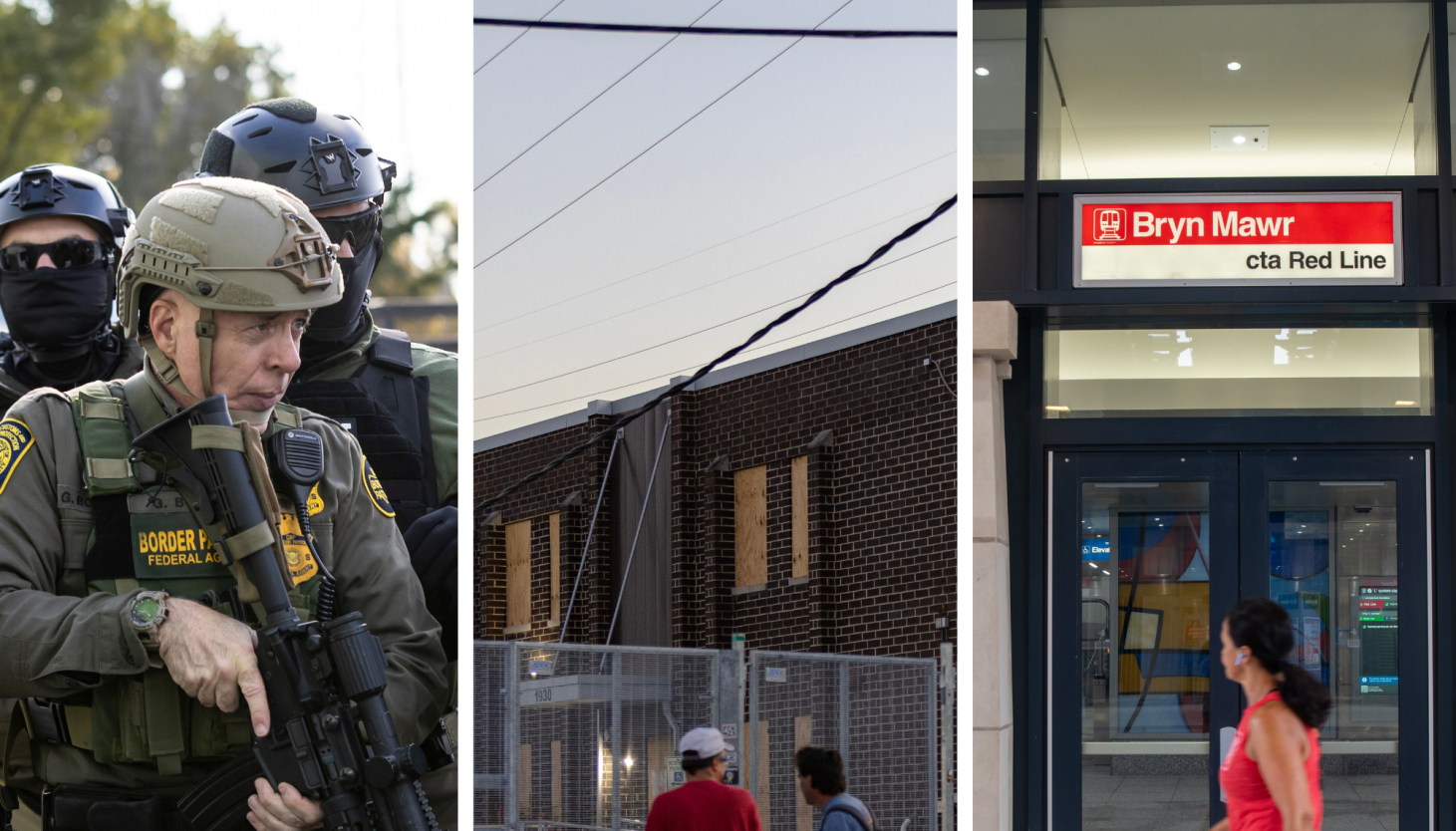
Nearly two months into the enforcement initiative, social media feeds from the administration and allied right-wing outlets are saturated with dramatic imagery—military-style raids, agents apprehending and handcuffing individuals described as “criminal illegal aliens,” and immigration facilities supposedly preparing for confrontations with “agitators” and “terrorists.”
Media analysts and political communication experts suggest these carefully crafted messages serve a strategic purpose: building public support for controversial enforcement actions by framing them as necessary security measures rather than contested political policies.
“This is classic political communication strategy,” says Dr. Elena Rodriguez, a professor of political media at Northwestern University. “By controlling the visual narrative and employing emotional language, they’re attempting to shape public perception before opposition messaging can take hold.”
The campaign comes as federal immigration enforcement faces multiple legal challenges in Chicago courtrooms. On Wednesday, U.S. District Judge Robert Gettleman issued a 15-point temporary restraining order requiring the federal government to improve conditions for detainees at the Immigration and Customs Enforcement (ICE) facility in Broadview, addressing issues ranging from bedding and cleanliness to access to medications and legal representation.
In separate proceedings, U.S. District Judge Sara Ellis is weighing testimony about federal agents’ treatment of protesters and journalists, including evidence that Border Patrol Chief Gregory Bovino instructed officers to “go hard” against demonstrators. Ellis plans to rule Thursday on whether to extend a temporary order banning the use of “riot control” weapons without warning.
Meanwhile, a third federal judge, Georgia Alexakis, is hearing testimony in a case involving Border Patrol supervisory agent Charles Exum, who shot a woman five times during an October 4 incident in Brighton Park. Text messages presented in court showed Exum apparently boasting about how his shots left seven holes in Marimar Martinez, whom federal authorities claim was pursuing agents. When questioned about these messages, Exum stated he takes pride in his shooting skills as a firearms instructor.
The heightened enforcement has sparked numerous confrontations across the city. In a particularly controversial incident Wednesday morning, federal immigration agents entered a Rayito de Sol Spanish Immersion Early Learning Center in North Center and detained a teacher known as “Ms. Diana” without a warrant, according to Alderman Matt Martin (47th).
Recordings from the incident captured the teacher telling agents in Spanish, “Yo tengo papeles” (“I have papers”), yet she was still removed from the facility and placed in a vehicle. Children were reportedly present during the arrest.
These enforcement actions unfold against the backdrop of significant developments in local transportation funding. Illinois lawmakers recently passed a major transit reform bill allocating $1.5 billion in additional tax revenue to support the Chicago Transit Authority, Metra, and Pace, preventing service cuts that would have affected millions of riders.
The legislation, awaiting Governor JB Pritzker’s signature, increases the Chicago region’s sales tax by 0.25% effective June 2026 and redirects state gas tax revenue to public transit. It also raises Illinois Tollway fees by 45 cents for passenger vehicles and 30% for commercial vehicles, generating up to $1 billion annually. Transit agencies are prohibited from increasing fares during the first year after implementation.
Despite the ongoing immigration enforcement campaign and associated protests, community life continues across Chicago. In Beverly, Sanders BBQ Supply Co. has become a national culinary sensation, with The New York Times recently naming it one of the country’s 50 best restaurants just 17 months after opening. Chef and owner James Sanders and his team are now preparing to open a second, more upscale barbecue restaurant and bar in Hyde Park early next year.
In Douglass Park, organizers unveiled designs for a monument honoring Rekia Boyd on what would have been her 36th birthday. Boyd was fatally shot by an off-duty police officer in 2012, and his subsequent acquittal helped spark the #SayHerName movement addressing violence against Black women.
As winter approaches, Chicago residents are adapting to shorter days and dropping temperatures, with Metra announcing its popular holiday trains will run on five lines beginning December 6.
Fact Checker
Verify the accuracy of this article using The Disinformation Commission analysis and real-time sources.

10 Comments
While I understand the administration’s desire to control the narrative, framing immigration enforcement as a security issue rather than a political one is concerning. We need balanced, fact-based reporting that examines all sides of this complex debate.
Interesting analysis of the political communication strategy at play. Controlling the visual narrative and appealing to emotions are classic tactics, but they don’t necessarily reflect the full reality of the situation. I hope the reporting delves deeper into the local dynamics and impacts.
Interesting take on the propaganda tactics used to shape the immigration narrative. Controlling the visual and emotional messaging is a classic political communication strategy. I wonder how effective it will be in building public support for these enforcement actions.
As someone with an interest in political communication, I find this analysis of the administration’s propaganda tactics quite insightful. The use of dramatic imagery and emotional language to frame immigration enforcement as a security issue is concerning. I hope the media and public can see past this and have a more nuanced discussion.
I agree, this is an important issue that deserves careful, balanced reporting. It’s crucial to look beyond the political messaging and understand the real-world impacts on communities. Only then can we have a productive dialogue.
As a resident of Chicago, I’m curious to learn more about how local authorities are responding to this perceived propaganda campaign. It will be interesting to see how this clash between federal and city governments plays out in the media and on the ground.
Good point. The city’s perspective and the community impact are important factors that should be highlighted, beyond just the political messaging. I hope the reporting digs deeper into those local dynamics.
This seems like a concerning attempt to manipulate public opinion through selective imagery and emotional language. I hope the media and public can see through these tactics and have a more nuanced discussion about the complex issues at play.
You’re right, it’s important to look past the rhetoric and focus on the real impacts these policies have on communities. Objective analysis and open debate are crucial.
This sounds like a sophisticated propaganda effort, using visual and emotional tactics to build support for controversial policies. It’s important to look past the rhetoric and consider the real-world impacts on communities. Objective analysis is crucial here.