


Listen to the article
CBS Viewers Boycott Dokoupil’s Coverage of Trump’s Iran Ultimatum
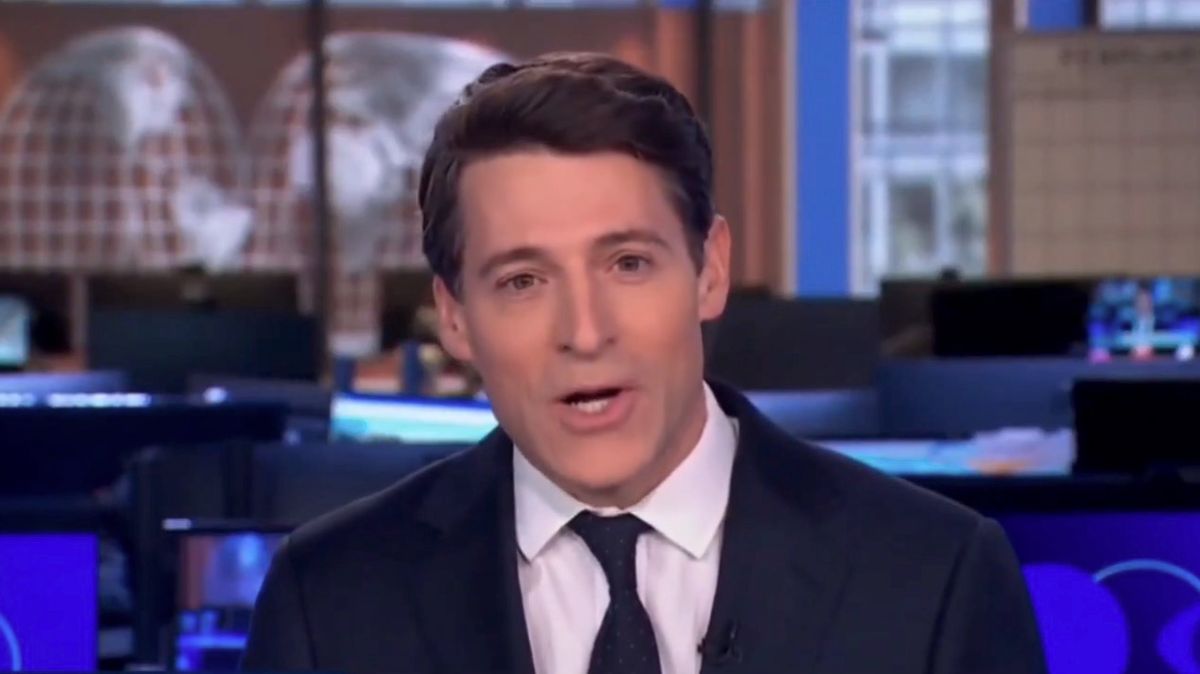
CBS Evening News anchor Tony Dokoupil faced a viewer boycott on Tuesday as he prepared to cover President Donald Trump’s controversial ultimatum to Iran, highlighting growing tensions between the broadcaster and his audience.
Dokoupil, 45, had promoted the evening’s broadcast with a preview focusing on Trump’s threat to “devastate” Iran if the country failed to reopen the Strait of Hormuz by 8 p.m. Tuesday. The strategic waterway handles over 20% of global daily oil shipments, making it a critical chokepoint for international energy markets.
“Tonight we’ll examine what was going to happen at 8 p.m., the president’s deadline,” Dokoupil stated in a promotional clip shared on the program’s official social media account. He noted that Trump was “threatening bridges, power plants, and the entire Iranian civilization,” promising viewers the “absolute latest” information on the developing situation.
Despite the high-stakes international story, some viewers expressed their intent to skip the broadcast entirely. Comments on social media revealed a clear distrust of Dokoupil’s coverage, with one viewer dismissing it as “lying propaganda BS” and others simply stating they would “pass” on the program. Another commenter suggested that the broadcast’s audience was limited to “nursing home residents that are forced” to watch.
The viewer backlash appears to stem less from the subject matter and more from perceptions about Dokoupil’s recent reporting approach. Critics have accused the anchor of softening his stance when interviewing Trump administration figures, including the president himself and Defense Secretary Pete Hegseth, and allegedly offering praise toward the administration’s policies.
Industry insiders suggest Dokoupil’s apparent pivot has damaged his credibility among viewers and colleagues alike. The anchor has recently positioned himself as critical of mainstream media outlets, characterizing them as out of touch with everyday Americans—a stance that has raised eyebrows given his own career trajectory through major news organizations including The Daily Beast, Newsweek, NBC, and CBS.
This apparent contradiction has not gone unnoticed within CBS. One network insider, speaking to the Columbia Journalism Review, directly challenged Dokoupil’s stance: “You are the media. Now you get a promotion and you’re gonna talk s–t?” Another source described the anchor as “professional and smart, if a little cocky and looking to climb,” while noting that since Dokoupil’s promotion to his current role, “people actually feel badly for him.”
The boycott comes at a sensitive time for broadcast news outlets, which face declining viewership and increasing political polarization among audiences. Networks like CBS must balance delivering objective reporting on critical international developments while navigating intense scrutiny from viewers who increasingly consume news through partisan lenses.
The Iran ultimatum story itself represented a significant escalation in tensions between the United States and Iran. Trump’s threat to take military action against Iranian infrastructure raised concerns about potential regional destabilization and impacts on global oil markets, which have already experienced volatility due to ongoing conflicts in the Middle East.
For Dokoupil, who took over the CBS Evening News anchor chair relatively recently, the viewer pushback highlights the challenges facing broadcast journalists in today’s fractured media landscape, where audience trust has become as valuable a currency as breaking news exclusives or high-profile interviews.
Whether the boycott represents a temporary protest or a more permanent shift in viewer habits remains to be seen, but it underscores the increasingly complex relationship between news presenters, their audiences, and the politically charged stories they cover.
Fact Checker
Verify the accuracy of this article using The Disinformation Commission analysis and real-time sources.

7 Comments
The viewer criticism of potential ‘propaganda’ in Dokoupil’s Iran coverage is concerning. Objectivity and truth should be the priority when reporting on such a delicate geopolitical situation. I’ll be watching closely for any signs of bias.
The viewer concerns about ‘propaganda’ are understandable given the charged political climate. CBS should strive for even-handed, nuanced reporting that avoids fanning the flames of conflict.
I’m curious to see how CBS covers this high-stakes situation with Iran. Dokoupil’s preview does sound concerning, with talk of ‘devastation’ and ‘civilization’ targets. I hope the reporting provides a balanced, fact-based perspective.
The prospect of a potential conflict in the Strait of Hormuz is very concerning given its importance for global energy markets. I’ll be watching CBS’s coverage closely to see if they provide helpful context and analysis.
Threatening to ‘devastate’ Iran and its ‘entire civilization’ sounds like an inflammatory and dangerous escalation of rhetoric. I hope CBS can provide nuanced, well-researched reporting to help the public understand this complex issue.
The prospect of conflict in the Strait of Hormuz is deeply concerning, given its importance for global energy markets. I hope CBS can provide insightful, level-headed coverage to help inform the public.
While viewers may be skeptical, I hope CBS can rise to the occasion and deliver thoughtful, responsible journalism on this high-stakes geopolitical situation. Clear, factual reporting is needed more than ever.