


Listen to the article
CBC Interview with Military College Professor Sparks Controversy over Iran Analysis
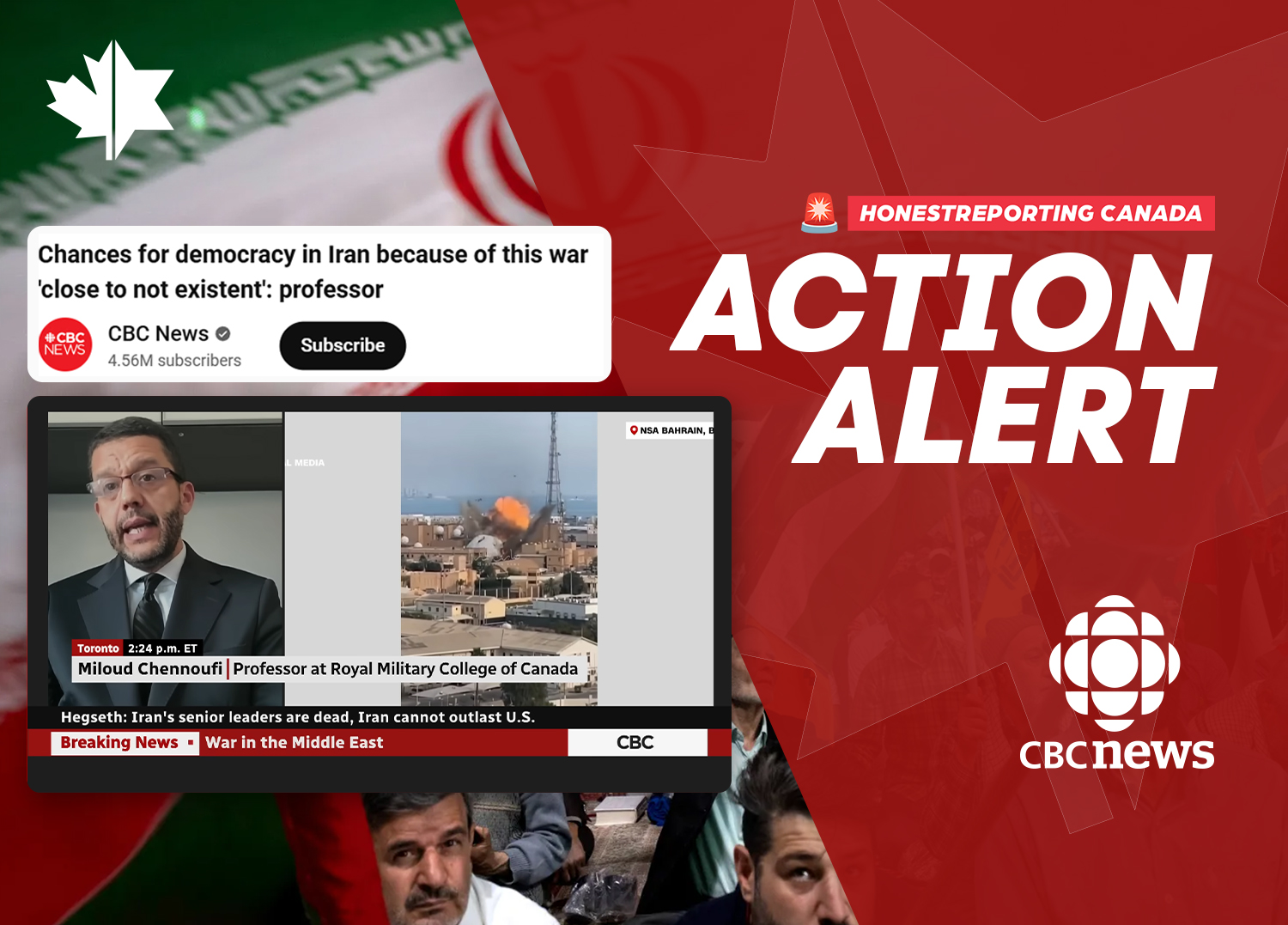
A recent CBC News interview featuring Miloud Chennoufi, a professor at the Royal Military College of Canada, has drawn criticism for what some observers characterize as incomplete analysis of the complex geopolitical situation involving Iran, Israel, and the United States.
During the March 4 segment titled “Chances for democracy in Iran because of this war ‘close to not existent’: professor,” Chennoufi discussed U.S.-Israeli military actions against Iranian targets. Critics argue that several key contextual elements were absent from the discussion, potentially leaving viewers with an incomplete understanding of regional dynamics.
In the interview, Chennoufi suggested that American participation in military operations was “set by Israel,” a claim that has been challenged by foreign policy experts who point to the complex, multifaceted nature of U.S. Middle East policy. The United States, as a global superpower with extensive strategic interests in the region, typically formulates its military decisions based on numerous factors including intelligence assessments, regional stability concerns, and its own national security priorities.
Chennoufi also questioned the legality of military actions against Iranian targets, citing the absence of United Nations Security Council authorization. This perspective fails to acknowledge the structural limitations of the Security Council, where permanent members Russia and China—both allies of Iran—possess veto power that effectively prevents united action on many Middle Eastern security issues.
Media analysts note that host Andrew Nichols did not challenge several of the professor’s assertions or provide alternative viewpoints, which some consider a missed opportunity for a more balanced discussion.
Perhaps most controversial was Chennoufi’s dismissal of external pressure as a catalyst for democratic change in Iran. He emphasized that only an “indigenous movement” could bring democracy to the country, without acknowledging the January protests in which thousands of Iranians demonstrated against the regime—demonstrations that were violently suppressed by government forces.
The interview notably omitted discussion of several relevant factors that shape the current geopolitical landscape, including the Iranian regime’s support for regional proxy groups, its ballistic missile program, and the ongoing tensions with Israel. These omissions potentially left viewers without crucial context for understanding the multifaceted nature of the conflict.
International relations experts emphasize that comprehensive analysis of the Iranian situation requires acknowledging both internal dynamics—including the regime’s human rights record and treatment of protesters—and external factors such as Iran’s regional activities and relationships with global powers.
Outside of Iran, diaspora communities have held demonstrations in various cities, often displaying pre-revolution Iranian flags alongside American, Canadian, and Israeli flags, expressing complex sentiments about their homeland and its government that weren’t reflected in the interview’s framing.
The controversy highlights broader questions about media coverage of Middle Eastern conflicts and the responsibility of news organizations to provide viewers with comprehensive context when discussing geopolitically sensitive topics.
CBC News, which receives public funding, has not issued a statement regarding criticisms of the segment. Media ethics specialists suggest that publicly funded broadcasters bear a particular responsibility to ensure that complex international issues are presented with appropriate nuance and balanced perspective.
As tensions in the Middle East continue to evolve, the incident serves as a reminder of the challenges in providing comprehensive analysis of intricate geopolitical situations and the importance of diverse viewpoints in public discourse.
Fact Checker
Verify the accuracy of this article using The Disinformation Commission analysis and real-time sources.

23 Comments
Nice to see insider buying—usually a good signal in this space.
Good point. Watching costs and grades closely.
Good point. Watching costs and grades closely.
The cost guidance is better than expected. If they deliver, the stock could rerate.
Good point. Watching costs and grades closely.
Interesting update on CBC News Interview with Royal Military College Professor Features Unchallenged Conspiracy Claims. Curious how the grades will trend next quarter.
Good point. Watching costs and grades closely.
Good point. Watching costs and grades closely.
If AISC keeps dropping, this becomes investable for me.
Silver leverage is strong here; beta cuts both ways though.
Silver leverage is strong here; beta cuts both ways though.
Good point. Watching costs and grades closely.
Exploration results look promising, but permitting will be the key risk.
Good point. Watching costs and grades closely.
Good point. Watching costs and grades closely.
I like the balance sheet here—less leverage than peers.
Good point. Watching costs and grades closely.
Silver leverage is strong here; beta cuts both ways though.
Good point. Watching costs and grades closely.
Good point. Watching costs and grades closely.
Silver leverage is strong here; beta cuts both ways though.
Good point. Watching costs and grades closely.
If AISC keeps dropping, this becomes investable for me.