


Listen to the article
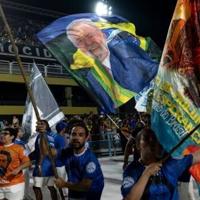
Brazilian President Luiz Inácio Lula da Silva is taking center stage at Rio de Janeiro’s iconic Carnival parade this year, sparking a heated debate about whether the display represents artistic homage or political propaganda.
The samba school Dragões da Real has chosen to feature Lula prominently in their performance, portraying the president’s remarkable political journey from factory worker to national leader. The school’s parade will showcase key moments from Lula’s life, including his rise through union leadership, his imprisonment on corruption charges that were later annulled, and his dramatic political comeback.
Carnival parades in Brazil traditionally incorporate social commentary and political themes, but this year’s focus on a sitting president has intensified scrutiny. Critics argue the display crosses into inappropriate political promotion, while supporters maintain it represents legitimate artistic expression celebrating a significant Brazilian figure.
Leandro Vieira, Dragões da Real’s creative director, defended the choice, explaining that the parade aims to celebrate Lula’s life story as an embodiment of Brazilian resilience. “We’re portraying a man who represents the ability to overcome adversity, which resonates with many Brazilians,” Vieira said in an interview. “This is cultural expression, not campaign material.”
The timing has fueled controversy, as Brazil remains deeply polarized following Lula’s narrow victory over former right-wing President Jair Bolsonaro in 2022. The country continues to grapple with political divisions that erupted into violence when Bolsonaro supporters stormed government buildings in January 2023, an event reminiscent of the U.S. Capitol riots two years earlier.
Political scientists note that the carnival representation reflects Brazil’s broader cultural landscape where politics and artistic expression frequently intersect. “Carnival has always been a mirror of Brazilian society and its tensions,” explained Mariana Santos, professor of political science at the Federal University of Rio de Janeiro. “What’s unusual this time is featuring a sitting president so prominently during such a polarized moment.”
The samba school’s performance will include elaborate floats depicting milestones from Lula’s life, including his early days working in São Paulo’s metal factories, his leadership during Brazil’s economic boom in the early 2000s, and his recent political resurrection. Hundreds of costumed performers will participate in the spectacle at the Sambadrome, where thousands of spectators and millions of television viewers will witness the event.
Brazil’s election authority has received complaints from opposition groups claiming the parade constitutes illegal electoral propaganda. However, legal experts point out that carnival displays typically enjoy broad artistic freedom protections under Brazilian law.
“The line between cultural celebration and political promotion can be blurry,” said Rafael Oliveira, a constitutional law specialist. “But courts have historically given wide latitude to artistic expression during Carnival, considering it part of Brazil’s cultural heritage.”
The controversy highlights the unique role of Carnival in Brazilian society. While primarily a celebration of music, dance, and creativity, the event has historically served as a platform for marginalized communities to comment on social issues and power dynamics. Previous parades have addressed topics ranging from environmental concerns to racial inequality and political corruption.
Tourism officials expect the controversy may actually boost attendance at this year’s celebrations. Rio’s Carnival, scheduled for February, typically draws over 1.5 million visitors and generates approximately $800 million for the local economy.
Lula himself has remained relatively quiet about the tribute, though sources close to the president indicate he is “honored” by the recognition. His administration has emphasized that the government had no role in the school’s creative decisions.
As preparations for the parade intensify, both supporters and critics agree on one thing: the spectacle will be remembered as a defining moment in the evolving relationship between Brazilian politics and one of the country’s most cherished cultural traditions.
“Whether you view it as homage or propaganda ultimately depends on your political perspective,” Santos noted. “But it certainly demonstrates how central political identity has become in Brazil’s cultural conversation.”
Fact Checker
Verify the accuracy of this article using The Disinformation Commission analysis and real-time sources.

7 Comments
The use of Carnival to highlight political figures is thought-provoking. While artistic expression is valuable, there’s a valid concern about the parade becoming a propaganda platform, especially for a sitting president. The school will need to carefully navigate this line.
The prominence of a sitting president in a major Carnival parade is certainly notable. I can see both sides of the argument – the celebration of a remarkable political journey, versus concerns about inappropriate political promotion. Curious to hear more perspectives on this.
You raise a fair point. Carnival has historically been a space for political expression, but the nuances here are worth unpacking. The school’s stated intent to celebrate Lula’s life story is understandable, but the execution will be key in determining if it crosses any lines.
As someone interested in mining and commodities, I’ll be watching this debate with interest. Carnival parades can be powerful platforms, and the portrayal of political figures is always a sensitive topic. I hope the organizers can find a way to honor Lula’s story without it becoming overly partisan.
An interesting debate around the use of Carnival parades for political messaging. While the arts have long been a venue for social commentary, the line between homage and propaganda can be fine. It will be important to examine the specifics of how Lula’s story is portrayed.
As someone invested in the mining and energy sectors, I’m always interested in the political and economic climate in major producer countries like Brazil. This Carnival parade controversy touches on some fascinating intersections of art, politics, and public perception. I’ll be following this story closely.
This is an interesting development in the world of Brazilian politics and culture. Carnival has long been a venue for social commentary, but the focus on a sitting president raises some flags. I’ll be curious to see how this plays out and whether the parade is seen as genuine artistic expression or something more partisan.