


Listen to the article
Border Crisis Escalates as Thailand and Cambodia Exchange Accusations Amid Ongoing Conflict
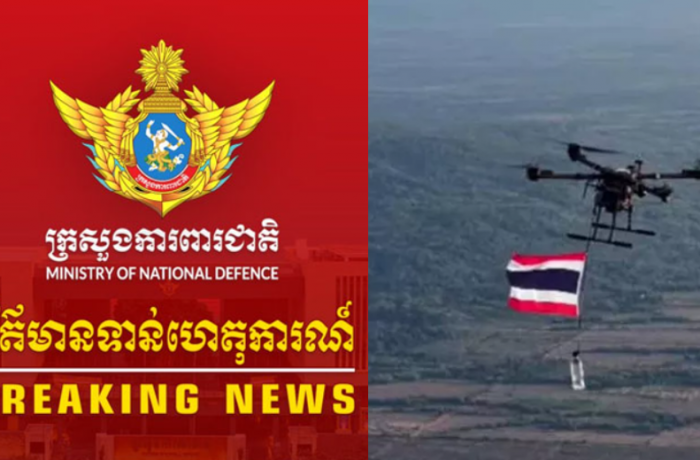
The border conflict between Thailand and Cambodia has entered its tenth day with no signs of resolution, despite international diplomatic efforts. Fighting that erupted on December 7 continues to intensify, with both nations engaging in not only military operations but also an aggressive propaganda war.
Despite claims of ceasefire attempts by U.S. President Donald Trump and mediation efforts by Malaysian Prime Minister Anwar Ibrahim, who currently heads ASEAN, hostilities persist along the disputed border region. The conflict has now created what Cambodian officials describe as their worst humanitarian crisis since the Khmer Rouge era.
Official casualty figures from both sides appear suspiciously low, with Thailand reporting 16 deaths including one civilian announced yesterday. Cambodia claims 15 civilian casualties but, remarkably, no military losses—a claim experts find dubious considering Thailand’s air force has conducted operations deep inside Cambodian territory.
The humanitarian impact tells a far more concerning story. Cambodian authorities report a staggering 423,000 people now living in emergency shelters across seven provinces: Preah Vihear, Oddar Meanchey, Banteay Meanchey, Battambang, Pursat, Koh Kong, and Siem Reap. The scale of displacement has prompted Cambodian Prime Minister Hun Manet and his wife Pich Chanmony to mobilize scout guides nationwide to grow vegetables for feeding evacuees.
Diplomatic tensions continue to escalate through contradictory narratives. Thai foreign ministry spokeswoman Maratee Nalita Andamo placed responsibility on Cambodia, stating, “As the aggressor onto Thai territory, Cambodia must announce the ceasefire first.” She urged Phnom Penh to cooperate “sincerely” in demining operations along the border.
Cambodia has countered with accusations that Thailand’s military dropped cluster munitions in the conflict zone. Phnom Penh has formally complained to Laos, the current chair of the 2008 Convention against the Use of Cluster Munitions, seeking international intervention. Meanwhile, Cambodian media portrays the conflict as an aggression by Thailand’s superior military forces against their smaller neighbor.
Further complicating matters, Thai media reports have suggested Russian mercenaries might be supporting Cambodian forces—claims promptly denied by Russian embassies in both capitals. Russia maintains it has “friendly relations” with both countries and supports peaceful resolution of the border dispute.
The conflict reveals stark differences in how each government is managing public perception. Cambodia emphasizes the humanitarian emergency, while Thailand’s government—led by Prime Minister Anutin Charnvirakul, who faces early elections on February 8—projects an image of normalcy despite the border crisis.
The Bangkok Post recently highlighted data from Thailand’s Department of Foreign Trade showing that “Despite the closure of border crossings with Cambodia since July, the value of Thai exports in the first 10 months of this year grew by 13% year-on-year.” Similarly, Thailand’s Ministry of Tourism reported no cancellations by travelers planning to visit major tourist destinations like Phuket, Chiang Mai, and other popular provinces.
The border dispute between these Southeast Asian neighbors has historical roots dating back decades, with territorial claims over ancient temple complexes and surrounding lands. Previous flare-ups occurred in 2008 and 2011 but were eventually contained through diplomatic channels and ASEAN intervention.
The current conflict represents a significant escalation in both military engagement and humanitarian impact. With hundreds of thousands displaced and accusations of serious violations of international humanitarian law, the situation threatens regional stability while testing ASEAN’s conflict resolution mechanisms.
As neighboring countries watch with growing concern, the conflict’s resolution may depend on whether international diplomatic pressure can overcome domestic political considerations driving the continued hostilities on both sides.
Fact Checker
Verify the accuracy of this article using The Disinformation Commission analysis and real-time sources.

7 Comments
The conflicting casualty reports from each side suggest there is a lot of misinformation and spin going on. It’s important to get a clear, unbiased picture of what’s really happening on the ground to understand the full scale of this crisis.
Agreed. Independent verification of the facts will be crucial to finding a lasting solution. Relying solely on government narratives risks further escalating the conflict.
It’s troubling to see this border dispute spiral into such a serious humanitarian crisis. I hope regional leaders can act quickly to broker a ceasefire and open up channels for peaceful dialogue between Cambodia and Thailand.
This conflict appears to be a complex propaganda battle between Cambodia and Thailand. It’s concerning to see the humanitarian crisis unfolding, with potentially underreported casualties on both sides. I hope diplomatic efforts can find a peaceful resolution soon.
This seems like a classic case of the fog of war, with both sides making questionable claims about casualties and the overall situation. Impartial monitoring and reporting will be essential to getting to the truth.
The humanitarian toll of this conflict is deeply concerning. Civilians should never bear the brunt of geopolitical tensions. All parties must prioritize de-escalation and delivering urgent aid to affected populations.
Territorial disputes are often inflamed by nationalist rhetoric and propaganda. I hope cooler heads can prevail and the two countries find a diplomatic path forward that protects the interests of their people.