


Listen to the article
Bulgarian Man’s Image Used in Russian Disinformation Campaign Despite Being Very Much Alive
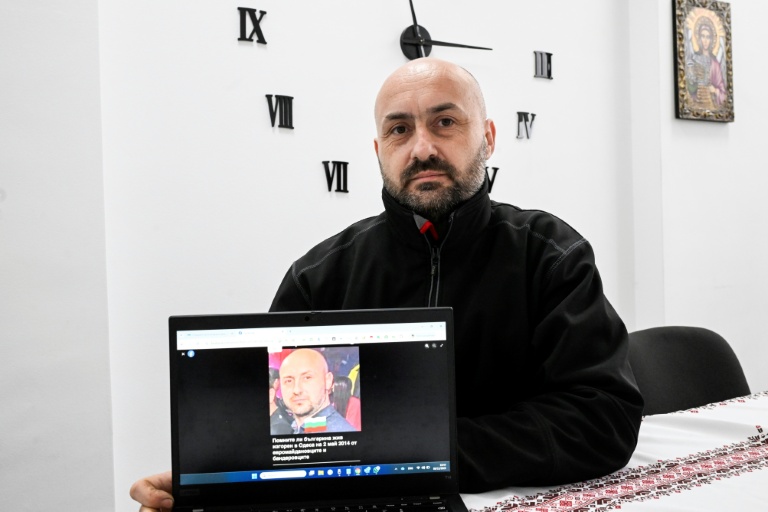
For nearly a decade, Bulgarian mechanic Nikolay Gentchev has faced an unusual question from acquaintances: “You’re not dead, are you?” The bizarre inquiry stems from his photograph being repeatedly published on pro-Russian websites with a false claim that he was burned alive by Ukrainian protesters in Odesa in 2014.
“When they published my photo for the first time, my friends called me to ask if I was alive,” Gentchev told AFP. The 42-year-old resident of Kazanlak, central Bulgaria, has a simple response to these inquiries: “I’ve never been to Odesa or Ukraine.”
Despite his repeated attempts since 2017 to correct the record, the fabricated story and his image continue to circulate on social media and in certain Bulgarian media outlets. The false narrative resurfaced again in late November in a Facebook post shared thousands of times, which asked, “Do you remember the Bulgarian burned alive in Odesa on May 2, 2014 by people from Euromaidan and the Banderites?”
The disinformation exploits real events—deadly clashes between pro-Russian and pro-Ukrainian activists in the Black Sea port city that resulted in over 40 deaths, primarily in a fire at the Trade Unions House where pro-Russian protesters had barricaded themselves.
Nikola Tulechki, a disinformation expert at data analysis company Data for Good, explains that “The Odesa fire story is often used to portray Ukrainians as enemies of Bulgarians,” forming part of the Kremlin’s broader strategy to paint Ukrainians as Nazis. “It fits into Russia’s broader narrative about the ‘liberation’ of Ukraine from a fascist regime,” he added—one of the justifications Vladimir Putin used when launching his invasion in 2022.
Bulgaria, a former Soviet satellite where communist nostalgia remains strong, provides fertile ground for Russian propaganda despite the country’s membership in NATO and the European Union. Tulechki notes that Russian disinformation is pervasive in Bulgarian society, propagated by politicians, influencers, and even in school history textbooks.
“Russian propaganda plays on extremely low levels of trust in Bulgarian society, a shared past, and geographic and cultural proximity to Russia,” Tulechki said. This influence extends to Bulgaria’s political and economic discourse, including debates about the country’s recent adoption of the euro on January 1.
Ironically, while being a victim of Russian disinformation, Gentchev himself shares pro-Kremlin content on social media and has expressed skepticism about Ukraine’s position in the conflict. Rather than expressing anger at Russian propagandists, he appears ambivalent about the misuse of his image.
“Let’s say they made a mistake, that the algorithm confused people,” Gentchev said. “I have recovered, though it was really tough.”
Gentchev’s hometown of Kazanlak is known for its arms factories and rose oil production. The region’s largest weapons factory currently supplies ammunition largely to the Ukrainian army, creating a complex local economic reality that intersects with geopolitical tensions.
When asked about the human toll in Ukraine, Gentchev expressed skepticism about media reports: “I don’t know, I wasn’t there, I didn’t see anything. You can’t trust journalists.”
The case illustrates the complex dynamics of disinformation in Eastern Europe, where historical ties with Russia, current geopolitical allegiances, and economic interests create a tangled web that influences public opinion. It also highlights how personal identities can be exploited and manipulated to advance political narratives in conflict zones, even as the affected individuals themselves may hold contradictory views about the very conflicts in which they’ve been unwittingly enlisted.
Fact Checker
Verify the accuracy of this article using The Disinformation Commission analysis and real-time sources.

12 Comments
This is a disturbing example of how the Kremlin’s propaganda machine can hijack an individual’s identity and use it to push a false narrative. Nikolay Gentchev’s experience highlights the urgent need for stronger protections against the misuse of personal data and images.
I applaud Gentchev’s persistence in trying to correct the record, but it’s disheartening to see how difficult it is to combat these persistent falsehoods. This case underscores the critical importance of media literacy and fact-checking efforts to counter the spread of online disinformation.
Nikolay Gentchev is clearly a victim here, having his image repeatedly misused to spread disinformation. I commend him for continually trying to set the record straight, even in the face of this persistent false narrative.
The fact that this fabricated story has resurfaced on social media and in Bulgarian media outlets shows the insidious reach of Kremlin propaganda. It’s a sobering reminder of the challenges in combating the spread of online disinformation.
The repeated use of Nikolay Gentchev’s image in pro-Russian disinformation campaigns is a disturbing violation of his privacy and autonomy. He deserves to have his identity and life story respected, not exploited for political gain.
It’s disheartening to see how the Kremlin’s propaganda machine can latch onto a single photograph and twist it into a false narrative that persists for years. This case underscores the urgent need for robust fact-checking and media literacy efforts.
Nikolay Gentchev is an innocent victim caught in the crosshairs of Kremlin propaganda. His repeated attempts to set the record straight are commendable, but the resilience of this false narrative is a sobering reminder of the challenges in combating disinformation.
The exploitation of Gentchev’s image is a cynical manipulation of the truth. I hope this case receives widespread attention and that the responsible parties are held accountable for their role in spreading this disinformation.
This is a troubling case of the Kremlin’s disinformation tactics. Using an innocent person’s image to spread false narratives is a despicable abuse of propaganda. I hope Nikolay Gentchev can finally put this to rest and reclaim his identity.
It’s appalling that this false story has persisted for nearly a decade despite Gentchev’s efforts to correct the record. The Kremlin’s propaganda machine knows no bounds when it comes to distorting the truth.
This is a textbook example of how the Kremlin weaponizes information to sow discord and confusion. Using an ordinary Bulgarian citizen’s image to push a false narrative about the 2014 events in Odesa is a cynical manipulation of the truth.
I hope Nikolay Gentchev’s continued efforts to correct the record will eventually lead to this false story being permanently debunked and removed from circulation. But the resilience of Kremlin propaganda is concerning.