


Listen to the article
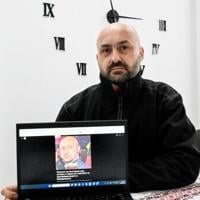
Bulgarian auto mechanic Teodor Georgiev has become an unlikely symbol of disinformation warfare as Russian propaganda outlets repeatedly report his death in Ukraine – despite the fact he has never set foot in the country.
Georgiev, who runs a modest repair shop in Bulgaria’s capital Sofia, first discovered he had been “killed” when friends called him in panic after seeing his photo in news reports claiming he was a foreign mercenary who died fighting for Ukraine.
“The first time it happened, I couldn’t believe it,” Georgiev told reporters during a recent interview at his workshop. “My phone wouldn’t stop ringing with people asking if I was alive. It was surreal to have to convince everyone I wasn’t dead.”
Russian state media and pro-Kremlin Telegram channels have used Georgiev’s image at least five times in the past 18 months, each time with a different name and elaborate backstory about his supposed military background and death on Ukrainian battlefields. Most recently, he was portrayed as “Fredrik Johansson,” a Swedish special forces veteran allegedly killed near Kharkiv.
The 43-year-old mechanic, who has no military training and has never traveled to Ukraine, believes his photograph was likely scraped from his social media profiles. Intelligence experts note this case demonstrates a common Russian disinformation tactic: repurposing real images with fabricated contexts to create false narratives about foreign fighters in Ukraine.
“What we’re seeing with Mr. Georgiev is a textbook example of how the Kremlin’s propaganda machine operates,” said Maria Avramova, a researcher at the Center for the Study of Democracy, a Bulgarian think tank. “They need to show their domestic audience that foreign mercenaries are fighting against Russia and being defeated, even if they have to completely fabricate these stories.”
Bulgarian authorities have confirmed they are investigating the misuse of Georgiev’s identity, though they acknowledge there is little they can do to prevent Russian media outlets from continuing the practice. The European Union’s East StratCom Task Force has documented Georgiev’s case among thousands of other disinformation incidents related to the war in Ukraine.
The psychological toll on Georgiev has been significant. After the third “death,” he closed his social media accounts and became more reclusive. Business at his auto repair shop suffered as some customers began questioning whether he had indeed been involved in the conflict.
“People look at me differently now. Some avoid me completely,” Georgiev said. “I’m just a mechanic trying to make a living. I’ve never held a gun in my life, yet somehow I keep dying in Ukraine.”
Media analysts point out that Georgiev’s case reveals the industrial scale of Russian wartime disinformation. The operation involves not just state media outlets but networks of Telegram channels, blogs, and social media accounts that amplify these false stories across multiple languages.
“The creativity and persistence in these campaigns is remarkable,” said Peter Kreko, director of Political Capital, a Budapest-based research institute. “They don’t simply create a fake story once – they recycle identities, create variations, and keep pushing the same narratives with different faces to reinforce their message about foreign fighters.”
For Ukraine, these fabrications serve a dual purpose in Russian propaganda: they suggest the Ukrainian military is reliant on foreign fighters rather than its own citizens, while simultaneously showing these foreigners being defeated, which boosts morale among Russian supporters.
The European Digital Media Observatory has urged platforms to improve their detection systems for this type of identity theft, which affects not just public figures but private citizens like Georgiev. However, the cross-border nature of these disinformation campaigns makes enforcement challenging.
As for Georgiev, he now keeps a folder of all the different identities he’s been assigned in Russian media, showing them to skeptical customers as proof of his innocence. His case has drawn attention from international media, bringing a spotlight to the human cost of propaganda warfare.
“Sometimes I joke that I should visit Ukraine just to see what all the fuss is about,” Georgiev said with a weary smile. “But honestly, I just want to be forgotten by these people and go back to fixing cars. Being repeatedly killed in a war I have nothing to do with wasn’t exactly in my life plans.”
Fact Checker
Verify the accuracy of this article using The Disinformation Commission analysis and real-time sources.

4 Comments
Targeting an innocent civilian like this is pretty despicable. Georgiev must be frustrated and confused to have his life disrupted by these false reports of his death. It speaks to the lengths the Kremlin will go to in spreading disinformation.
This just goes to show how pervasive and far-reaching Russian disinformation can be. Georgiev is an unlikely victim, but his story illustrates the real human impact of these propaganda tactics. It must be incredibly frustrating for him.
This is a fascinating story. It’s incredible how Russian propaganda can so easily spread misinformation and fabricate narratives, even using the image of an unsuspecting Bulgarian mechanic. I wonder what Georgiev thinks about being repeatedly targeted in this way.
The ease with which Russian state media and pro-Kremlin channels can manufacture these kinds of stories is really concerning. Georgiev seems like a regular guy just trying to run his auto repair shop, yet he’s been swept up in this propaganda war. I wonder if there’s any recourse for him.