


Listen to the article
Bulgarian Man Fights Russian Disinformation Despite Being Exploited as Propaganda Tool
For nearly a decade, Bulgarian mechanic Nikolay Gentchev has faced a peculiar question from friends and acquaintances: “You’re not dead, are you?”
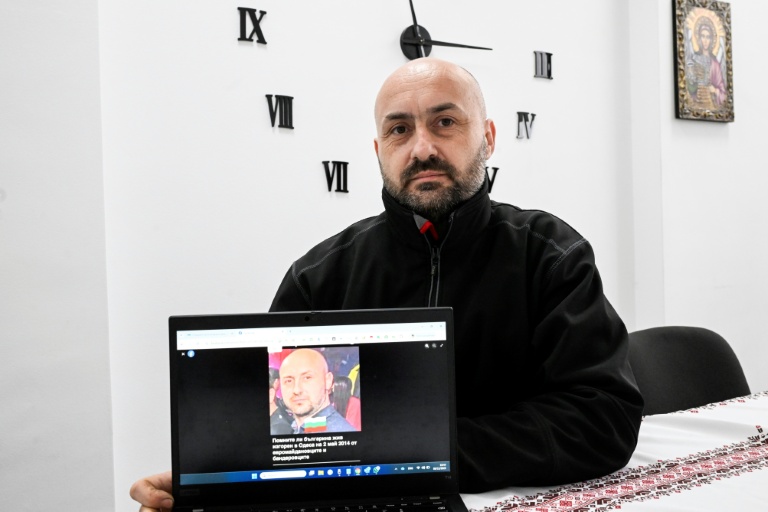
Since 2014, Gentchev’s photograph has been weaponized in pro-Russian media outlets, which falsely claim he was burned alive by Ukrainian protesters in Odesa following the ousting of Ukraine’s pro-Kremlin president that year.
“When they published my photo for the first time, my friends called me to ask if I was alive,” Gentchev told AFP. “I’ve never been to Odesa or Ukraine.”
Despite his repeated attempts to correct the record since 2017, the fabricated story continues to circulate on social media platforms and within sections of Bulgarian media. The falsehood resurfaced in late November in a widely-shared Facebook post asking: “Do you remember the Bulgarian burned alive in Odesa on May 2, 2014 by people from Euromaidan and the Banderites?”
The post references Ukraine’s 2014 protest movement and followers of Stepan Bandera, a controversial Ukrainian nationalist leader who collaborated with Nazi Germany against Soviet forces during World War II. Bandera has since become a symbol of Ukrainian independence for some, while being portrayed as a fascist by Russian propaganda.
This disinformation narrative stems from actual deadly clashes between pro-Russian and pro-Ukrainian activists in Odesa in May 2014, when over 40 people were killed—most in a fire at the Trade Unions House where pro-Russian protesters had barricaded themselves.
“The Odesa fire story is often used to portray Ukrainians as enemies of Bulgarians,” explained Nikola Tulechki, a disinformation expert at data analysis company Data for Good. “It fits into Russia’s broader narrative about the ‘liberation’ of Ukraine from a fascist regime,” he added, noting this was one of Vladimir Putin’s justifications for launching his invasion in 2022.
Bulgaria remains particularly vulnerable to Russian propaganda, according to experts. As a former Soviet satellite where communist nostalgia remains strong, the country provides fertile ground for anti-Western messaging despite its NATO and EU membership.
“Russian propaganda is everywhere in Bulgaria, repeated by politicians and influencers, and even in school history classes,” Tulechki said. This propaganda exploits “extremely low levels of trust in Bulgarian society, a shared past and geographic and cultural proximity to Russia.”
Ironically, being victimized by Russian disinformation hasn’t prevented Gentchev from sharing pro-Kremlin viewpoints on his own social media. The 42-year-old mechanic from Kazanlak—a town known for its arms manufacturing and rose oil production—maintains a Facebook profile where he regularly posts anti-European content and criticizes “corrupt politicians.”
Gentchev expressed opposition to Bulgaria’s recent adoption of the euro currency on January 1, calling it “really absurd” and claiming, “In reality, we don’t benefit from the EU.”
When questioned about the human toll of Russia’s war against Ukraine, Gentchev responded skeptically: “I don’t know, I wasn’t there, I didn’t see anything. You can’t trust journalists.”
His attitude toward the Russian propagandists who exploited his image is surprisingly forgiving. “Let’s say they made a mistake, that the algorithm confused people,” he suggested. “I have recovered, though it was really tough.”
Gentchev’s hometown of Kazanlak houses Bulgaria’s largest arms factory, which produces ammunition largely destined for Ukrainian forces fighting against the Russian invasion. When asked about this, Gentchev offered a pragmatic view: “If it’s not us producing these weapons, someone else will.”
This case highlights the complex dynamics of disinformation in Eastern Europe, where historical ties, cultural connections, and economic realities create a challenging environment for distinguishing fact from propaganda—even for those directly victimized by false information campaigns.
Fact Checker
Verify the accuracy of this article using The Disinformation Commission analysis and real-time sources.

10 Comments
It’s disheartening to see how this Bulgarian mechanic has been repeatedly targeted by Kremlin propaganda. The fact that these false claims continue to circulate, despite his efforts to refute them, speaks to the pervasive nature of disinformation. This case underscores the urgent need for improved media literacy and fact-checking efforts to combat the spread of such harmful narratives.
This is a disturbing case of how disinformation can have real, harmful impacts on people’s lives. The mechanic’s ordeal shows the tenacity of these false narratives and the difficulty of correcting the record once they take hold. More must be done to address the root causes of such propaganda and ensure that innocent individuals are not exploited in this way.
It’s appalling that this Bulgarian mechanic has been subjected to this kind of harassment and exploitation for nearly a decade. The fact that these false claims continue to circulate, even after he’s tried to set the record straight, is a testament to the challenge of combating disinformation. This case highlights the need for stronger safeguards and accountability measures to protect individuals from being used as pawns in propaganda campaigns.
It’s unfortunate that this Bulgarian mechanic has had to deal with this propaganda for nearly a decade. No one should have to endure such false accusations and the disruption to their life. I hope he’s able to finally put this issue to rest and that the outlets responsible are held accountable.
Agreed, this is a prime example of how misinformation can have real consequences for individuals. The mechanic shouldn’t have to repeatedly refute these baseless claims.
This is a troubling case of disinformation and propaganda targeting an innocent individual. It’s concerning to see how false narratives can spread and persist online, even when the person involved tries to correct the record. This highlights the need for better fact-checking and media literacy efforts.
This is a concerning example of how propaganda can be used to target and harass innocent individuals. The fact that the mechanic’s photo has been repeatedly used in this way, despite his efforts to correct the record, is deeply troubling. More needs to be done to address the spread of such misinformation and protect vulnerable people from these kinds of attacks.
It’s outrageous that this Bulgarian mechanic has had to deal with these false claims for nearly a decade. The fact that the story continues to resurface, despite his efforts to correct the record, speaks to the challenges of combating misinformation online. This case highlights the need for more robust fact-checking and accountability measures.
Absolutely. The persistence of this false narrative is troubling and shows how difficult it can be to counter disinformation once it takes hold. More needs to be done to hold the outlets responsible and protect individuals from being exploited in this way.
This story is a reminder of the insidious nature of disinformation campaigns. Using an innocent person’s photo to push a false narrative is a despicable tactic. I hope the authorities can take steps to address the spread of this propaganda and protect people like the mechanic from being unfairly targeted.