


Listen to the article
Prime Minister Kim Min-seok issued a stern warning against the spread of false information and black propaganda on Wednesday, calling such practices a significant threat to South Korea’s democratic foundations.
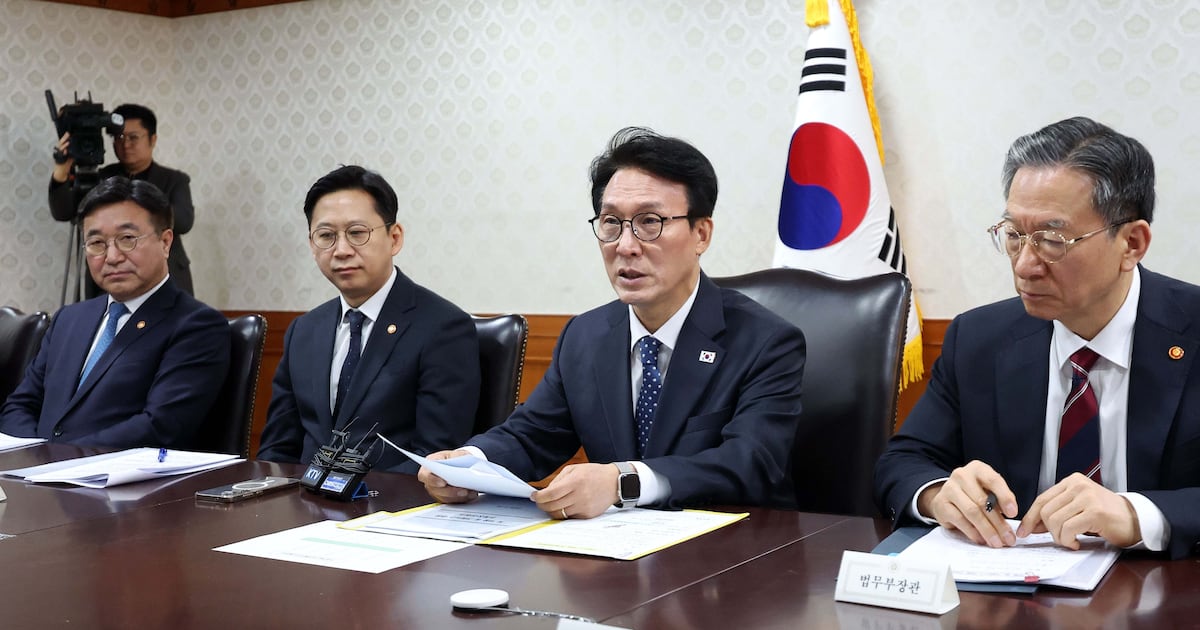
During an emergency cabinet meeting in Seoul, Kim emphasized that deliberate misinformation campaigns undermine public trust in institutions and can destabilize society, particularly ahead of the upcoming parliamentary elections.
“The proliferation of fake news represents one of the most pressing challenges facing our democracy today,” Kim stated. “When citizens cannot distinguish fact from fiction, the very fabric of our democratic system becomes compromised.”
The Prime Minister’s comments come amid growing concerns about organized disinformation efforts targeting government officials and policies. Intelligence agencies have reported a 37% increase in coordinated false information campaigns over the past six months, with many originating from anonymous sources on social media platforms.
Kim highlighted recent examples where fabricated stories about economic policies and diplomatic relations gained significant traction before being debunked. In one instance, a falsified government document suggesting dramatic tax increases circulated widely for three days before officials could effectively counter the narrative.
“The damage is often done before corrections can catch up,” noted Kim. “We must strengthen our early detection and rapid response mechanisms while preserving freedom of expression.”
The government announced a comprehensive three-point plan to address these concerns. First, a new rapid response team will be established within the Ministry of Information to identify and counter false information within hours of its appearance. Second, media literacy programs will be expanded in schools and community centers nationwide. Third, dialogue with major technology platforms will be intensified to improve content moderation without imposing censorship.
Political analysts view the Prime Minister’s strong stance as reflecting broader regional concerns about information integrity. Similar challenges have emerged across East Asia, with Japan and Taiwan also implementing measures to combat disinformation.
Professor Lee Ji-won from Seoul National University’s Department of Political Communication explained that South Korea faces unique vulnerabilities due to its high internet penetration rate and digital connectivity.
“With over 96% of the population online and one of the world’s highest smartphone usage rates, false information can spread at unprecedented speeds here,” Lee said. “The challenge for the government is finding the balance between countering harmful misinformation and respecting democratic freedoms.”
Opposition leaders cautiously welcomed the Prime Minister’s commitment to addressing fake news but expressed concerns about potential overreach. Democratic Party spokesperson Park Sun-hee emphasized that any countermeasures must be implemented with strict oversight.
“While we agree that harmful disinformation must be addressed, we will vigilantly ensure that these efforts don’t become tools to silence legitimate criticism or political opposition,” Park stated.
Business leaders have also voiced support for government efforts to maintain information integrity. The Korea Chamber of Commerce and Industry released a statement noting that market stability depends on reliable information flows, with fake news potentially disrupting investor confidence and consumer behavior.
The timing of the Prime Minister’s announcement is significant, coming just four months before national elections and amid increased geopolitical tensions in the region. Experts suggest that election periods typically see spikes in misleading content and that foreign actors sometimes exploit information environments during politically sensitive periods.
International observers from the Organization for Economic Cooperation and Development (OECD) have previously identified South Korea’s response to digital misinformation as a potential model for other democracies if implemented with appropriate safeguards.
The government plans to publish monthly transparency reports detailing actions taken against false information and will establish an independent review board comprising civil society representatives, legal experts, and media professionals to provide oversight of anti-misinformation efforts.
“Our goal is not to control information,” Prime Minister Kim concluded, “but to ensure that public discourse is based on facts rather than fabrications designed to manipulate and divide.”
Fact Checker
Verify the accuracy of this article using The Disinformation Commission analysis and real-time sources.

14 Comments
The 37% increase in coordinated false information campaigns is alarming. Disinformation can have far-reaching consequences for democratic institutions and public trust. Decisive action is needed.
Absolutely. Stronger regulations, enforcement, and public awareness campaigns are essential to counter the spread of malicious fake news.
Kudos to the Prime Minister for speaking out against these deceptive propaganda efforts. Maintaining a well-informed citizenry is crucial for the health of any democracy.
I agree. Robust fact-checking, media literacy education, and transparency around the sources of information should be top priorities.
The Prime Minister is right to call out these malicious attempts to mislead the public. Voters deserve accurate information to make informed decisions, not fabricated stories intended to manipulate them.
Absolutely. Protecting the integrity of the electoral process should be a key focus. Robust measures are needed to identify and remove coordinated disinformation campaigns.
I’m glad to see the government taking a firm stance against the proliferation of fake news. This is a complex challenge that requires a multi-pronged approach to address the root causes.
Agreed. Educating the public on media literacy and critical thinking skills is just as important as cracking down on the sources of disinformation.
This is deeply concerning. Fake news campaigns that sow disinformation and erode public trust are a serious threat to democracy. I hope the government takes strong action to crack down on these coordinated propaganda efforts.
Agreed, transparency and fact-based reporting are essential for a healthy democratic discourse. Tackling misinformation should be a top priority.
Fake news and black propaganda undermine the foundations of democracy. I’m glad to see the government taking this issue seriously and taking steps to protect the integrity of the electoral process.
Absolutely. Robust fact-checking, media literacy education, and transparency around the sources of information should be key components of the government’s response.
The Prime Minister is right to be concerned about the threat posed by fake news and coordinated disinformation campaigns. This is a complex challenge that requires a multi-faceted response.
Agreed. Addressing the underlying drivers of misinformation, such as social media algorithms and financial incentives, will be crucial in the long run.