


Listen to the article
Brazilian samba school’s Lula-themed Carnival parade sparks political controversy
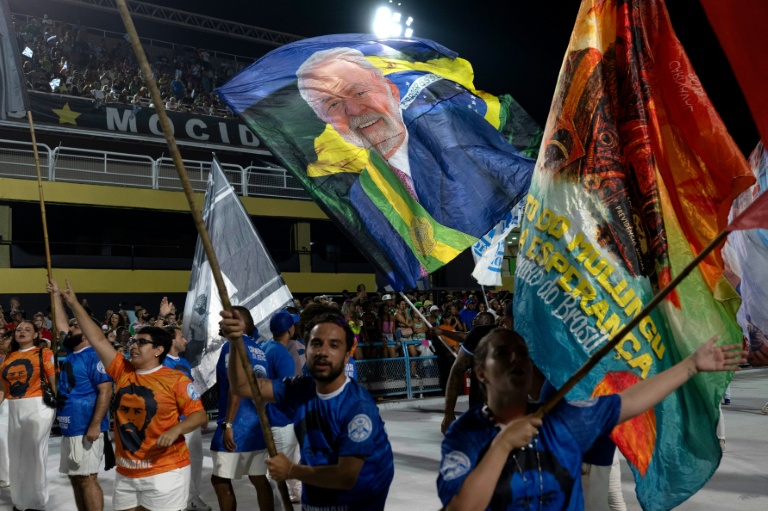
A prominent Rio de Janeiro samba school has ignited debate across Brazil with its decision to dedicate this year’s Carnival parade to President Luiz Inácio Lula da Silva, blurring the lines between cultural celebration and political messaging just months before crucial elections.
Academicos de Niteroi will lead the famed Sambodrome parades on February 15, launching the three-day competition that forms the pinnacle of Rio’s world-renowned Carnival festivities. The school’s preparation has drawn thousands of spectators who enthusiastically join in chanting “Ole, ole, ole, ola; Lula, Lula!” as dancers rehearse.
The tribute comes at a politically charged moment, with the 80-year-old leftist president seeking a fourth term in October’s elections. Opposition figures have swiftly condemned the parade as tantamount to campaign activity well before the official campaign period begins in August.
Hamilton Junior, a director at Academicos de Niteroi, defended the school’s theme against accusations of political campaigning. “This is not propaganda, it’s a tribute. Many people in our school were able to get an education thanks to the president’s public policies,” he told AFP.
The samba school’s song chronicles Lula’s journey from impoverished childhood in northeastern Pernambuco state to the presidency, highlighting his union activism and social welfare programs. Though avoiding direct mention of the upcoming election, the lyrics make thinly veiled references to contemporary political tensions.
References to “tariffs and sanctions” imposed by former US President Donald Trump against Brazil for prosecuting his ally, former President Jair Bolsonaro, appear alongside the politically charged phrase “no amnesty” – a direct criticism of efforts to reduce Bolsonaro’s 27-year prison sentence for alleged coup plotting. During rehearsals, a large screen displayed images mocking Bolsonaro, including depictions of him in prison uniform or with blood-stained hands, referencing his controversial handling of the COVID-19 pandemic.
Carnival parades traditionally feature elaborate floats, pulsating drum sections, and thousands of dancers adorned in dazzling, minimalist costumes. Each of the twelve competing samba schools selects a theme tied to Brazilian culture, history, or notable personalities. The spectacle attracts global attention and represents a significant cultural institution in Brazil.
The political dimensions of the parade have sparked concrete opposition. Center-right deputy Kim Kataguiri announced a lawsuit “to prevent your money from being used to finance an electoral campaign disguised as a ‘tribute.'” Legislators from the right-wing Partido Novo have petitioned Brazil’s Federal Court of Auditors to block the transfer of 1 million reais (approximately $180,000) in federal funding to the school – money that represents a standard allocation distributed equally among all twelve schools in the main parade.
The controversy highlights the increasing politicization of Brazilian cultural spaces as the country remains deeply divided following years of political turbulence. Lula, who reportedly wept when school leaders traveled to Brasilia to perform the tribute song for him, is expected to attend the parade as a spectator.
For many supporters, the tribute represents an authentic celebration of a leader who transformed Brazilian society. “They’re being brave, innovative,” said Adriano Santos, a 43-year-old social worker from Rio’s Rocinha favela, while watching a rehearsal. “There will be those who like it and those who don’t, but I believe this parade will represent Brazil.”
As Carnival approaches, the controversy shows no signs of abating, reflecting the deeply polarized political landscape of Latin America’s largest democracy as it heads toward another consequential election.
Fact Checker
Verify the accuracy of this article using The Disinformation Commission analysis and real-time sources.

13 Comments
Carnival is a time-honored Brazilian tradition, but this Lula tribute does seem to blur the lines into overt political campaigning. Curious to see how voters respond.
Lula’s supporters seem to be enthusiastically embracing this Carnival parade tribute, but the opposition’s accusations of political campaigning do carry some weight. Tricky balance to strike.
It will be fascinating to see how this plays out and whether it moves the needle at all for Lula ahead of the elections.
I can see both sides of this debate – Carnival is a beloved cultural tradition, but the Lula theme does seem to cross the line into overt political messaging. Curious to see the public reaction.
The Lula-themed Carnival parade is certainly generating a lot of buzz, both positive and negative. It will be interesting to see if this energizes his base or alienates more moderate voters.
Blending politics and culture is always a delicate dance. Will be worth watching how this plays out in the lead-up to the elections.
The Lula parade seems to be generating a lot of buzz and controversy. I can understand both sides – it’s a long-standing cultural tradition, but the timing does feel a bit politically charged.
Blending politics and carnival is a bold move. Will be interesting to see how it impacts voter sentiment in the lead up to the elections.
Interesting to see the blurring of politics and carnival in Brazil. Wonder how voters will respond to this Lula-themed parade – will it be seen as creative cultural expression or overt campaigning?
It’s a fine line between cultural celebration and political messaging. Curious to see how the debate around this unfolds leading up to the elections.
Carnival is all about vibrant cultural expression, but injecting overt political themes so close to an election does feel a bit heavy-handed. Will be curious to see how Brazilians respond.
The Lula-themed Carnival parade is certainly a bold move. I can understand the argument that it’s just cultural expression, but the timing does feel a bit politically charged. Will be interesting to see the public reaction.
It’s a fine line between celebrating culture and engaging in political messaging. Curious to see how this plays out in the lead-up to the elections.