


Listen to the article
In a strongly worded rebuttal, the Bangladesh Nationalist Party has dismissed allegations from Jamaat-e-Islami claiming it struck a deal with India to regain political power, calling the accusations “total propaganda” without factual basis.
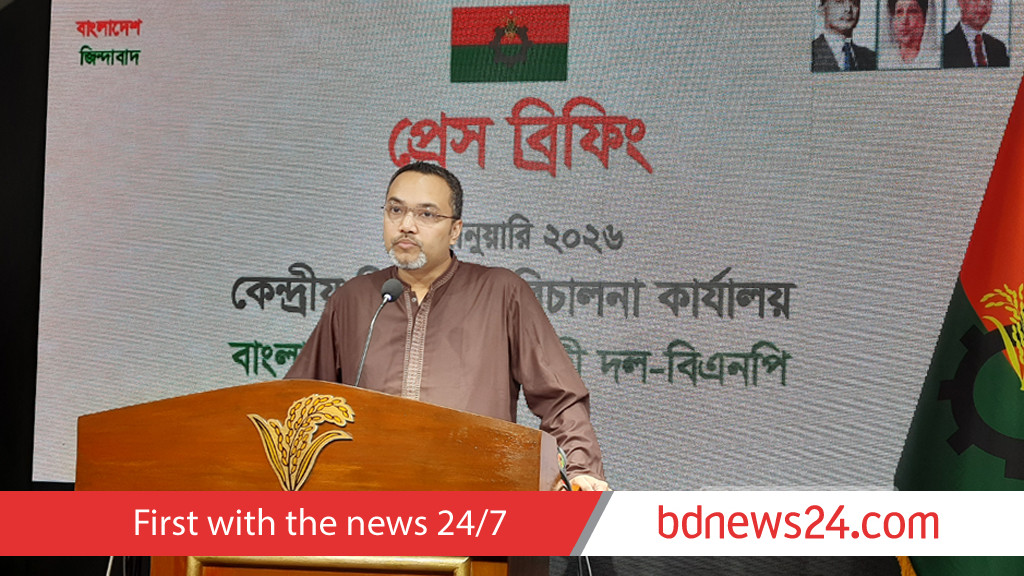
The denial came during a press conference held Saturday at the BNP chairperson’s office in Dhaka’s Gulshan area, where Mahdi Amin, spokesperson for the party’s Central Election Steering Committee, addressed reporters.
“BNP’s politics means pro-Bangladesh politics,” Amin stated, emphasizing that the accusations lacked evidence and were either politically motivated or stemmed from ignorance about the party’s stance.
The controversy erupted following comments made by Jamaat-e-Islami deputy chief Syed Abdullah Md Taher at a rally in Cumilla on Friday. Taher accused an unnamed political party of “once again reaching a compromise” with India to return to power and “selling Bangladesh in the process.” He warned that the country’s citizens, including 40 million young voters, would not tolerate such arrangements.
Amin countered by highlighting the BNP’s track record of defending national interests, citing the party’s protests against border killings and advocacy for Bangladesh’s fair share of water from the Teesta and Padma rivers. These actions, he argued, demonstrate the party’s commitment to protecting Bangladesh’s sovereignty.
The spokesperson also emphasized that party leader Tarique Rahman’s political vision centers on national interest, sovereignty, and citizen empowerment—principles that stand in contrast to the collaboration with foreign powers alleged by Jamaat-e-Islami.
This exchange reveals growing tensions between the two opposition forces at a critical moment in Bangladesh’s political landscape. The BNP and Jamaat-e-Islami have historically maintained a complex relationship, sometimes working as allies against the ruling Awami League while also competing for similar voter bases.
Political analysts note that such public disagreements could potentially undermine opposition unity at a time when consolidated efforts might be necessary to challenge the incumbent government effectively. The accusations also highlight the persistent influence of India-Bangladesh relations as a sensitive political issue in the country’s domestic politics.
During the same press conference, Amin addressed another matter of public concern, warning citizens about fraudsters demanding money in exchange for “Family Cards” and “Farmer Cards.” He clarified that while these initiatives are part of the BNP’s policy platform—designed to empower women and support the agricultural sector—they would be implemented free of charge if the party forms the next government.
“If anyone asks for money for these cards, please inform the party or contact law-enforcing agencies immediately,” Amin advised the public.
In an effort to strengthen public engagement ahead of elections, the BNP has launched new communication channels, including an election hotline at 16543 and a WhatsApp service at 01806977577. According to Amin, these services aim to provide citizens with information on election rules, collect voter complaints, and foster a more transparent electoral environment.
“Many people have already utilized these services to resolve various election-related issues,” Amin noted, signaling the party’s commitment to improving its outreach efforts.
The exchange between the BNP and Jamaat-e-Islami occurs against the backdrop of Bangladesh’s complex political environment, where questions of sovereignty, international relations, and domestic governance continue to shape public discourse ahead of anticipated elections.
Fact Checker
Verify the accuracy of this article using The Disinformation Commission analysis and real-time sources.

16 Comments
This looks like a classic case of political mudslinging, with both sides trying to gain the upper hand. However, the public deserves a more substantive debate on the merits of the claims, rather than just partisan rhetoric.
Well said. Robust political discourse is important, but it needs to be grounded in facts and a genuine attempt to address the concerns of the citizenry.
The allegations made by Jamaat-e-Islami raise valid concerns that the BNP should address directly, rather than simply dismissing them as propaganda. Transparency and a willingness to engage with the public on these issues would go a long way in building trust.
Agreed. Robust political debate and a commitment to the truth are essential for a well-functioning democracy. Both sides should strive to move the conversation in a more constructive direction.
Interesting political maneuvering going on here. It’s important to get the facts straight on these kinds of allegations, rather than letting unsubstantiated claims take hold. Curious to see how this plays out.
Yes, accusations of this nature require solid evidence. Dismissing them as mere ‘propaganda’ without addressing the core concerns would not be constructive.
The BNP’s defense of its ‘pro-Bangladesh’ stance is admirable, but the specific allegations made by Jamaat-e-Islami cannot be simply dismissed as propaganda. A more comprehensive response addressing the core issues would be more constructive.
Exactly. A nuanced, evidence-based approach is needed to build public confidence and avoid further polarization on this sensitive political issue.
This political dispute highlights the importance of transparency and accountability in the democratic process. Both sides should be prepared to substantiate their claims and engage in a meaningful dialogue to address the concerns of the public.
Well said. Constructive political discourse, grounded in facts and a genuine commitment to the national interest, is crucial for a healthy democracy.
The BNP’s assertion of ‘pro-Bangladesh politics’ is noteworthy, but the specific allegations made by Jamaat-e-Islami need to be addressed more directly. Dismissing them as mere propaganda may not be enough to quell public concerns.
Agreed. Transparency and a willingness to engage with the issues raised, rather than just refuting them, would go a long way in building public trust.
This appears to be a politically charged dispute, with both sides making claims and counterclaims. It would be helpful to see a neutral, fact-based analysis to better understand the underlying issues at play.
Absolutely. Independent scrutiny and verification of the claims from all sides is essential to get to the truth of the matter and avoid further polarization.
The BNP seems to be taking a firm stance in defending its nationalist credentials. However, the Jamaat-e-Islami’s allegations, while unproven, do warrant a more substantive response to reassure the public.
I agree. The BNP needs to transparently address the concerns raised, rather than simply labeling them as propaganda. Transparency is key in these sensitive political matters.