


Listen to the article
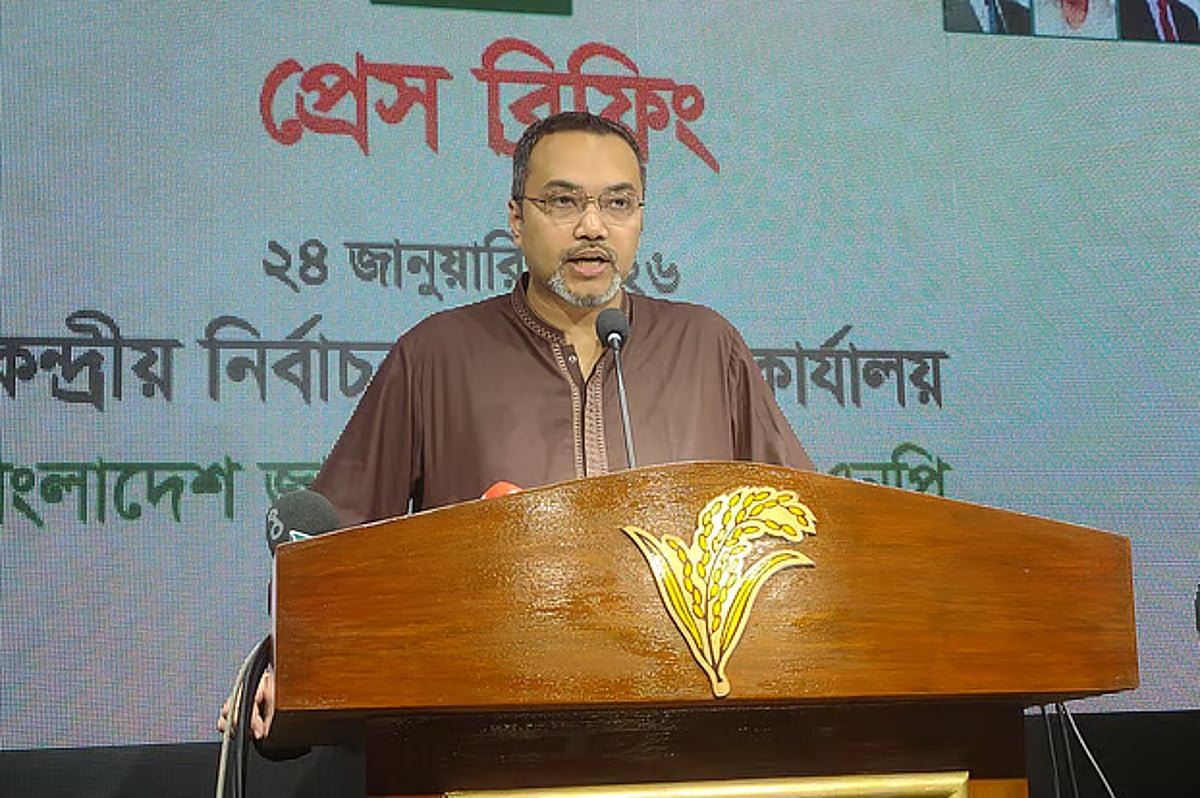
In a strong rebuttal against recent allegations, BNP spokesperson Mahdi Amin has categorically denied reports of any deal between the Bangladesh Nationalist Party and India, calling the claims baseless and politically motivated.
“The information that is being claimed to have appeared in the media has no minimum basis or truth. Therefore, we consider it a tactic to create political controversy or propaganda,” Amin stated. He suggested that confusion around these false claims might stem from the “ignorance of the leader involved,” though he did not specify which leader he was referring to.
The controversy emerged following statements made by Jamaat leader Syed Abdullah Mohammad Taher at an election rally in Cumilla’s Chauddagram upazila last Thursday. During the rally in the Chufua area of Kalikapur union, Taher alleged that India’s Anandabazar newspaper had published a report claiming that a rival political party had entered into a three-point agreement with India. He further suggested that the unnamed party had not issued any denial of these allegations.
Political tensions in Bangladesh have been escalating in recent months ahead of anticipated elections, with various parties exchanging accusations in an increasingly polarized environment. The BNP, one of Bangladesh’s two major political parties, has frequently positioned itself as a defender of national sovereignty in its political messaging.
The allegations touch on a sensitive issue in Bangladesh’s political landscape, where relations with neighboring India often become a contentious topic during election seasons. Historically, political parties have accused each other of compromising national interests in dealings with the regional power, making such allegations particularly potent in campaign rhetoric.
In his statement, Mahdi Amin emphasized the nationalist credentials of his party, asserting that “BNP’s politics is inherently pro-Bangladesh.” He specifically highlighted the role of party leader Tarique Rahman, stating that under his leadership, “BNP’s politics is founded on putting Bangladesh’s interests, sovereignty, and the empowerment of its people first.”
Tarique Rahman, son of BNP founder and former president Ziaur Rahman, has been living in exile in London since 2008. Despite his absence from Bangladesh, he maintains significant influence over party affairs and policy directions.
Amin also framed the BNP’s political aspirations in terms of fostering “a people’s uprising” aimed at “establishing positive politics.” He insisted that in this vision, “There is no place there for propaganda, political tactics, or misgovernance.”
The exchange highlights the continuing relevance of India-Bangladesh relations as a political flashpoint in Bangladeshi domestic politics. With a shared border spanning over 4,000 kilometers, historical ties dating back to Bangladesh’s 1971 independence, and significant economic and cultural connections, India’s role and influence in Bangladesh remains a complex and often divisive issue.
Political analysts note that allegations of foreign influence or “deals” with neighboring countries are common tactics in South Asian political discourse, particularly during election periods. Such claims often aim to question opponents’ patriotism and commitment to national interests.
As Bangladesh moves closer to its next general election, political rhetoric is likely to intensify further, with parties attempting to position themselves as the true defenders of national sovereignty and interests.
Fact Checker
Verify the accuracy of this article using The Disinformation Commission analysis and real-time sources.

10 Comments
This appears to be a complex issue with political maneuvering on multiple sides. I would caution against jumping to conclusions without clear, verified information. Maintaining impartiality and seeking the truth should be the priority.
Allegations of secret international deals are always controversial. I’m curious to learn more about the context and motivations behind these claims. Careful analysis of the evidence from all perspectives will be important to understand what’s really going on.
Agreed. Geopolitical maneuvering can be murky, so it’s crucial that journalists and analysts dig deep to uncover the facts, rather than amplifying partisan narratives.
The timing of these allegations, just before anticipated elections, raises questions about potential political motivations. It will be important for independent observers to scrutinize the claims and evidence objectively, without being swayed by rhetoric from either side.
This story highlights the challenges of maintaining transparency and trust in the political process, especially during heated election seasons. I hope both BNP and Jamaat will focus on substantive policy discussions rather than trading accusations.
Well said. Voters deserve a clear picture of each party’s vision and agenda, not a mudslinging match. Responsible leadership means rising above partisan squabbles.
Interesting claims about a potential political deal between BNP and India. I’d like to see more concrete evidence before drawing any conclusions. Allegations of propaganda from both sides suggest there may be more to this story than meets the eye.
I agree, transparency and factual reporting are key here. Claims of a secret deal should be backed up with credible sources and documentation.
It’s concerning to see political tensions escalating ahead of elections in Bangladesh. Dismissing allegations as ‘propaganda’ doesn’t help build trust. All parties should focus on substantive policy debates rather than trading accusations.
You make a fair point. Stable democratic processes require open and honest discourse, not inflammatory rhetoric. Voters deserve to make informed choices based on facts, not rumors.