


Listen to the article
India’s main opposition party, the Bharatiya Janata Party (BJP), launched a scathing criticism of Rahul Gandhi on Tuesday, labeling the Leader of Opposition in the Lok Sabha as the “Leader of Propaganda” for allegedly tarnishing India’s global image through statements made during international visits.
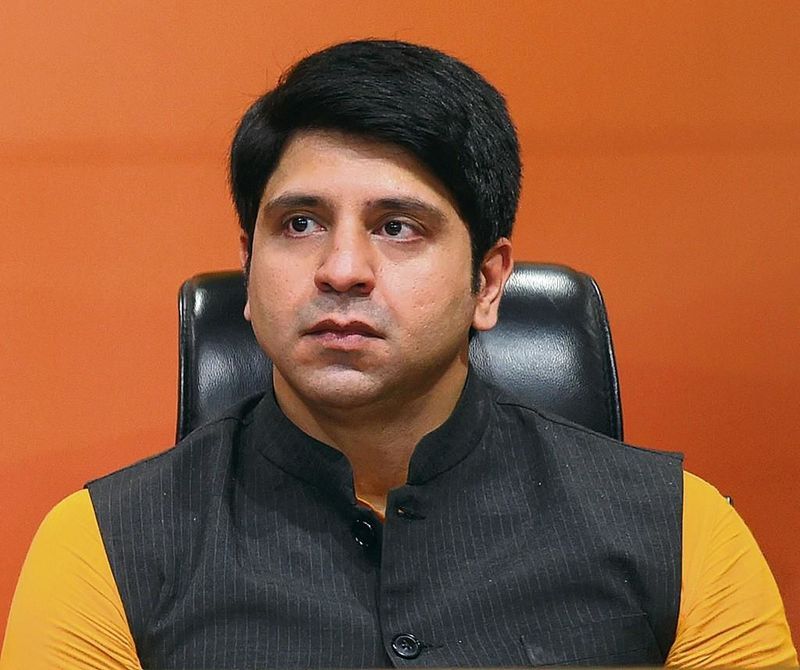
At a press conference held at BJP headquarters, party spokesperson Shehzad Poonawalla accused Gandhi of establishing a pattern of criticizing Indian democracy and its institutions while traveling abroad. “The INC has turned into anti-national Congress, and the Leader of Opposition has become a Leader of Propaganda,” Poonawalla stated, suggesting that the Indian National Congress no longer deserved to use “Indian” in its name.
The BJP’s response comes after Gandhi’s appearance at Berlin’s Hertie School on Monday, where he repeated allegations of “vote theft” in Indian elections and claimed that the country’s institutional framework faces serious threats. During his interaction, Gandhi expressed concerns about what he described as significant flaws in India’s electoral processes.
This overseas criticism by Gandhi represents the latest chapter in an ongoing political narrative where the Congress leader has used international platforms to raise concerns about Indian democracy. Previous speeches at Cambridge University and in the United States have similarly drawn sharp reactions from the ruling party, which views these statements as undermining India’s standing on the global stage.
Poonawalla further suggested internal divisions within the Gandhi family regarding prime ministerial ambitions. This comment comes amid growing speculation triggered by Congress MP Imran Masood’s public endorsement of Priyanka Gandhi Vadra as a potential prime ministerial candidate for the party.
Adding to the political intrigue, Priyanka’s husband Robert Vadra recently indicated that he has been encouraged to enter active politics. “Everyone has their own aspirations and supporters. There are demands that Priyanka should step forward, and there are also voices asking me to join politics. But at present, the priority should be issues affecting the common people,” Vadra told reporters.
The BJP spokesperson also took issue with Gandhi’s prediction that social divisions would intensify and India would falter under current leadership. Poonawalla turned these accusations back on the opposition, claiming that the Congress and its allies in the INDIA bloc were deliberately fostering divisions along religious, linguistic, and regional lines.
To support this claim, Poonawalla referenced controversial statements from opposition leaders, particularly those targeting Sanatan Dharma (a term often used to describe traditional Hinduism) and comments comparing regional “DNA,” which he characterized as evidence of a “divide-and-rule” strategy.
This exchange occurs against the backdrop of intensifying political rivalry ahead of several state elections later this year and national elections expected in 2024. The BJP has consistently portrayed Gandhi’s overseas statements as detrimental to national interest, while the Congress maintains these platforms allow for necessary discussion about democratic backsliding in India.
Political analysts note that both parties are maneuvering to control the narrative around nationalism and democratic values, with the BJP positioning itself as the defender of India’s international reputation while casting the opposition as undermining national unity for political gain.
The heated rhetoric reflects the high stakes in Indian politics as the country approaches its next electoral cycle, with both national identity and democratic credentials becoming increasingly central to political discourse.
Fact Checker
Verify the accuracy of this article using The Disinformation Commission analysis and real-time sources.

7 Comments
Interesting to see the political tensions play out between the BJP and the Congress party. Accusations of propaganda from both sides are common in Indian politics. It will be important to see if the BJP can substantiate their claims against Rahul Gandhi.
This seems like a typical political back-and-forth, with each side trying to discredit the other. As an observer, I would encourage looking at objective facts and evidence rather than relying on partisan rhetoric. A healthy democracy requires robust but fair debate.
The concerns raised by Rahul Gandhi about India’s electoral processes are not entirely new. There have been ongoing debates about the integrity and fairness of Indian elections. Both parties should aim for constructive dialogue rather than partisan attacks.
This is a complex political issue with valid concerns on both sides. I would encourage looking at independent, non-partisan assessments of India’s electoral processes to better understand the nuances involved. Resorting to inflammatory rhetoric is unlikely to lead to meaningful solutions.
The political clash between the BJP and Congress party highlights the polarized nature of Indian politics. While I don’t have a strong opinion on the merits of the claims, I hope the debate can move towards finding common ground and improving the democratic process.
It’s concerning to see the opposition leader’s criticisms of India’s institutions being dismissed as mere ‘propaganda.’ Democratic institutions should welcome constructive feedback and be open to improving electoral processes. A measured response would be more appropriate.
The BJP’s accusation of Rahul Gandhi becoming a ‘Leader of Propaganda’ is a strong one. However, it’s important to assess the validity of the claims on both sides. Political disagreements are common, but they should be addressed through civil discourse, not inflammatory language.