


Listen to the article
Congress President Accuses BJP of False Propaganda in ‘Gamosa’ Controversy
Congress President Mallikarjun Kharge has accused the Bharatiya Janata Party (BJP) of spreading “false propaganda” against Leader of Opposition Rahul Gandhi in the ongoing ‘Gamosa’ controversy, asserting that such attempts to tarnish Gandhi’s image will ultimately fail.
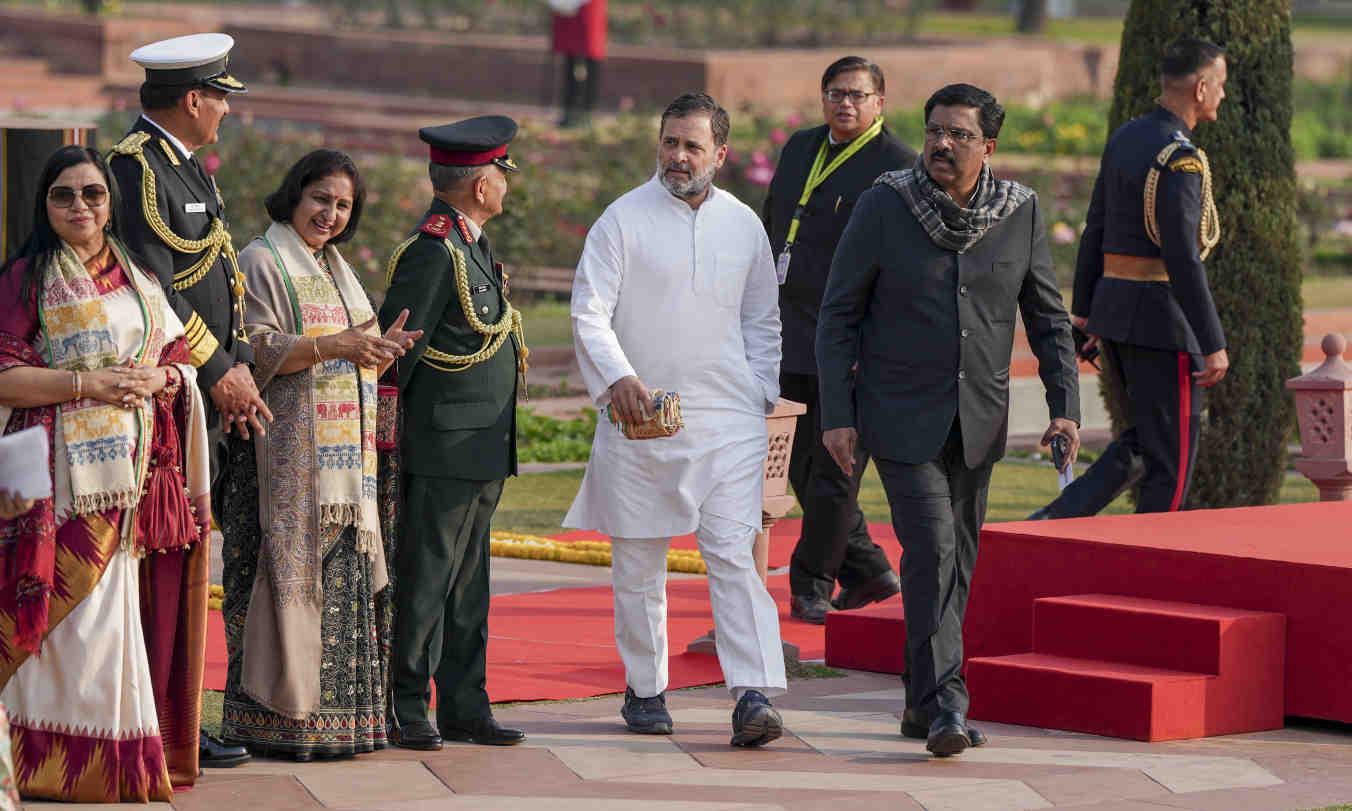
The controversy erupted following a Republic Day reception hosted by President Droupadi Murmu, where Gandhi allegedly did not wear the traditional Assamese ‘Gamosa’ (a decorative scarf) that was presented to all guests. The BJP seized on this apparent oversight, with party members claiming that Gandhi had deliberately disrespected the cultural heritage of Northeast India.
“This is a lie,” Kharge told PTI Videos, firmly refuting the accusations. “Even the Defence Minister was not wearing the ‘Gamosa’… the BJP president was also not wearing it. [Gandhi] was holding it in his hand after wearing it.”
Kharge emphasized that Gandhi had actively engaged with artists from the Northeast during the event. “Gandhi is the only leader who met all the Northeast artists, shook hands with them, and even hugged an artist from Arunachal,” he said, noting that photographic evidence of these interactions exists.
The ‘Gamosa’ holds deep cultural significance in Assam and other parts of Northeast India. Traditionally a white cloth with red borders and embroidered patterns, it is used to honor guests and dignitaries as a symbol of respect and appreciation. This cultural context has made the controversy particularly sensitive, as it touches on issues of regional identity and cultural recognition.
Assam Chief Minister Himanta Biswa Sarma has demanded an “unconditional apology” from Gandhi, calling his alleged actions “deeply insensitive and insulting to the people of the entire Northeast.” BJP national spokesperson Shehzad Poonawalla echoed these sentiments on social media, accusing Gandhi of insulting the Northeast and disrespecting President Murmu.
The Congress party has mounted a vigorous defense, with media and publicity department head Pawan Khera posting a photograph of Defense Minister Rajnath Singh also not wearing the ‘patka,’ questioning whether the Assam Chief Minister would demand an apology from Singh as well.
Kharge provided further context to the situation, explaining that both he and Gandhi had initially worn the ‘Gamosa’ but removed them while eating and placed them on the table – a practical consideration that has been omitted from the BJP’s criticism.
Beyond the ‘Gamosa’ dispute, Kharge raised another issue of protocol and respect at the Republic Day celebrations. He claimed that the Modi government deliberately insulted him and Gandhi by seating them in the third row during the Republic Day parade, “behind kids” and alongside ministers of state, positions that did not reflect their status as senior opposition leaders.
“They should apologize to us,” Kharge stated, suggesting that the seating arrangement was a calculated slight against the opposition leadership.
The controversy highlights the increasingly contentious relationship between India’s ruling party and the opposition as both sides prepare for upcoming electoral battles. Such cultural and protocol disputes often become proxies for broader political confrontations in India’s diverse and symbol-rich political landscape.
As the BJP continues to target Gandhi, who has emerged as one of the government’s most vocal critics, the Congress appears determined to counter what it characterizes as deliberate misinformation campaigns designed to undermine their leader’s public standing, particularly in politically sensitive regions like Northeast India.
The incident underscores the complex intersection of cultural symbols, political messaging, and regional sensitivities that continues to shape India’s vibrant but often polarized democratic discourse.
Fact Checker
Verify the accuracy of this article using The Disinformation Commission analysis and real-time sources.

10 Comments
This seems like a classic case of political mudslinging. It’s concerning to see false propaganda being used to tarnish someone’s reputation. I hope the truth comes out and the public can see through these tactics.
Agreed. Spreading misinformation for political gain is unethical and damaging to the democratic process. The public deserves facts, not fabrications.
I’m glad the Congress president is pushing back against these false claims. Attacking an opposition leader’s character through unsubstantiated propaganda is a concerning tactic that undermines democratic discourse.
Absolutely. Politicians should be held accountable for their actions, not subjected to smear campaigns. Maintaining integrity in the political process is crucial for a healthy democracy.
I appreciate Kharge’s forceful rebuttal of the BJP’s claims. Providing context and facts is important to counter misinformation. Hopefully, this will encourage more nuanced and honest political discourse.
Agreed. Calling out false propaganda directly is a necessary step to maintain accountability in the political sphere. Voters should be able to trust that their leaders are acting in good faith.
The BJP’s apparent attempt to create controversy over Rahul Gandhi’s attire is puzzling. If even the Defense Minister and BJP president were not wearing the ‘Gamosa’, then why single out Gandhi? This reeks of political pettiness.
Good point. Selectively criticizing one leader’s actions, while ignoring the same behavior from others, suggests a clear agenda rather than genuine concern for cultural protocol.
It’s telling that the BJP is focusing on this ‘Gamosa’ issue rather than substantive policy discussions. Distracting the public with manufactured controversies is a common tactic to deflect from real issues.
You’re right. This appears to be more about scoring political points than any genuine concern for cultural respect. The public deserves a more meaningful dialogue from their elected representatives.