


Listen to the article
Data Center Study Bill Raises Eyebrows with “Foreign Propaganda” Investigation Directive
A newly introduced bill in the Ohio legislature aimed at studying the impact of data centers has drawn attention for an unusual provision that directs investigators to examine whether opposition to these facilities stems from “foreign propaganda.”
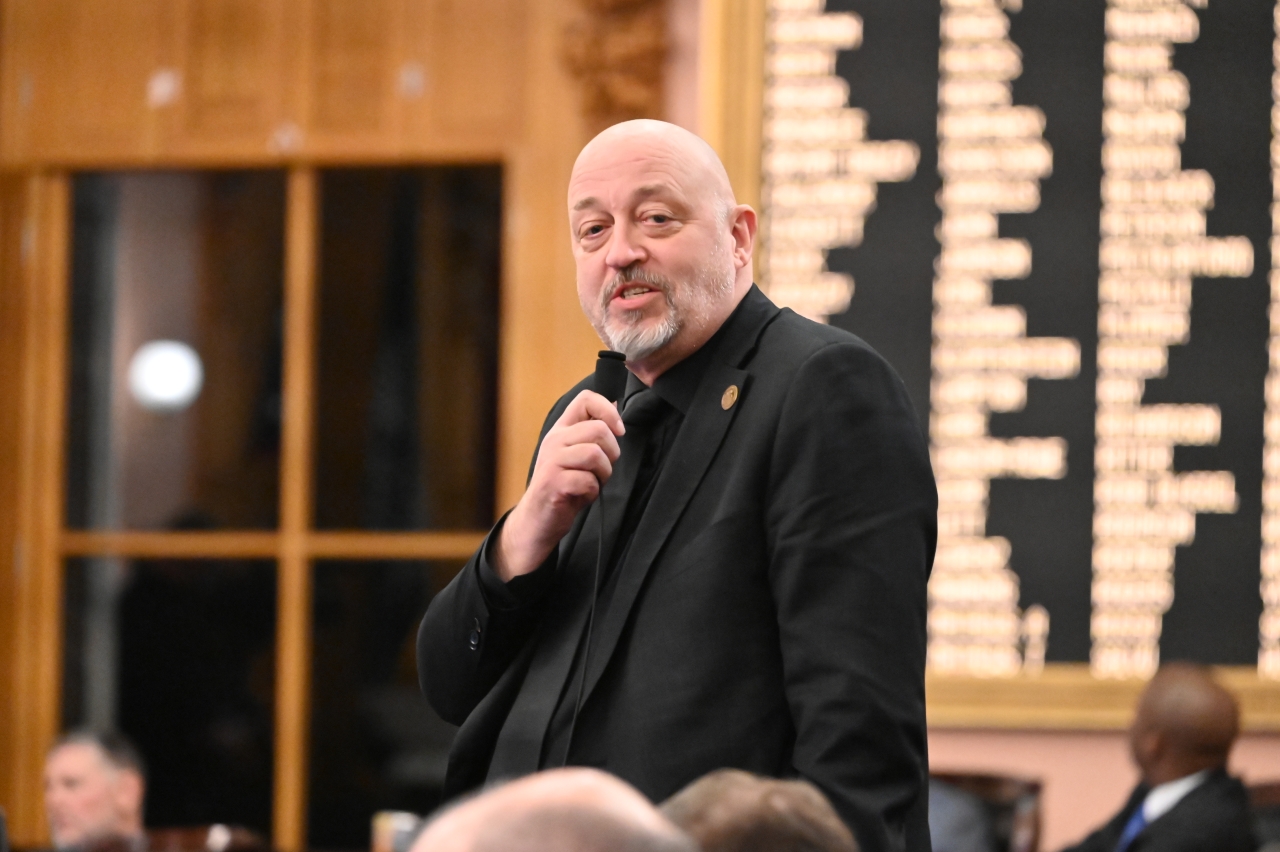
House Bill 646, co-sponsored by state Rep. Gary Click (R-Vickery), Rep. Kellie Deeter (R-Norwalk), and more than a dozen Republican colleagues, establishes a Data Center Study Commission within the Ohio Department of Development. While the commission’s primary focus includes legitimate concerns such as environmental impact, electrical grid effects, water usage, noise pollution, and farmland preservation, one directive stands apart from the rest.
The ninth study topic listed in Division (D)(9) requires the commission to investigate “reports of foreign propaganda intended to create opposition to data centers.” This provision appears without context or explanation, yet stands alongside environmental and infrastructure concerns as an equal area of study.
Critics worry this framing could delegitimize genuine local opposition. A Sandusky County farmer concerned about water resources or a homeowner worried about utility rates might find their objections potentially categorized alongside alleged foreign influence operations.
The legislation has been designated an “emergency measure,” allowing it to take effect immediately upon the governor’s signature rather than following the standard 90-day waiting period. The bill justifies this classification by stating that data centers are “proliferating rapidly in the absence of a specific regulatory structure” and that “verifiable information is urgently needed.”
Emergency declarations in Ohio typically address immediate public safety or health threats. The accelerated timeline raises questions, especially considering the commission would have up to six months to issue its final report—seemingly undercutting the urgency argument used to bypass standard legislative procedure.
The commission’s structure has also drawn scrutiny. Of its 13 members, nine would be appointed by Republican-controlled offices—three each from the Governor, House Speaker, and Senate President. The remaining four appointments would come from Democratic minority leaders, giving Republicans a 69 percent majority on what the bill describes as a neutral fact-finding body.
Commission members would receive $250 per meeting and would be required to hold at least four public meetings—two for general public testimony and two for invited expert testimony—before submitting findings and legislative recommendations.
The political context surrounding the bill adds another dimension to the controversy. Rep. Click represents the 88th House District, a predominantly rural area in northwest Ohio where agricultural concerns, water resources, and utility costs rank high among constituent priorities—the very issues the bill ostensibly aims to study.
The “foreign propaganda” provision introduces a framework not present elsewhere in the legislation. By directing the commission to investigate whether data center opposition may be foreign-influenced, the bill creates a mechanism that could potentially categorize community resistance as illegitimate regardless of its specific concerns.
This framing could benefit data center developers, who have faced increasing local opposition across Ohio communities regarding water consumption, farmland conversion, and electricity demands. As data centers continue to proliferate nationwide to support growing cloud computing and AI applications, similar tensions between tech development and rural preservation have emerged in multiple states.
Rep. Click’s office did not respond to requests for comment prior to publication.
The bill has been referred to the House Rules and Reference Committee, where it will undergo further review before potentially advancing through the legislative process.
Fact Checker
Verify the accuracy of this article using The Disinformation Commission analysis and real-time sources.

10 Comments
As someone who follows mining and energy issues, I’m curious to see how this plays out. Data centers are crucial infrastructure but can also disrupt local communities. Investigating potential foreign interference is reasonable, but shouldn’t overshadow the real concerns of Ohio residents.
Interesting that this bill directs the commission to investigate potential foreign propaganda behind data center opposition. I wonder what evidence there is to support that claim, and if it’s really the key issue here or if it’s being used to downplay genuine local concerns.
You raise a good point. Framing local opposition as foreign propaganda could be an attempt to discredit valid community concerns about the environmental and infrastructure impacts of data centers.
While data centers bring economic opportunities, their environmental footprint is significant. I hope the commission takes a balanced, evidence-based approach that addresses all stakeholder concerns, foreign or domestic, rather than prematurely labeling opposition as propaganda.
This seems like an unusual provision to include alongside more standard impact study topics. I’d be curious to know what specific intelligence or information led legislators to believe foreign actors are trying to influence the data center debate in Ohio.
Agreed, the foreign propaganda angle stands out as a bit of a stretch without clear justification. Local voices should be heard on the merits of the issues, not dismissed as being manipulated from abroad.
This is a complex issue with valid concerns on multiple sides. I hope the commission takes a thoughtful, fact-based approach that weighs economic, environmental, and community impacts thoroughly, without getting sidetracked by unproven foreign propaganda claims.
This is an interesting case study on the tensions between economic development and environmental/community impacts. I’ll be watching to see if the commission’s findings provide any clarity on the foreign propaganda claims or if they’re simply a political red herring.
The inclusion of that foreign propaganda directive raises some red flags. While I understand the desire to understand potential outside influence, it feels like an attempt to undermine legitimate local opposition. Hopefully the commission maintains objectivity on all the issues at hand.
Agreed, that part of the bill stands out as potentially problematic. Local voices should be the priority, not unsubstantiated claims of foreign manipulation.