


Listen to the article
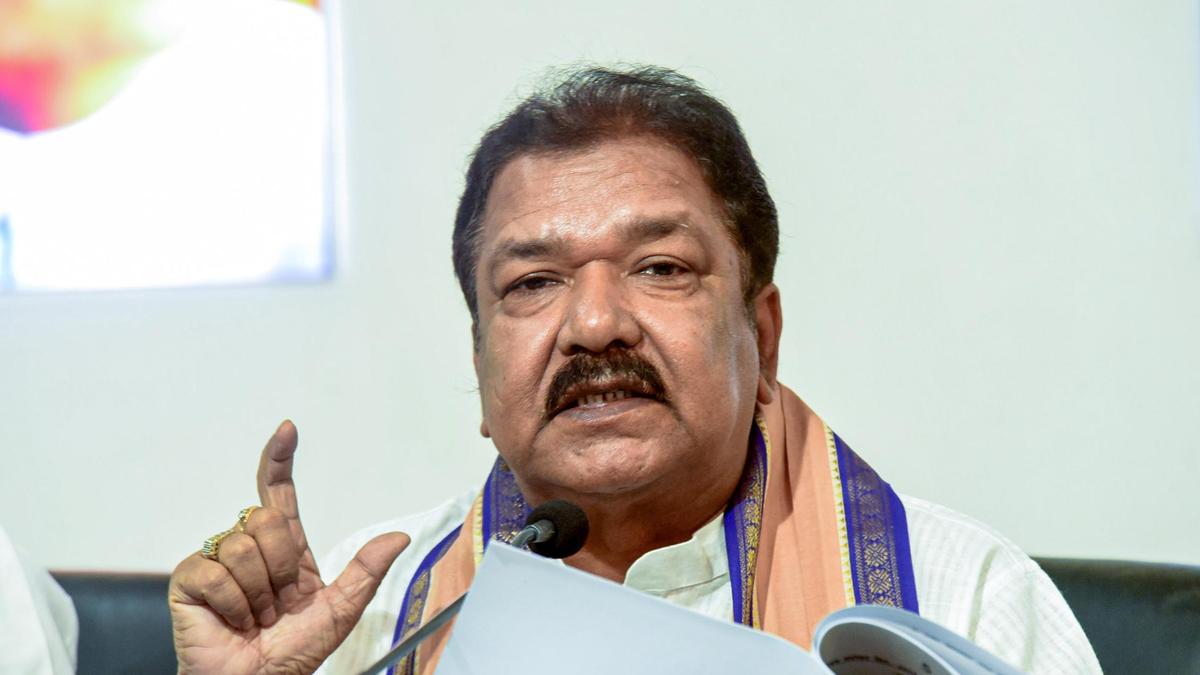
In a tense political standoff, Bihar Industries Minister Dilip Jaiswal has dismissed allegations of LPG cylinder shortages across the state, instead blaming the situation on “misleading propaganda” orchestrated by opposition Congress party members.
Speaking to reporters in Patna on Thursday, Jaiswal firmly rejected claims that Bihar faces any shortage of cooking gas. “This is a handiwork of Congress’s misleading propaganda, aimed at spreading fear in the minds of the people,” the minister stated, despite visible queues forming outside distribution outlets across the state.
The controversy comes amid reported LPG supply constraints that have affected multiple states across northern India, with the opposition claiming the situation has reached crisis proportions in several regions.
The Congress party has responded by staging demonstrations across Bihar, with state Congress president Rajesh Ram directly challenging the minister’s denial. “The Union government has completely failed to provide gas cylinders to people across the country,” Ram told reporters. “People are forced to stand in queues for hours for LPG cylinders. They are left with no option because the availability of cooking gas is running thin.”
Ram’s criticisms extended beyond the immediate supply issues to include a pointed reference to Prime Minister Narendra Modi’s flagship Pradhan Mantri Ujjwala Yojana, launched in 2016 to provide LPG connections to women from below poverty line households. “When Narendra Modi initiated the PM Ujjwala Yojana in 2016, he said that he could not bear to see smoke affecting the eyes of women. Today, as he fails to convince [U.S. President] Donald Trump and the Iranian regime to resolve the crisis, the LPG mismanagement has broken the back of the people,” the Congress leader asserted.
The situation appears particularly dire according to opposition claims, with Ram alleging that elderly citizens have died while waiting in lengthy queues in neighboring states including Punjab, Haryana, and Uttar Pradesh. “Still, the government is repeatedly saying there is no crisis. So, let the government explain why people are being forced to stand in queues,” he challenged.
Senior Congress leader Madan Mohan Jha further underscored the growing public concern, citing evidence of market disruption. “If the government claims there is no shortage at all, then what explains the long queues outside LPG distribution agencies? People are willing to pay five times the actual price of cylinders,” Jha stated.
The dispute highlights the growing tensions around essential commodity supplies in India’s third most populous state. Energy security has become an increasingly sensitive political issue in recent years, particularly as India navigates complex geopolitical relationships with major oil and gas producing nations.
Industry analysts note that LPG supply chains in India remain vulnerable to international market fluctuations and diplomatic tensions. The reference to negotiations with the U.S. and Iran points to the broader context of international sanctions and trade relationships affecting energy imports.
The Ujjwala scheme, mentioned by the Congress leader, has been one of the Modi government’s most publicized welfare initiatives, having provided over 80 million LPG connections nationwide since its inception. Any disruption to cooking gas supplies carries significant political implications, particularly in states like Bihar where a large percentage of the population has transitioned to cleaner cooking fuels under the program.
As the political rhetoric escalates, ordinary citizens continue to face uncertainty regarding essential cooking fuel supplies, caught between government assurances and their daily experiences of scarcity at distribution points across the state.
Fact Checker
Verify the accuracy of this article using The Disinformation Commission analysis and real-time sources.

14 Comments
Reliable energy access is a basic necessity, not a political football. I hope the government and opposition can put aside their differences and work together to ensure adequate and affordable LPG supply for the people of Bihar.
Agreed. Constructive dialogue and a shared commitment to serving the public interest should be the priority, not scoring political points.
Cooking gas supply issues can have serious implications for households, especially the most vulnerable. I hope the government and opposition can work together to swiftly address any real supply constraints and ease the burden on consumers.
That’s a fair point. Maintaining adequate LPG availability should be a priority, beyond partisan politics. Constructive dialogue is needed to find solutions.
The opposition’s claims of a ‘crisis’ may be exaggerated, but the minister’s outright denial also seems questionable. A balanced, data-driven assessment is needed to understand the ground realities and address any genuine supply gaps.
Well put. Avoiding political rhetoric and focusing on facts is crucial for finding practical solutions that benefit all citizens, regardless of their political affiliations.
The minister’s categorical denial of any shortages, despite visible queues, raises questions about the government’s grasp of the ground reality. Transparent communication and accountability are crucial for effective energy distribution.
Well said. Dismissing public concerns without addressing them directly undermines trust in the system. A more nuanced, solution-oriented approach would be more constructive.
The political tussle over LPG cylinder shortages in Bihar highlights the complexity of energy distribution challenges. It’s important to look at the facts objectively and find practical solutions, rather than resorting to partisan finger-pointing.
Agreed. Transparent and collaborative efforts are needed to ensure reliable energy access for all, regardless of political affiliations.
This political back-and-forth does little to help households struggling with LPG access. The focus should be on quickly identifying the root causes and implementing sustainable remedies, not scoring political points.
Absolutely. Putting people’s needs first, above partisan interests, is the only way to find a meaningful resolution to this issue.
Blaming the opposition for ‘propaganda’ doesn’t seem very productive. If there are genuine shortages, it’s important to acknowledge the problem and work to resolve it, rather than dismiss legitimate public concerns.
Exactly. Pointing fingers won’t help – a collaborative, evidence-based approach is needed to get to the root of the issue and ensure reliable LPG supply for all.