


Listen to the article
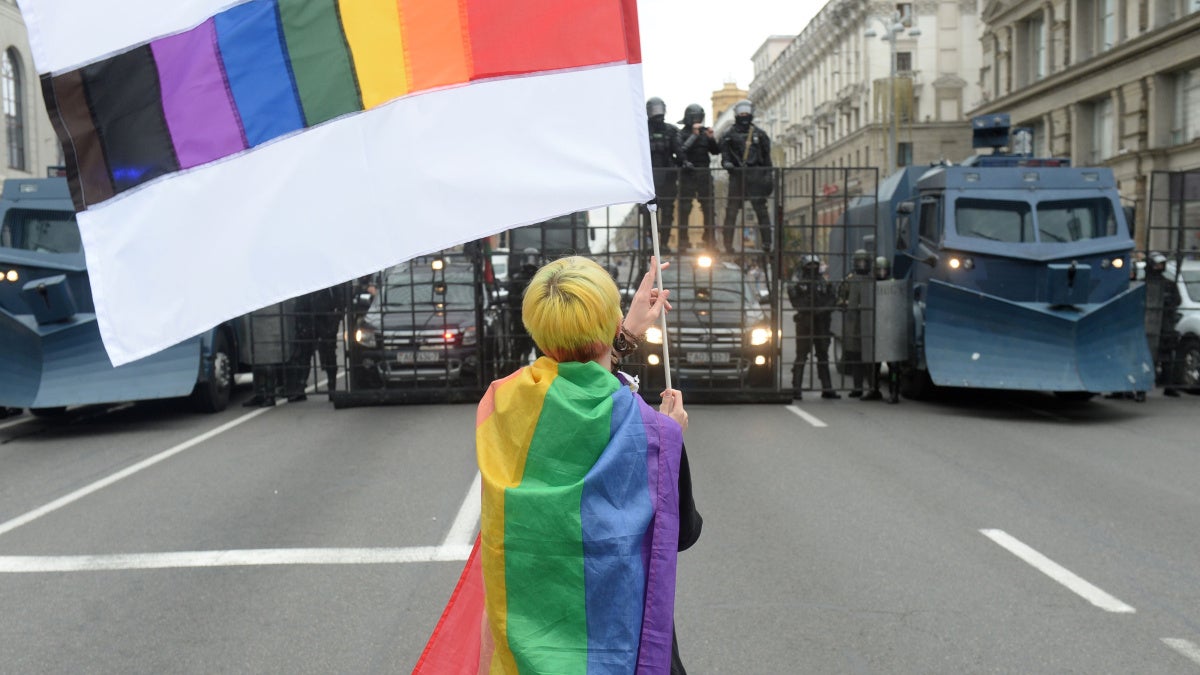
Belarus has enacted a new law banning the “propaganda” of same-sex relationships, gender reassignment, and childlessness, further aligning its legal framework with Russia’s approach toward minority groups and public discourse control.
On April 2, the Belarusian parliament adopted legislation that vaguely defines “propaganda” as the dissemination of “appealing” information “intended to influence citizens’ perceptions.” The law imposes administrative penalties, with individuals facing fines up to 20 base units (approximately $310) and legal entities up to 150 base units (about $2,320) for violations. Penalties increase substantially if the material is accessible to minors, potentially resulting in higher fines, community service, and detention.
The legislation represents a significant escalation in Belarus’s restrictions on free expression and LGBT rights. By creating deliberately unclear boundaries around lawful speech, the law establishes an environment where citizens must self-censor to avoid potential prosecution.
Notably, the ban extends beyond LGBT issues to include “childlessness,” effectively intruding into the personal autonomy and private life decisions of all Belarusian citizens. This broad approach gives authorities extensive discretion to control public discourse on matters ranging from family planning to sexuality.
Human rights advocates have expressed particular concern about the law’s intentional conflation of pedophilia with discussions about sexual orientation and gender identity. By grouping these disparate topics under the same regulatory framework, legislators have created a mechanism to stigmatize LGBT people by association with serious criminal conduct.
“This deliberate mixing of categories provides authorities with sweeping powers to silence not just activists, but journalists, educators, healthcare professionals, and ordinary citizens,” noted a regional rights monitor who requested anonymity due to safety concerns.
The latest restrictions build upon a series of increasingly repressive measures. Earlier this year, Belarusian authorities classified depictions of LGBT people as “pornography,” potentially exposing individuals to criminal liability. They also banned advertising and dissemination of cultural and educational content promoting LGBT relationships.
The trajectory closely mirrors developments in Russia, where similar “LGBT extremism” designations and propaganda bans have facilitated widespread crackdowns, including arrests, fines, and the forced closure of civil society organizations. These measures have also contributed to increased social stigma and violence against LGBT individuals.
Political analysts view Belarus’s legislative changes as part of a broader pattern of alignment with Russia’s socio-political model. Since the contested 2020 presidential election and subsequent protests, President Alexander Lukashenko’s government has intensified its crackdown on independent voices and civil society organizations.
“While authorities present this legislation as defending ‘traditional values,’ it’s actually part of a systematic effort to eliminate independent thought and civil society in Belarus,” said Maria Kulikovskaya, an Eastern European policy analyst at a European think tank. “It’s a multi-pronged approach to controlling the narrative on everything from politics to personal identities.”
The international community has largely condemned the legislation as contrary to Belarus’s human rights obligations. The European Union, which has already imposed multiple rounds of sanctions on Belarus for human rights violations, may consider further measures in response to these new restrictions.
For LGBT Belarusians and those who support them, the law represents another significant setback in an increasingly hostile environment. Many have already fled the country, joining the ranks of political dissidents and independent journalists seeking refuge abroad.
Human rights organizations are urging the international community to recognize the law not merely as discrimination against LGBT people, but as part of a broader assault on fundamental freedoms and civil society in Belarus.
Fact Checker
Verify the accuracy of this article using The Disinformation Commission analysis and real-time sources.

13 Comments
This is deeply concerning. Restricting free speech and personal freedoms under the guise of ‘propaganda’ control is a dangerous path that erodes fundamental civil liberties. I hope the people of Belarus can push back against this troubling legislation.
Agreed. Vague and overbroad laws like this are often weaponized to target minority groups and dissenting voices. It’s a disturbing trend we’ve seen in authoritarian regimes.
This new legislation in Belarus is very troubling. Framing the restriction of personal freedoms and minority rights as ‘propaganda control’ is a classic tactic used by authoritarian regimes to justify cracking down on civil liberties. I hope the international community condemns this move in the strongest possible terms.
Agreed. Criminalizing the dissemination of information on these topics is a severe infringement on freedom of expression. It’s a concerning erosion of civil liberties in Belarus that must be addressed.
This new law in Belarus is extremely worrying. Framing the restriction of personal freedoms and minority rights as ‘propaganda control’ is a tactic we’ve seen used by authoritarian regimes to justify cracking down on civil liberties. I hope the international community responds forcefully to this development.
Absolutely. Vague and overbroad laws like this are often weaponized to target minority groups and dissenting voices. It’s a disturbing trend that erodes the foundations of a free and open society.
The Belarusian government’s decision to ban the ‘propaganda’ of same-sex relationships, gender reassignment, and childlessness is deeply concerning. This appears to be a clear attempt to control public discourse and restrict personal freedoms under the guise of ‘propaganda’ control.
This new law in Belarus is very worrying. Framing the restriction of personal freedoms and minority rights as ‘propaganda control’ is a classic tactic of authoritarian regimes. I hope the international community condemns this move in the strongest possible terms.
The Belarusian government’s decision to ban the ‘propaganda’ of same-sex relationships, gender reassignment, and childlessness is a troubling development. This appears to be a clear attempt to control public discourse and restrict personal freedoms.
Absolutely. Criminalizing the dissemination of information on these topics is a severe infringement on freedom of expression. It’s a concerning erosion of civil liberties in Belarus.
The Belarusian government’s new law banning the ‘propaganda’ of same-sex relationships, gender reassignment, and childlessness is a grave infringement on fundamental freedoms. This is a concerning escalation of restrictions on free expression and LGBT rights.
I’m appalled to see Belarus following in Russia’s footsteps with this draconian legislation. Curtailing free speech and personal autonomy under the guise of ‘propaganda’ is a blatant attack on human rights. This is a deeply troubling development.
Agreed. Belarus is clearly aligning itself more closely with Russia’s repressive policies towards minority groups and civil society. This does not bode well for the future of democracy in the region.