


Listen to the article
As the United States approaches its 250th anniversary and Black History Month reaches its centennial milestone, the Birmingham Civil Rights Institute (BCRI) has unveiled an ambitious program lineup for February 2026, anchored by a groundbreaking exhibition examining the forces that shape historical narratives.
The centerpiece exhibition, “(The) Victors Write the Algorithm: Power, Propaganda, and the Making of American Memory,” will run from February 4 through February 28, 2026. This timely exploration sits at the intersection of Black history and broader American storytelling, investigating how power structures influence the narratives nations construct about themselves—and which truths are systematically excluded.
BCRI officials explain that the exhibition traces propaganda’s evolution from early printed materials through biased news coverage to today’s algorithm-driven digital platforms. The showcase examines the mechanisms through which narratives are built, distributed, and ultimately canonized as “truth,” while questioning who benefits from these selective histories.
“In moments of democratic stress and the active erasure of history, the question is never just what we remember but who gets to decide,” said Deborah V. Bowie, MPA, President and CEO of the Birmingham Civil Rights Institute. She emphasized that the exhibition aims to encourage visitors to think critically about narrative power and its tangible consequences in society.
“This exhibit challenges all of us to be critical thinkers and understand how narratives about people and their cultures shape not just how we see one another but how these institutionalized mental frameworks shape public policy,” Bowie added.
The physical installation will feature a diverse collection of archival materials, historical and contemporary media, and cultural artifacts that illustrate how Black Americans have been portrayed, misrepresented, or erased from dominant narratives—and importantly, how they have resisted these portrayals throughout history.
The timing of this exhibition carries particular significance, coinciding with both America’s semiquincentennial celebration and the hundredth anniversary of Black History Month. This convergence offers a unique opportunity to examine historical narrative-building at a moment of national reflection.
The exhibition arrives amid growing national debates about how American history is taught, documented, and preserved. Recent controversies surrounding curriculum restrictions in several states and disputes over monument removal have highlighted tensions about who controls historical narratives. BCRI’s programming directly addresses these contemporary concerns while grounding them in historical context.
Beyond the main exhibition, BCRI has organized an extensive calendar of supporting events throughout February 2026. The schedule includes the “Cellphone Time Capsule” supplementary exhibition, running concurrently with the main showcase, and a “State of the Algorithm” roundtable discussion focusing on propaganda, media, and technology scheduled for February 12.
Families can participate in the BCRI Signature Program’s “Community Of S.T.R.E.A.M.ers” children’s workshop on February 14, which will explore themes of media literacy and technology. Additional programming includes panel discussions presented by Prosper on February 17 and a “Mapping Black Migration” event organized in collaboration with the City of Birmingham’s Office of Public Affairs on February 26.
The month concludes with a Smithsonian Institute-sponsored workshop for middle school students titled “Cellphone Unseen Connections,” which will examine the technological and social implications of modern communications devices.
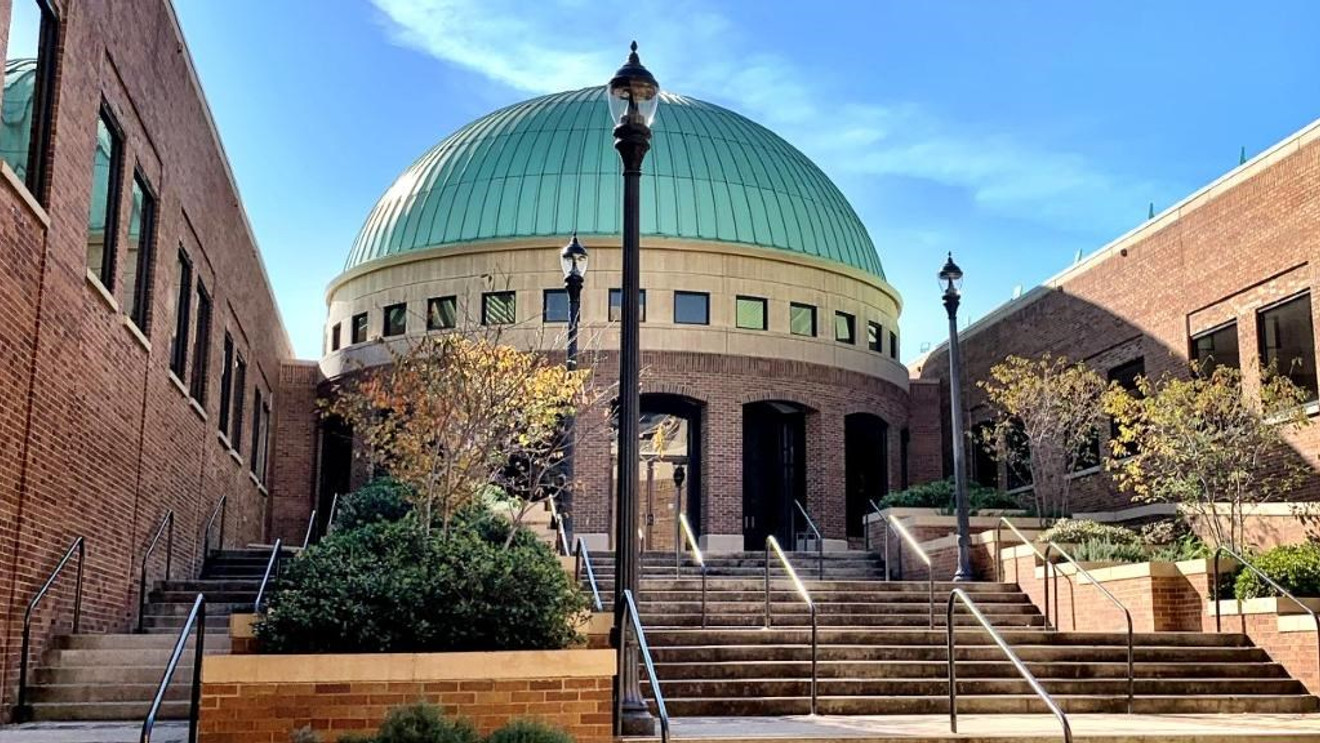
Birmingham’s role as host for this exhibition carries historical weight. As a pivotal location in the civil rights movement, the city provides a resonant backdrop for discussions about narrative control and historical memory. The BCRI itself, established in 1992, has long served as a cultural and educational center dedicated to documenting the struggle for civil rights in Birmingham and beyond.
Through this comprehensive programming, BCRI aims to provide visitors with tools to navigate an increasingly complex information landscape while recognizing how historical patterns of narrative control continue to shape contemporary discourse.
Fact Checker
Verify the accuracy of this article using The Disinformation Commission analysis and real-time sources.

12 Comments
In an era of increasing political polarization, an exhibition that examines the role of propaganda and biased narratives is a welcome and necessary contribution. I look forward to seeing how the BCRI approaches this complex subject.
Fascinating to see the BCRI tackling this complex topic. Exploring the intersection of Black history and broader American storytelling is an important and necessary undertaking.
Examining the evolution of propaganda from print to digital platforms is a valuable approach. Uncovering the mechanisms behind the canonization of selective histories is key to promoting more inclusive and truthful accounts.
Agreed. Questioning who benefits from these exclusionary narratives is a vital part of this investigation.
In times of democratic stress, the erasure of historical truths is a concerning trend. This exhibition seems well-positioned to shed light on these issues and encourage a more nuanced understanding of America’s past.
The idea of “the active erasure of history” is a concerning one. This exhibition seems poised to explore how certain historical truths have been systematically suppressed or distorted, and the implications for our understanding of the past.
Kudos to the BCRI for taking on this challenging and important topic. Shedding light on the power dynamics behind historical storytelling is a vital service to the public.
This exhibition sounds like an important and timely exploration of how power structures shape historical narratives. It’s crucial to understand how propaganda and biased media have influenced America’s collective memory and national identity.
The title “(The) Victors Write the Algorithm” is a provocative and thought-provoking framing of this exhibition. I’m curious to see how it delves into the role of digital platforms in shaping historical narratives.
As the US approaches its 250th anniversary, this exhibition’s timing couldn’t be more relevant. Unpacking the forces that have influenced America’s collective memory is crucial for building a more inclusive and truthful national identity.
Well said. Confronting the biases and exclusions embedded in historical narratives is essential for progress and understanding.
As a student of history, I’m intrigued by the BCRI’s focus on the mechanisms behind the construction and distribution of historical narratives. Unraveling these processes is crucial for promoting a more nuanced and inclusive collective memory.