


Listen to the article
In a dramatic turn of events at the Winter Olympics, Ukrainian skeleton racer Vladyslav Heraskevych was barred from competition just minutes before his event after refusing to remove a “helmet of memory” honoring Ukraine’s war dead. The decision has sparked international controversy and raised questions about the International Olympic Committee’s stance on political expressions.
Heraskevych, 27, who was considered a medal contender and potentially Ukraine’s first Winter Olympic medalist, accused the IOC of inadvertently supporting Russian propaganda through their decision. “This situation plays along with Russian propaganda and it does not look good. I believe it’s a terrible mistake that was made by the IOC,” he told journalists after learning of his disqualification.
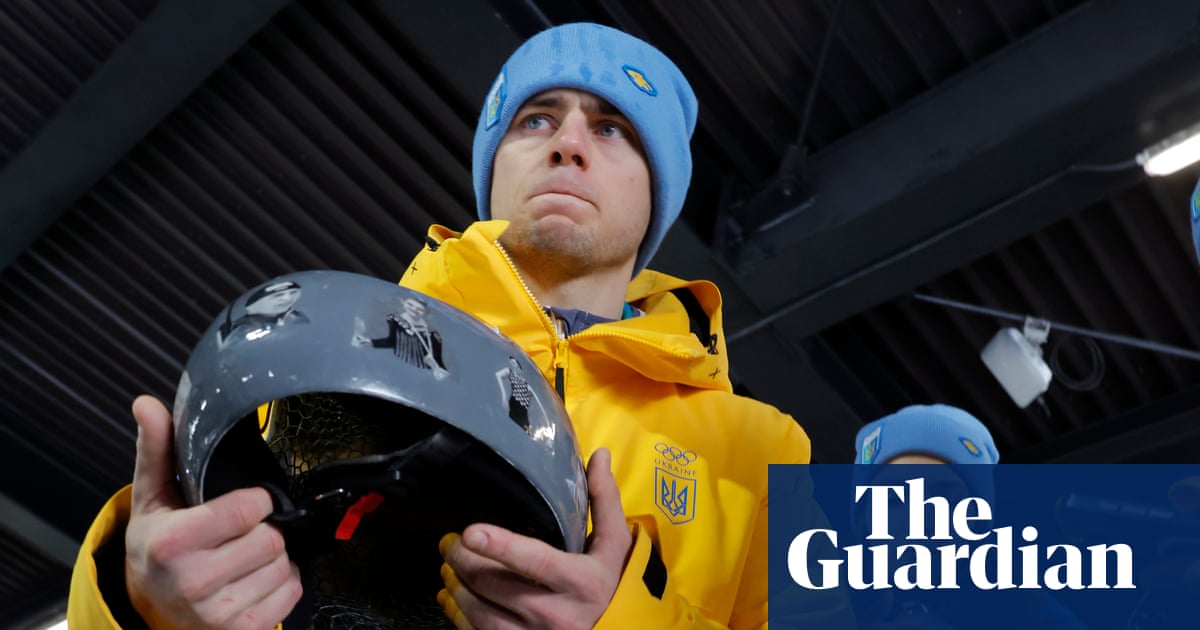
The helmet at the center of the controversy displays images of 24 Ukrainian athletes and children killed during Russia’s invasion of Ukraine. While the IOC permitted Heraskevych to wear it during his six practice runs, they ruled it violated Olympic regulations prohibiting political statements on the field of play.
A last-minute meeting Thursday morning between Heraskevych and IOC President Kirsty Coventry failed to resolve the impasse. Witnesses reported that Coventry left the meeting in tears after being unable to persuade the Ukrainian athlete to compete without his commemorative helmet.
“I was at many funerals when I was in Ukraine and it’s a truly terrible tragedy that young people at such a young age were killed for nothing,” Heraskevych explained. “Because of their sacrifice, we’re able to be here today, and I want to honor them, and I want to honor their families.”
The IOC maintained they had attempted compromise, offering Heraskevych the rare opportunity to wear a black armband during competition. Coventry defended the organization’s position, stating: “Athletes asked us to keep certain areas – the field of play, the podium and the Olympic Village – safe zones.”
She emphasized that the rule protects athletes from potential pressure from their governments to display political messages, adding: “No one – no one, especially me – is disagreeing with the messaging. The messaging is a powerful message. It’s a message of remembrance. It’s a message of memory. But this is literally about the rules and the regulations.”
Following widespread criticism, the IOC later reversed its decision to strip Heraskevych of his accreditation, allowing him to remain at the Games, though still unable to compete. The committee cited the “respectful conversation” between the athlete and Coventry as the reason for this partial concession.
Ukrainian President Volodymyr Zelensky swiftly condemned the IOC’s decision, stating it played “into the hands of aggressors.” He praised Heraskevych’s courage, declaring it “worth more than any medal,” while highlighting Russia’s history of military actions during Olympic periods, including the 2008 war against Georgia, the 2014 occupation of Crimea, and the 2022 full-scale invasion of Ukraine.
IOC spokesperson Mark Adams defended the organization’s neutrality during a press conference in Milan. “There are 130 conflicts going on in the world and the organization could not take a stand against countries involved in war,” he said, suggesting that doing so would dramatically reduce Olympic participation. “Because once you start, as a sporting organization, taking stands against wars and conflicts there is no end.”
Heraskevych has since appealed to the Court of Arbitration for Sport (CAS), arguing that the IOC’s exclusion was “disproportionate, unsupported by any technical or safety violation and causes irreparable sporting harm to him.” He has requested immediate reinstatement or, alternatively, a CAS-supervised official run pending the court’s final decision, though experts consider his chances of success slim.
The incident has reignited debate about the line between remembrance and political statement in international sports, particularly in the context of ongoing global conflicts.
Fact Checker
Verify the accuracy of this article using The Disinformation Commission analysis and real-time sources.

7 Comments
The IOC needs to carefully balance their political neutrality with allowing athletes to peacefully express support for their country and its people. Banning this athlete’s helmet seems like an overly restrictive interpretation of the rules.
I agree, the IOC should be more flexible and understanding in these complex geopolitical situations. Barring athletes from honoring their fallen countrymen is a bad look and could further damage the IOC’s reputation.
This is a complex situation, but the IOC’s decision to bar the Ukrainian athlete over his helmet honoring fallen Ukrainians seems heavy-handed and risks playing into Russian propaganda efforts. They need to be more nuanced in their approach to political expressions at the Olympics.
This raises important questions about the IOC’s stance on political expressions at the Olympics. While maintaining neutrality is important, the decision to disqualify the Ukrainian athlete over his helmet seems heavy-handed and risks fueling Russian propaganda.
This is a troubling situation that raises valid concerns about the IOC’s handling of political expressions at the Olympics. The decision to bar the Ukrainian athlete over his helmet honoring fallen Ukrainians seems misguided and could play into Russian propaganda efforts.
The IOC’s decision to bar the Ukrainian athlete over his helmet honoring fallen Ukrainians is concerning. They need to strike a better balance between political neutrality and allowing athletes to make peaceful gestures of support for their country.
Agreed, the IOC should reconsider their stance on this issue. Disqualifying an athlete over a helmet with images of fallen countrymen seems overly restrictive and could backfire by drawing more attention to the political tensions.