


Listen to the article
Bangladesh’s diplomatic mission in New Delhi has expressed strong concerns over a protest held outside its High Commission on December 20, calling the incident “highly regrettable” and rejecting what it described as “misleading propaganda” surrounding the event.
According to a statement from Bangladesh’s Ministry of Foreign Affairs, the demonstration caused significant distress among diplomatic personnel working at the mission. Officials in Dhaka noted that the High Commission had received no prior notification about the organized protest, which contributed to the sense of alarm among staff members.
While acknowledging India’s commitment to ensuring the safety of diplomatic missions on its soil, Bangladesh firmly pushed back against claims that appeared to characterize a recent attack on a Hindu citizen in Bangladesh as part of a broader pattern of violence targeting minority communities.
“The incident involving a Hindu citizen is being thoroughly investigated, with several suspects already in custody,” a Bangladeshi official familiar with the matter explained. “It would be inappropriate to frame this isolated case as indicative of intercommunal tensions, which remain stable across the country.”
The protest comes amid occasional flare-ups of religious tensions in the region, which often reverberate across the India-Bangladesh relationship. Bangladesh, a predominantly Muslim nation of 170 million people, has a Hindu minority comprising approximately 8% of its population. How both governments handle incidents involving religious communities has historically been a sensitive aspect of bilateral relations.
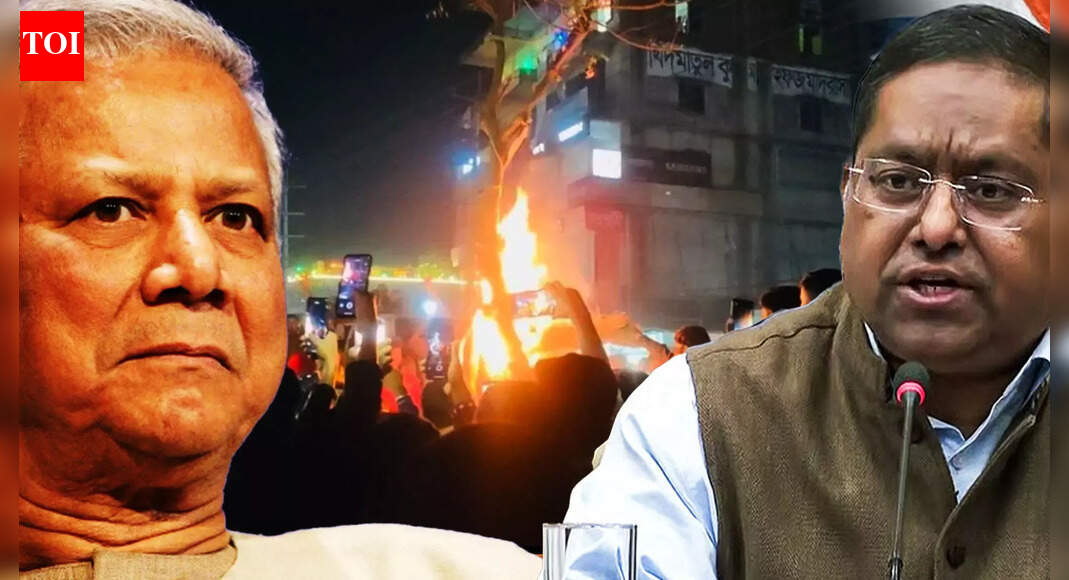
India’s Ministry of External Affairs offered a different characterization of the demonstration, stating that approximately 20 to 25 young protesters had gathered peacefully outside the High Commission. According to Indian officials, the protesters were specifically demonstrating against the killing of Dipu Chandra Das, a Hindu resident of Bangladesh, and calling for greater protection of minority communities.
Indian authorities maintained that police responded promptly to the situation and dispersed the group without incident. The MEA also noted that visual evidence of the protest was publicly available, suggesting transparency regarding the nature and scale of the demonstration.
“India remains fully committed to its obligations under the Vienna Convention regarding the protection of diplomatic premises,” an Indian diplomatic source stated. “At the same time, we continue to urge appropriate action to ensure justice for victims of violence.”
The diplomatic exchange highlights the delicate balance both nations must maintain when addressing incidents with religious or communal dimensions. Bangladesh and India share deep historical, cultural, and economic ties, with cross-border religious sensitivities occasionally creating diplomatic challenges.
Security analysts note that both governments typically strive to prevent isolated incidents from escalating into broader diplomatic tensions. The swift response from both sides in addressing this situation reflects the established diplomatic channels between the neighboring countries.
The incident occurs against a backdrop of generally stable relations between the two South Asian nations, though periodic tensions arise over issues including border management, water sharing, and the treatment of religious minorities. Both countries have established mechanisms to address such concerns through regular diplomatic consultations.
Human rights organizations monitoring the region have consistently advocated for greater protection of minority rights in both countries, emphasizing that transparent investigation of incidents and clear communication can help prevent misunderstandings and potential escalation of tensions.
As investigations continue into the attack on Dipu Chandra Das in Bangladesh, diplomatic observers expect both nations to maintain open lines of communication while working to ensure that isolated incidents do not undermine the broader bilateral relationship that remains critical for regional stability and economic cooperation.
Fact Checker
Verify the accuracy of this article using The Disinformation Commission analysis and real-time sources.

14 Comments
The Bangladeshi government’s response seems measured and appropriate given the circumstances. Ensuring the safety of diplomatic staff is a basic responsibility, and they are right to push back against any misleading propaganda.
Absolutely. It’s understandable that Bangladesh would be concerned about the protest, especially if they received no prior notification. Diplomatic missions require a certain level of security and respect.
This incident highlights the delicate nature of regional geopolitics. While the specific details are still emerging, both sides would be wise to handle the situation carefully and avoid further escalation. Maintaining open communication channels is crucial.
The statement from Bangladesh seems reasonable and fact-based. Investigating isolated incidents thoroughly and avoiding framing them as part of broader patterns is a prudent approach. Diplomacy requires nuance and good-faith efforts to understand each other’s perspectives.
Well said. Diplomacy is a complex dance, and both countries need to be willing to listen, clarify, and find common ground wherever possible. Knee-jerk reactions or inflammatory rhetoric rarely lead to productive outcomes.
This situation highlights the importance of nuanced, fact-based diplomacy. While the details are still emerging, Bangladesh’s response seems reasonable, focusing on addressing specific concerns rather than engaging in tit-for-tat escalation. Effective dialogue and a commitment to understanding each other’s perspectives are key.
This is an interesting situation, with both sides making claims and counterclaims. It’s important to get the facts right and avoid escalating tensions unnecessarily. Diplomatic missions should be able to operate without interference or harassment.
Agreed, maintaining open communication and de-escalating tensions is crucial in these types of diplomatic disputes. Both countries should work to find a constructive resolution.
This incident underscores the delicate nature of regional geopolitics and the importance of diplomatic sensitivity. Bangladesh’s measured response, emphasizing the need for thorough investigation and avoiding inflammatory narratives, is a commendable approach. Maintaining open channels of communication and a commitment to de-escalation are key to resolving such disputes effectively.
It’s encouraging to see Bangladesh taking a firm but measured approach in responding to this incident. Ensuring the safety and security of diplomatic personnel is paramount, and they are right to push back against any misleading narratives.
Absolutely. Maintaining open communication channels and a commitment to de-escalation is crucial in these types of diplomatic disputes. Both sides should strive to find a constructive resolution that upholds the principles of international law and mutual respect.
The Bangladeshi government’s emphasis on thorough investigation and avoiding the framing of isolated incidents as indicative of broader patterns is a wise approach. Maintaining stable intercommunal relations and upholding the security of diplomatic missions are critical priorities in these types of situations.
Agreed. Diplomacy often requires patience, empathy, and a commitment to facts over rhetoric. Both sides would be well-served by focusing on open communication, de-escalation, and a shared goal of preserving regional stability and mutual understanding.
This situation underscores the importance of maintaining stable intercommunal relations, even in the face of isolated incidents. Bangladesh’s efforts to investigate thoroughly and provide context are commendable. Effective diplomacy requires patience, empathy, and a commitment to facts over rhetoric.