


Listen to the article
Bangladesh Prepares for First Post-Hasina Elections Amid Optimism and Challenges
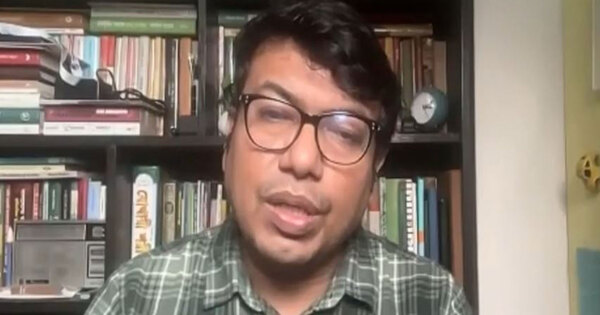
Bangladeshi journalist Muktadir Rashid has expressed strong confidence that the upcoming national elections in Bangladesh can proceed peacefully despite ongoing tensions in the country. Speaking in an interview with ANI, Rashid emphasized that the nation must embrace democratic values as it prepares for its first elections since former Prime Minister Sheikh Hasina was ousted during last year’s student-led uprising.
The elections, scheduled for February 12 by Muhammad Yunus, Chief Adviser of the interim government, come at a critical juncture for the South Asian nation. Rashid dismissed concerns about election violence, asserting that only “500 bad elements” are causing problems, some of whom he claims hold positions within the cabinet and government.
“One hundred percent. I would say 100 percent is possible,” Rashid said regarding the prospects for free and fair elections. “Many of them [troublemakers] are inside the cabinet, in the government. They are creating problems. They wanted to create some noise, but they don’t have any alternative other than supporting this election.”
The journalist emphasized that political leadership is essential for stabilizing Bangladesh, which has experienced significant turmoil since the uprising that toppled the Hasina government. The political transition has created a power vacuum that various factions have attempted to exploit, according to regional political analysts.
Rashid outlined his vision for Bangladesh’s future, stressing the importance of maintaining independence from foreign influence. “We don’t want to make it a foreign power, a stooge. We want to bring all our friends together. We don’t want to make an enemy city with any of our neighbours or a foreign neighbour.”
This stance reflects ongoing concerns about geopolitical pressures in the region, where Bangladesh has historically balanced relationships with India, China, and other powers. The country’s strategic location in South Asia makes it a focal point for regional diplomacy and economic partnerships.
The journalist also warned against religious extremism, emphasizing that Bangladesh should not become a religiously dominated state. “We want this country to be a democratic, fairly elected country and that leadership will function so that democracy will be upheld, and they will rule not by extra toughness, not by false propaganda, and not by making a religious country.”
These comments come amid rising concerns about religious tensions in Bangladesh, where the secular foundations established during independence have occasionally been challenged by more conservative elements.
The political climate in Bangladesh has remained tense following the killing of Osman Hadi, a prominent figure in the July Uprising and convenor of Inqilab Moncho, a mass cultural movement formed during last year’s protests. His death has added to the volatility of the pre-election period.
The interim government led by Nobel Peace Prize laureate Muhammad Yunus has faced significant challenges in maintaining order while preparing for elections. Yunus, known globally for his pioneering work in microfinance, has attempted to position himself as a unifying figure above partisan politics.
Bangladesh’s economy, once celebrated as one of Asia’s emerging success stories, has faced headwinds due to political uncertainty, global inflation, and disruptions in manufacturing and export sectors. The garment industry, which accounts for approximately 80 percent of the country’s export earnings, has reported production delays and canceled orders during periods of unrest.
International observers will be closely monitoring the electoral process, with many diplomatic missions already announcing plans to send election monitoring teams. The United Nations and various democratic nations have emphasized the importance of a transparent electoral process for Bangladesh’s democratic development.
As the election date approaches, the path forward for Bangladesh remains challenging but, according to Rashid, not insurmountable. “We have to build our country,” he concluded, calling for democratic support from neighboring countries and the international community.
Fact Checker
Verify the accuracy of this article using The Disinformation Commission analysis and real-time sources.

9 Comments
The journalist’s assertion that the elections have a 100% chance of being free and fair seems quite confident, given the reported presence of troublemakers in government. I hope they are right, but would caution against overoptimism without more transparency around the process.
That’s a fair point. Maintaining realistic expectations and closely monitoring the situation will be important as the elections unfold. Transparency from the authorities will be critical to build public trust.
Interesting to hear the journalist’s perspective on the upcoming elections in Bangladesh. It’s encouraging that they are confident the process can proceed peacefully despite some challenges. Maintaining democratic values will be critical during this transition period.
It’s good to see the interim government is taking steps to hold elections, even if the path forward has obstacles. Ensuring broad participation and acceptance of the results will be key. I’m curious to hear more about the specific challenges the journalist mentioned and how they might be addressed.
While the journalist expresses confidence, the presence of troublemakers within the government is concerning. Ensuring a truly free and fair election process, with full transparency and accountability, should be the top priority for the interim administration.
The student-led uprising that led to the ouster of the previous PM is an interesting backdrop. I’m curious to learn more about the factors that drove those protests and how they may influence the current political landscape and election dynamics.
Agreed, the student protests seem to have been a significant catalyst for change. Understanding the underlying issues and grievances that fueled that unrest could provide valuable context around the current transition.
The journalist’s comments highlight the delicate balance Bangladesh must strike between maintaining stability and upholding democratic principles. Navigating that middle ground during a sensitive election period will be crucial for the country’s future.
The journalist raises some concerning points about troublemakers within the government trying to create problems. I hope the election can still be carried out in a free and fair manner despite these internal issues. Stability and a smooth transition are important for Bangladesh.