


Listen to the article
Interviews in Azerbaijani Film About Ruben Vardanyan Used Without Consent, Investigation Finds
Armenian interviewees featured in the Azerbaijani documentary “The Oligarch’s Design” claim they were misled about the purpose of their filmed statements, an investigation by Hetq has revealed. The subjects say they believed they were participating in a completely different production about Armenia’s European integration and post-war development.
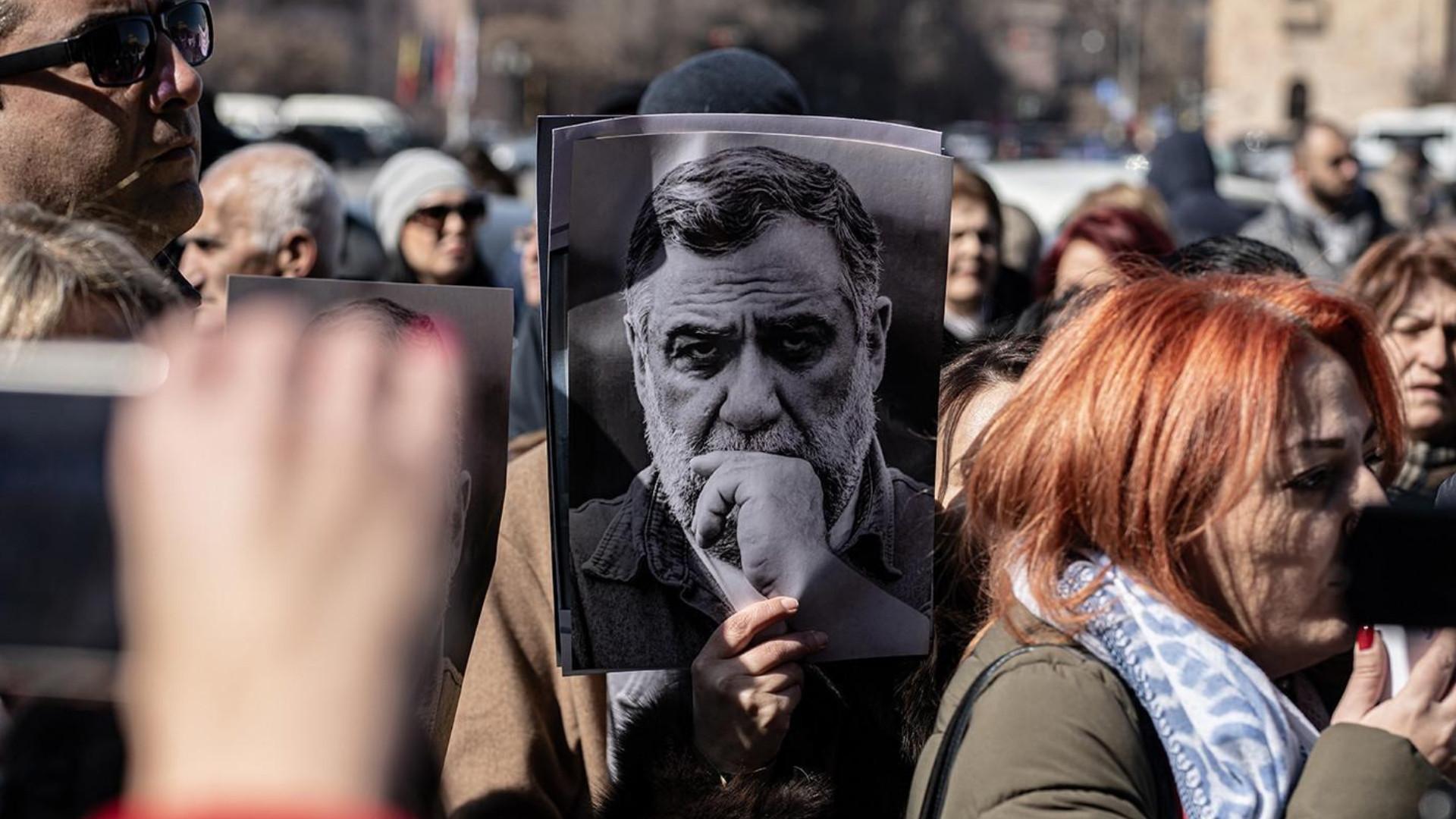
The 90-minute film about imprisoned Armenian businessman and former Artsakh State Minister Ruben Vardanyan was released in December 2025 by Azerbaijani international channel AnewZ in three languages. It portrays Vardanyan, who has been detained in Baku since September 2023, in a highly negative light, accusing him of fostering separatism and disrupting peace processes.
According to multiple sources interviewed by Hetq, the Armenia-based interviews were conducted in September 2025 by Portuguese journalist Carmen Dolores Francisco Marques, who presented herself as a representative of Spanish production company TPTM Media. Local filmmaker Michael Dishunts was contracted to organize and film the interviews.
“My job was to contact the people on the list, arrange for an interview, and videotape the interviews. We organized interviews on a completely different topic,” Dishunts told investigators. The footage was supposedly for a documentary titled “Bridges at the Edge: Armenia Between Continents.”
The four Armenian interviewees—former Artsakh National Security Council Secretary Samvel Babayan, former Artsakh State Minister Grigori Martirosyan, Ruben Hayrapetyan, and political activist Tigran Khzmalyan—all maintain they never authorized their statements to be used in an Azerbaijani production.
Internal documents obtained by OC Media suggest Turkish media professionals with ties to Azerbaijan were behind the production. Two key figures identified were Atakan Kerkuklu, who has previously created Azerbaijani government-approved documentaries, and Ömer Faruk Tunç, a senior producer at Turkey’s state-owned Anadolu Ajansı.
When questioned about how the footage appeared in the Azerbaijani documentary, Marques claimed TPTM Media abandoned the original project in October 2025. She vaguely suggested the material “appeared on the market” and was purchased by Azerbaijani interests.
“When I did the interviews, they signed a document where they agreed that the interviews could be used in various places,” Marques claimed to Hetq, though she refused to provide copies of such documents. The interviewees deny signing any agreement that would allow their statements to be sold or repurposed.
Further investigation raised serious questions about Marques’ credibility. She initially represented herself as a content manager for TPTM Media’s London branch, but corporate records show she has been the director of TPTM Media Spain SL since its founding in 2020. OC Media also discovered she previously worked as a producer for Turkish state-owned TRT World.
The documentary itself appears designed to reinforce Azerbaijani narratives about Vardanyan. It extensively features individuals connected to Azerbaijani state interests presented as “experts,” including former Azerbaijani foreign minister Tofik Zulfugarov, Farhad Mammadov (head of the Center for South Caucasus Studies in Baku), and even AnewZ’s own editor-in-chief Orkhan Amashov.
Legal experts consulted by Hetq note that using interview footage for purposes other than agreed upon likely violates copyright law, as ownership of interview content is typically shared between interviewer and subject. Armenian interviewees would have grounds for legal action.
Perhaps most troubling is the revelation that Marques and TPTM Media never applied for the legally required journalistic accreditation from Armenia’s Ministry of Foreign Affairs before conducting the interviews.
This case highlights sophisticated methods used in what appears to be state-sponsored propaganda operations. By employing intermediaries from third countries and misleading interview subjects about content usage, those behind the documentary created an appearance of international journalistic investigation while actually serving specific political narratives.
AnewZ did not respond to requests for comment on how the interviews appeared in their documentary. The Armenian interviewees continue to maintain they were deceived about the ultimate use of their statements.
Fact Checker
Verify the accuracy of this article using The Disinformation Commission analysis and real-time sources.

9 Comments
This case highlights the need for rigorous journalistic standards and oversight, especially when it comes to sensitive geopolitical issues. I hope the investigation can shed more light on the production process and hold the responsible parties accountable.
The use of interviews without consent is highly problematic and undermines the credibility of this Azerbaijani propaganda film. I’m curious to learn more about the specific circumstances surrounding the filming and the motivations behind portraying Vardanyan in such a negative light.
I agree, the lack of transparency and potential manipulation of the interview process is very concerning. It seems this film may be part of a broader disinformation campaign targeting Armenia and its citizens.
This is a concerning situation. If the interviewees were misled about the purpose of the film, it raises serious ethical questions about the production and Azerbaijani government’s intentions. I hope a thorough investigation can uncover the truth and ensure the rights of the Armenian participants are respected.
The alleged deception in obtaining these interviews is deeply troubling. I’m interested to see how this story develops and whether the Azerbaijani authorities will address the concerns raised about the film’s production and content.
While I appreciate the desire to understand the complexities of the Nagorno-Karabakh conflict, the alleged deception in this Azerbaijani documentary is deeply troubling. Transparency and consent should be paramount when conducting interviews, particularly on such a contentious topic.
This case highlights the importance of ethical journalism and the need for strict protocols when conducting interviews, especially in conflict zones. I hope the investigation can shed more light on the specific tactics used to mislead the Armenian participants.
This is a concerning development that undermines the credibility of the Azerbaijani government’s narrative. I hope the investigation can provide a clearer picture of the production process and the motivations behind the portrayal of Vardanyan. Transparency is key in such sensitive matters.
The revelation that Armenian interviewees were misled about the nature of this Azerbaijani film is extremely concerning. I’m curious to learn more about the specific tactics used to obtain these interviews under false pretenses. Accountability is crucial in these situations.