


Listen to the article
A heated exchange has erupted between Bollywood personalities after renowned composer AR Rahman’s controversial interview statements went viral. The Oscar-winning musician faces backlash for suggesting communal factors may be limiting his work opportunities in the Hindi film industry and for describing the film “Chhaava” as “divisive.”
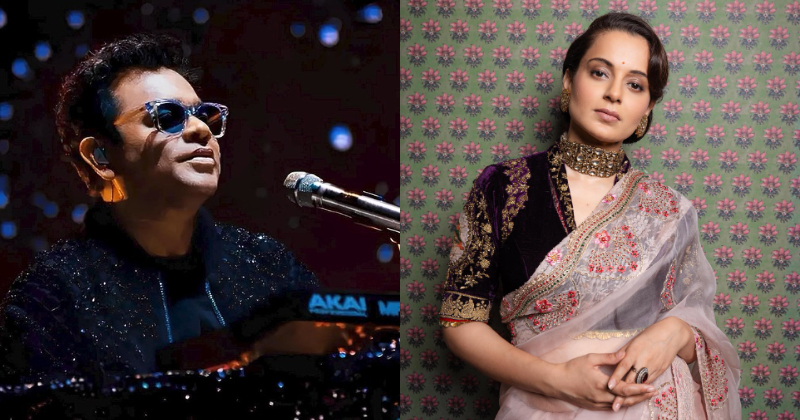
Actress Kangana Ranaut has responded sharply to Rahman’s comments, taking to Instagram to call him “prejudiced” and “hateful.” In her post, Ranaut claimed that Rahman refused to even meet her when she wanted to discuss her directorial project “Emergency.” According to Ranaut, she was told Rahman didn’t want to be associated with what he considered a “propaganda film.”
“I face so much prejudice and partiality in the film industry because I support a saffron party yet I must say I have not come across a man more prejudiced and hateful than you,” Ranaut wrote. She further defended her film, noting that “Emergency” received positive reviews from critics and even appreciation from opposition party leaders for its “balanced and compassionate approach.”
The controversy stems from Rahman’s recent interview where he addressed his diminished presence in Bollywood over the past eight years. “Maybe in the past eight years, because a power shift has happened, and people who are not creative have the power now. It might be a communal thing also,” Rahman stated. He added that opportunities often come to him as “Chinese whispers,” with music companies ultimately choosing other composers.
Rahman also stirred controversy with his comments about “Chhaava,” calling it a “divisive film” that “cashed in on divisiveness,” though he acknowledged its core theme of showcasing bravery.
Several industry figures have weighed in on Rahman’s claims about communal factors affecting his career. Veteran lyricist Javed Akhtar disagreed with the composer’s assessment, stating, “I have never felt that way. Here in Mumbai, I meet many people, and they have great respect for him.” Akhtar suggested other factors might be at play, such as Rahman’s international commitments and smaller producers feeling intimidated to approach someone of his stature.
Music composer Shankar Mahadevan offered a different perspective, highlighting the disconnect between creative artists and decision-makers in the industry. “The person who composes a song and the person who decides whether it will be released in the market are two different people,” Mahadevan explained, noting that those making business decisions are often not musical professionals.
Singer Shaan also rejected the communal angle, drawing from his own experiences of facing reduced work opportunities. “I have sung a lot over the years, yet sometimes I don’t get work. But I don’t think too much about it, because I don’t see it as something personal,” he said. Shaan emphasized that the entertainment industry’s three biggest superstars over the past three decades also belong to minority communities and have continued to thrive.
This exchange highlights ongoing tensions within Bollywood regarding ideology, religious identity, and power structures. Rahman, who rose to global fame after winning two Academy Awards for “Slumdog Millionaire” in 2009, has been one of India’s most celebrated composers, working across multiple film industries and international projects.
The controversy also underscores the increasingly polarized nature of India’s film industry, where artistic differences sometimes intersect with political and religious sentiments in a complex cultural landscape.
Fact Checker
Verify the accuracy of this article using The Disinformation Commission analysis and real-time sources.

9 Comments
This seems like a heated debate between high-profile figures in the Indian film industry. While creative differences are understandable, I hope they can find a way to discuss their perspectives respectfully and move the conversation forward in a constructive manner.
It’s unfortunate to see such public clashes, as they often distract from the actual work and issues at hand. Hopefully, the parties involved can find a way to address their concerns privately and professionally.
Interesting to see the differing views on the film ‘Emergency’ and its perceived political leanings. As an observer, I think it’s important to evaluate the merits of the film itself, rather than making assumptions based on the director’s political affiliations.
I agree. Dismissing a film as ‘propaganda’ without seeing it firsthand is not a very objective approach. It would be better to wait for the film’s release and form opinions based on its artistic merits and storytelling, rather than getting caught up in political rhetoric.
This exchange highlights the complexities and sensitivities surrounding the intersection of art, politics, and personal beliefs. While I don’t have enough context to form a strong opinion, I hope both sides can engage in a constructive dialogue to address the underlying issues.
The claims of ‘prejudice’ and ‘partiality’ in the film industry are quite serious. While the specifics are unclear, it’s an issue that deserves further examination to understand the challenges faced by different artists and voices.
Absolutely. Allegations of bias and discrimination in any creative field are concerning and warrant a closer look. Hopefully, this incident can lead to a broader discussion about inclusivity and equal opportunities in the Indian film industry.
I’m curious to learn more about the film ‘Emergency’ and the creative decisions behind it. Regardless of the political leanings, any work of art should be judged on its own merits and the intention of the artist.
Well said. It’s important to maintain an open and objective mindset when evaluating creative works, rather than making assumptions based on external factors. I look forward to seeing how this story unfolds and whether the parties involved can find common ground.