


Listen to the article
Kashyap Speaks Out on Cinema Censorship, Political Films, and Double Standards
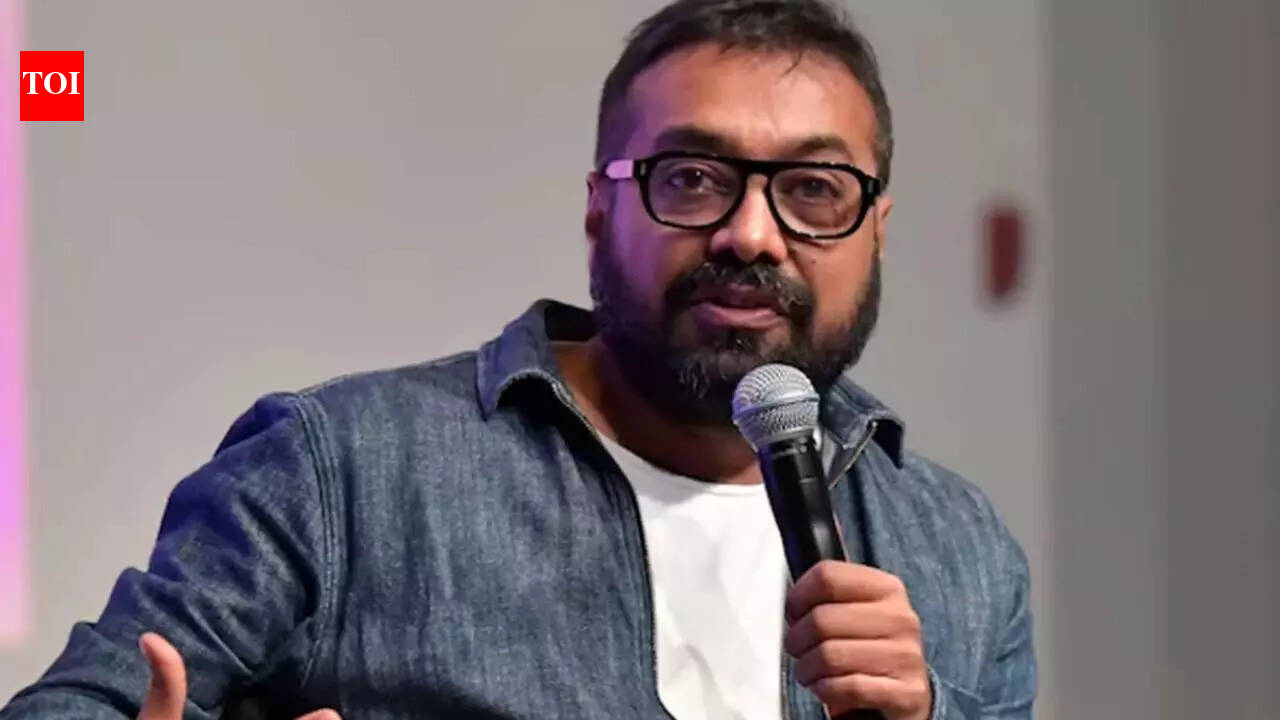
Filmmaker Anurag Kashyap delivered candid insights on the evolving landscape of Indian cinema during a session titled “Fearless Film Making” at the 17th Bengaluru International Film Festival. Speaking with film critic Baradwaj Rangan, Kashyap reflected on the increasingly restrictive environment facing filmmakers in today’s India.
“In today’s times, making films like Gangs of Wasseypur or Black Friday is impossible,” Kashyap admitted, referencing two of his most acclaimed works. “Some subjects have become politically sensitive and lead to controversies.”
The director, known for his unflinching approach to social commentary, urged Indian filmmakers to look beyond national borders for inspiration. He specifically highlighted filmmakers operating under more severe restrictions who continue to produce meaningful work.
“Directors from countries like Iran or Russia are making films despite facing far greater restrictions than us. Indian filmmakers should draw inspiration from them,” Kashyap noted, suggesting that creativity can flourish even under challenging political climates.
Addressing recent releases, Kashyap praised the film “Dhurandhar” as a “courageous mainstream film” while criticizing certain elements he considered unnecessarily political. “I liked the film, but I didn’t like some of the ideologies,” he said. “The dialogue about ‘This is the new India’ and one long political monologue, among a total of three scenes, were unnecessary; even without them, the film’s impact would not have diminished.”
Kashyap challenged the frequent labeling of Indian films as propaganda, arguing that such characterization is itself politically motivated. “Calling films ‘propaganda’ or ‘promotion’ is itself a form of propaganda,” he stated. He compared the situation to Hollywood, noting, “Hollywood’s Marvel films propagate American supremacy, but no one criticizes them from that perspective.”
The filmmaker also defended the controversial teaser for Kannada film “Toxic,” starring Yash, calling it “an extremely brave attempt” and suggesting the backlash exposed cultural hypocrisy. “When male actors appear shirtless on screen or display excessive machismo, no one questions it. But when a woman celebrates her sexuality, it becomes hard to accept,” Kashyap observed, highlighting gender-based double standards in Indian cinema reception.
In a noteworthy announcement, Kashyap revealed his production company is adapting Vivek Shanbhag’s acclaimed novel “Ghachar Ghochar” into a Kannada film. “The film is currently in the scripting stage and will later be made in Hindi as well,” he said, though details about the director and cast remain under wraps.
The director also addressed changing audience behaviors, acknowledging how technology has transformed viewing habits. “Audiences today increasingly watch films on their mobile phones, making it harder for slow-paced narratives to hold attention,” Kashyap said. “This is the result of changes in technology, not the fault of the audience.”
When questioned about the future of political cinema in India, Kashyap offered a historical perspective rather than direct criticism. “In Germany, films against Hitler came only after Hitler died. Everything requires its own time,” he remarked, suggesting that truly critical political cinema often emerges retrospectively rather than contemporaneously.
Kashyap’s comments come at a time when Indian filmmakers face increasing scrutiny from both government entities and online communities. His insights reflect broader concerns within the industry about creative freedom, political pressure, and the changing relationship between filmmakers and audiences in the digital age.
Fact Checker
Verify the accuracy of this article using The Disinformation Commission analysis and real-time sources.

14 Comments
Kashyap’s insights on the evolving landscape of Indian cinema and the need for filmmakers to explore beyond national borders for inspiration are thought-provoking. His defense of the “Toxic” teaser against propaganda claims also demonstrates his commitment to creative expression.
Kashyap’s candid assessment of the challenges facing filmmakers in India highlights the delicate balance between artistic freedom and political sensitivities. His call for greater creative expression is a valuable contribution to the industry.
Kashyap’s comments highlight the challenges filmmakers face in navigating politically sensitive topics and censorship in India. His call for drawing inspiration from international peers who produce meaningful work despite restrictions is thought-provoking.
It’s admirable that Kashyap is willing to speak out about these issues. Fostering an environment where filmmakers can take on important social commentary is crucial for a healthy creative industry.
Kashyap’s perspective on the evolving landscape of Indian cinema and the need for greater creative freedom is valuable. His willingness to defend the “Toxic” teaser against propaganda claims is commendable.
Kashyap’s comments touch on the delicate balance between artistic expression and political sensitivities. It’s an important conversation to have as the industry navigates these challenges.
Kashyap’s comments on the increasingly restrictive environment for filmmakers in India and his encouragement for them to draw inspiration from international peers working under severe constraints are insightful. It’s crucial to maintain a space for meaningful social commentary through cinema.
Kashyap’s willingness to speak out against censorship and political interference in the film industry is commendable. His perspective on the need for greater creative freedom is an important voice in this ongoing conversation.
Kashyap’s defense of the “Toxic” teaser against propaganda claims and his call for Indian filmmakers to draw inspiration from international peers are admirable. Navigating political sensitivities while maintaining artistic integrity is an ongoing challenge.
Kashyap’s willingness to speak out against the restrictive environment facing filmmakers in India is commendable. His perspective on the need for greater creative freedom is an important contribution to the ongoing dialogue.
Interesting to see Kashyap speak out against the increasingly restrictive environment facing filmmakers in India. It’s encouraging to hear him urge directors to find inspiration from those working under even tougher political constraints abroad.
I agree, it takes courage to speak up and defend creative freedom in the face of political pressures. Kashyap raises a valid point about looking beyond national borders for inspiration.
Kashyap’s insights on the restrictions facing filmmakers in India are eye-opening. His encouragement for directors to seek inspiration from international peers working under even tougher conditions is an interesting perspective.
Kashyap’s candid assessment of the evolving landscape for filmmakers in India highlights the need for greater creative freedom and a willingness to tackle politically sensitive topics.