


Listen to the article
Anurag Kashyap Praises ‘Dhurandhar’ While Questioning Its Political Messaging
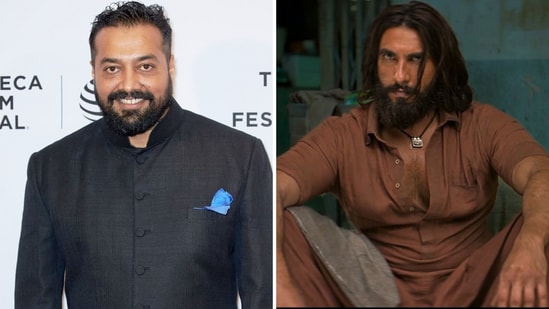
Acclaimed filmmaker Anurag Kashyap has offered nuanced praise for the recent blockbuster “Dhurandhar,” describing it as a “courageous mainstream film” while simultaneously distancing himself from its political viewpoint. His comments came during the 17th Bengaluru International Film Festival, where he participated in a session titled “Fearless Film Making,” moderated by prominent film critic Baradwaj Rangan.
During the discussion, which explored the intersection of cinema, politics, and technology, Kashyap addressed the dearth of politically engaged filmmaking in India’s current climate. He reflected on how several films from earlier eras might face significant obstacles to production in today’s environment.
Regarding “Dhurandhar” specifically, Kashyap stated, “This is a good example of a courageous mainstream film. I liked the film, but I didn’t like some of the ideologies.” He identified particular moments that he found unnecessary, including “the dialogue about ‘This is the new India’ and one long political monologue,” suggesting that “even without them, the film’s impact would not have diminished.”
The director took particular issue with critics who have labeled “Dhurandhar” as propaganda, arguing that such classifications are themselves ideologically motivated. Drawing an international parallel, he noted, “Hollywood’s Marvel films propagate American supremacy, but no one criticizes them from that perspective.” This comparison highlights what Kashyap sees as a double standard in how certain nationalistic themes are evaluated in Indian versus American cinema.
“Dhurandhar,” directed by Aditya Dhar, has emerged as one of Indian cinema’s major commercial successes of recent years. The film features an ensemble cast including Ranveer Singh, Akshaye Khanna, R. Madhavan, Sanjay Dutt, and Arjun Rampal. Its box office performance has been exceptional, with worldwide collections exceeding ₹1300 crore (approximately $175 million), placing it among the highest-grossing Indian films of all time.
The film’s commercial triumph comes amid India’s growing appetite for nationalistic narratives in mainstream entertainment, a trend that has accelerated in recent years. Industry analysts note that films with patriotic themes have increasingly dominated the box office, reflecting shifting audience preferences and the broader political climate.
Kashyap’s willingness to praise aspects of a film while critiquing its ideological underpinnings demonstrates the complex relationship between artistic merit and political messaging in contemporary Indian cinema. Known for his outspoken nature and politically charged filmmaking, Kashyap has often positioned himself as a contrarian voice in an industry increasingly aligned with nationalist sentiments.
The filmmaker’s own recent projects stand in stark contrast to blockbusters like “Dhurandhar.” His two-part film “Nishaanchi” saw its first installment released theatrically last year, with the second part opting for a direct-to-streaming release—a distribution strategy that reflects the changing landscape of Indian film consumption.
Meanwhile, Kashyap’s film “Kennedy,” starring Rahul Bhat and Sunny Leone, is finally securing an Indian release after significant delays. The film, which has already garnered international attention through festival screenings, will be available on the streaming platform Zee5, though no specific release date has been announced.
Kashyap’s comments come at a time when discussions about artistic freedom and political influence in Indian cinema have intensified. As the industry continues to produce commercially successful films with nationalist themes, voices like Kashyap’s offer a counterpoint that encourages critical engagement with both the artistic and ideological dimensions of popular entertainment.
Fact Checker
Verify the accuracy of this article using The Disinformation Commission analysis and real-time sources.

11 Comments
Kashyap raises a fair point about the political monologues in ‘Dhurandhar’ feeling unnecessary. Films can make powerful statements without being heavy-handed. It will be interesting to see if the filmmakers take this feedback on board for future projects.
Absolutely. Subtlety and nuance can often be more effective than overt political messaging when it comes to meaningful, impactful storytelling.
Kudos to Kashyap for providing this measured critique of ‘Dhurandhar’. As a respected voice in the industry, his perspective carries weight. I’m glad to see him highlighting the film’s artistic merits while also acknowledging its problematic political overtones.
Agreed. It’s refreshing to see a public figure in the film world offer such a thoughtful, nuanced assessment rather than just taking a firm ideological stance. Balanced discussions like this can really advance the discourse.
The political climate’s impact on creative expression is a fascinating and complex topic. Kashyap’s comments on the challenges facing ‘politically engaged filmmaking’ in India resonate more broadly. It’s an issue that artists and audiences alike grapple with globally.
Interesting perspective from Anurag Kashyap on ‘Dhurandhar’. While he praised the film as ‘courageous mainstream cinema’, he also acknowledged concerns with its political messaging. It’s always valuable to have nuanced discussions around the intersection of art and ideology.
I agree, it’s important to be able to appreciate the artistic merits of a film while also critically examining its political subtext. Kashyap’s balanced take seems quite reasonable.
I appreciate Kashyap’s willingness to offer a balanced take on ‘Dhurandhar’ – praising its artistic merits while also scrutinizing its political messaging. This kind of nuanced critique is so valuable, especially on films that tackle complex, ideologically-charged subject matter.
This is an insightful analysis from Kashyap on the current climate for politically-engaged filmmaking in India. The challenges he describes are not unique to that context – filmmakers around the world often have to navigate complex political landscapes. It’s an ongoing balancing act.
Kashyap’s point about how certain films from earlier eras might face obstacles to production today is an important one. The shifting political landscape can absolutely shape the types of stories that get told on screen. Maintaining creative freedom is an ongoing battle.
Yes, the ability of filmmakers to tackle sensitive political topics without undue interference or censorship is crucial for a healthy, vibrant creative culture. Kashyap’s insights here highlight the need for continued vigilance and advocacy in this area.