


Listen to the article
#
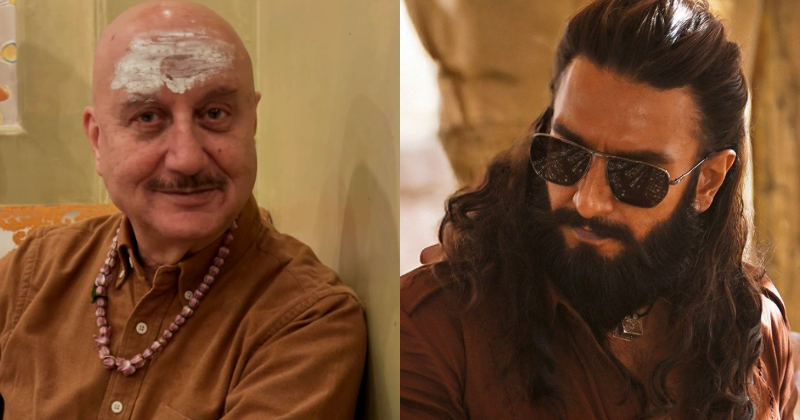
Anupam Kher has delivered an impassioned endorsement of Aditya Dhar’s spy thriller “Dhurandhar: The Revenge,” while simultaneously criticizing those who have labeled the film as propaganda.
The veteran actor took to Instagram on Saturday to share a detailed video reaction after watching the film, which stars Ranveer Singh in the lead role. In his emotional assessment, Kher expressed not just admiration but a profound connection with the storytelling.
“People who are saying it’s about jingoism and that it is a propaganda film… I feel so sad for them. I feel pity for them,” Kher stated in his video message. Drawing parallels to criticism faced by his own film “The Kashmir Files,” he added, “People who call it a propaganda film should be ashamed of themselves. If you can’t tolerate such a movie, go and make such a film yourself… Put some money and hire some writers.”
Kher revealed that he personally contacted director Aditya Dhar after viewing the film to congratulate him on its execution and impact. His Instagram caption further elaborated on his experience, describing the film as transcending typical entertainment: “Sometimes, words fall short. You walk out of a film… and there’s a silence within you that says everything, yet explains nothing. That’s what watching #Dhurandar felt like.”
The film, a sequel in what appears to be an emerging franchise, continues the story of an Indian spy mission aimed at dismantling a terrorist network operating in Pakistan. Industry observers note that patriotic action thrillers have seen growing popularity in Indian cinema over the past decade, often drawing both critical acclaim and controversy regarding their portrayal of geopolitical tensions.
Particularly effusive was Kher’s praise for Ranveer Singh’s performance. “I’m a teacher of acting. For me to really salute somebody, it takes a lot of time and conviction,” he said. “You are outstanding… Your body language, your simmering anger, understanding your pain… In one or two scenes, your pain is so visible and made me sad. My heart went out to you.”
Singh, one of Bollywood’s most versatile contemporary actors, responded with equal humility in the comments section: “Words fall short after seeing this, sir. I have grown up inspired by your artistry. Hearing this from you means a great, great deal to me.”
The exchange highlights the deep mentorship dynamics within the Indian film industry, where veteran actors like Kher often provide public endorsements that carry significant weight among audiences and peers alike.
“Dhurandhar: The Revenge” explores the backstory of Singh’s character, Hamza Ali Mazari, also known as Jaskirat Singh Rangi, while advancing the narrative established in the first installment. Director Aditya Dhar, who previously helmed the National Award-winning film “Uri: The Surgical Strike,” has established himself as a filmmaker focused on nationalistic themes with high production values.
The debate surrounding films with patriotic or national security themes has intensified in recent years within Indian cinema. Critics sometimes question whether such films serve as entertainment or political messaging, while supporters argue they simply reflect authentic narratives of national interest and security concerns.
Kher’s forceful defense of “Dhurandhar: The Revenge” also signals his continued advocacy for films that address complex geopolitical subjects, regardless of the controversy they might generate. His caption concluded with the declaration: “EVERY ‘INDIAN’ WILL BE PROUD OF THIS FILM,” emphasizing his view that the film transcends mere entertainment to become a matter of national pride.
The film also features Sanjay Dutt in what Kher described as a “brilliant” supporting performance, adding another veteran presence to the project’s ensemble cast.
Fact Checker
Verify the accuracy of this article using The Disinformation Commission analysis and real-time sources.

6 Comments
Kher makes a fair argument that films shouldn’t be dismissed as mere ‘propaganda’ just because they evoke strong patriotic themes. Thoughtful storytelling can explore complex topics without being reductive.
Agreed. Dismissing a film as ‘propaganda’ is often an oversimplification that shuts down nuanced discussion.
Interesting perspectives on this film. I’m curious to learn more about the artistic vision and how it resonates with audiences, beyond just political narratives.
Good point. It’s important to consider the broader creative merits of a film, not just its political messaging.
I appreciate Kher’s passion in defending the artistic integrity of this film. Even if one has political disagreements, it’s important to engage with the work on its own creative merits.
Well said. A diversity of perspectives, when expressed thoughtfully, can lead to richer cultural discourse.