


Listen to the article
Anti-Israel Groups Amplify Hamas Propaganda in the U.S., ADL Report Finds
U.S.-based activist groups are directly sharing terrorist propaganda across mainstream platforms, according to a comprehensive analysis by the Anti-Defamation League’s Center on Extremism. The report reveals how organizations like Students for Justice in Palestine (SJP) have been systematically amplifying content from designated Foreign Terrorist Organizations, including Hamas and the Popular Front for the Liberation of Palestine (PFLP), since the October 7, 2023 attacks.
The ADL warns that this trend poses a dual threat: not only are activists circulating terror propaganda to wider audiences, but they’re also normalizing the rhetoric, goals, and tactics of these groups within American public discourse.
“This migration of extremist content from terrorist channels to mainstream platforms demonstrates how these groups extend their reach and ideology into accessible online spaces,” noted the ADL report. “It’s not just praise for terrorist activities—it’s the direct dissemination of their official propaganda.”
One key example cited is the Telegram channel Resistance News Network (RNN), which takes content directly from Hamas’s own Telegram channel and translates it into English for its 150,000 subscribers. In May 2024, RNN shared Hamas propaganda praising a Houthi missile strike against Israel, content that was subsequently redistributed by the Bronx Anti-War Coalition, a New York-based anti-Israel group.
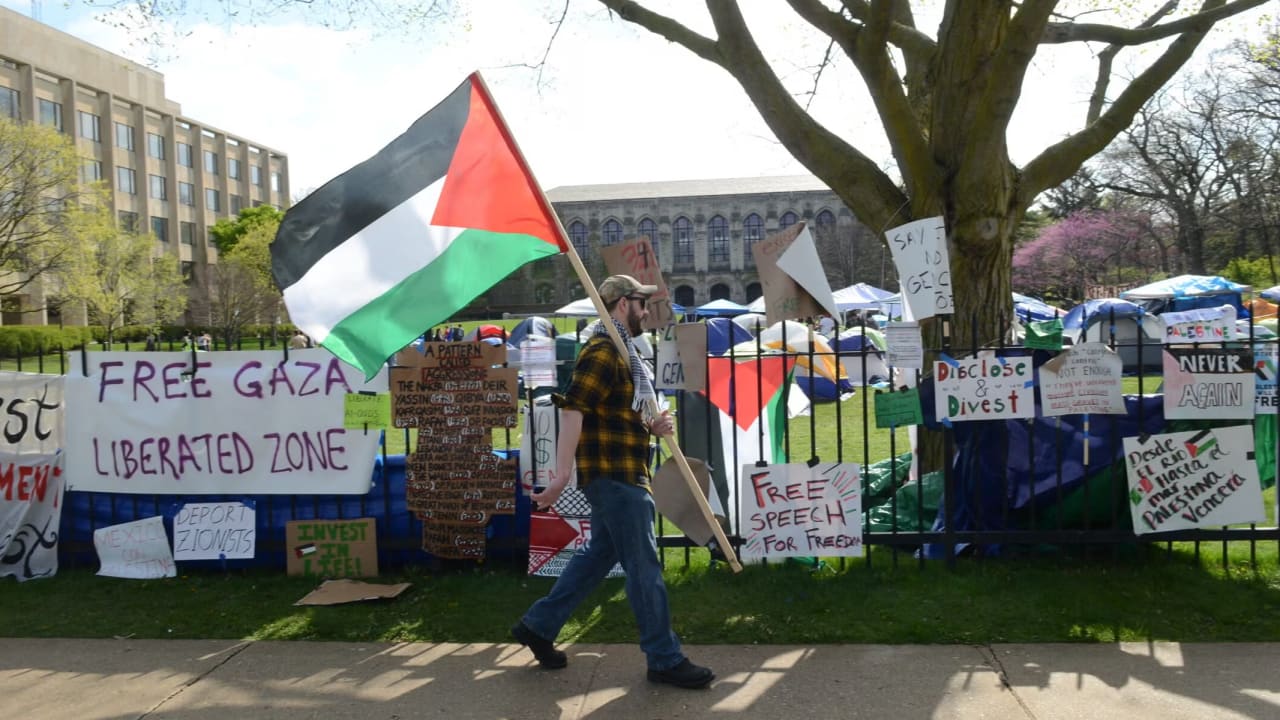
University campuses have become particular hotspots for this activity. Immediately following the October 7 massacre, the University of Illinois SJP chapter shared an Instagram video showing a Hamas terrorist filming from inside an Israeli family’s home during the attack.
The pattern continued on the first anniversary of the attacks, when UC Davis’s SJP chapter posted a quote from deceased Hamas spokesperson Abu Obaida on Instagram, describing October 7 as “the most successful and professional commando operation of the modern era.”
Similarly, far-left groups like Unity of Fields (formerly Palestine Action US) shared PFLP propaganda on Telegram featuring the organization’s logo, weapons imagery, and text reading “7 October World solidarity with Palestine, Palestine liberates the world.”
One of the most widespread forms of terrorist content being shared are PFLP propaganda posters. These materials range from explicit support for terrorists to broader messaging about supporting the working class, reflecting PFLP’s Marxist-Leninist ideology. Such posters have been distributed by numerous organizations, including Columbia4Palestine and various SJP chapters.
To combat this trend, the ADL is recommending several countermeasures. First, they’re calling on social media companies to rigorously enforce their existing policies prohibiting terrorist content. The organization is also urging Congressional support for the Stopping Terrorists Online Presence and Holding Accountable Tech Entities Act (STOP HATE), which would increase transparency around how platforms enforce anti-terrorism policies.
For university administrators, the ADL suggests creating and enforcing clear rules regarding the dissemination of terror propaganda by campus organizations and faculty groups, explicitly communicating how such actions may violate campus policies or even state and federal law.
The report emphasizes that this isn’t merely an issue of offensive content but represents a concerted effort to mainstream terrorist ideology within American discourse. The pipeline from terrorist organizations to U.S. activists demonstrates how extremist messaging can be laundered through seemingly legitimate advocacy channels.
“More broadly, it is incumbent upon the general public to engage in due diligence when consuming and sharing content online and associating with activist groups and individuals,” the ADL concluded, highlighting the responsibility of ordinary citizens to recognize and reject terrorist propaganda regardless of how it’s packaged.
The findings come amid heightened tensions surrounding the Israeli-Palestinian conflict on American campuses and in public discourse, where the line between legitimate advocacy and support for terrorist organizations has become increasingly blurred.
Fact Checker
Verify the accuracy of this article using The Disinformation Commission analysis and real-time sources.

18 Comments
This report is a wake-up call. The fact that designated terrorist groups like Hamas are being able to spread their propaganda through ostensibly grassroots activist channels is deeply concerning. Platforms and authorities must act quickly.
Absolutely. The normalization of extremist rhetoric and goals within American public discourse is a grave threat that demands a serious, coordinated response from all stakeholders.
As someone who closely follows geopolitics and the Middle East, I’m alarmed to see the extent to which Hamas propaganda is being amplified in the US. This has serious implications for regional stability and security that cannot be ignored.
Agreed. The ADL report is a wake-up call, and the urgent need for robust action to counter the spread of terrorist ideology through activist networks and mainstream platforms is clear.
The ADL report highlights a disturbing trend where activist groups are becoming mouthpieces for designated terrorist organizations like Hamas. This is deeply troubling and has serious implications for public discourse and security.
Absolutely. The direct dissemination of official propaganda from terrorist groups through ostensibly grassroots channels is a grave threat that must be swiftly addressed by authorities and platforms.
This report underscores the need for greater vigilance in monitoring and countering the spread of terrorist propaganda, even when it’s being shared through ostensibly activist channels. Platforms must take stronger action to remove this content.
Absolutely. The infiltration of mainstream platforms by extremist groups is a serious problem that requires a multi-pronged response from authorities, tech companies, and civil society.
As someone who closely follows developments in the Middle East, I’m very troubled by this report. Amplifying Hamas propaganda is completely unacceptable and has serious implications for regional stability and security.
Agreed. The blurring of lines between legitimate activism and the spread of terrorist ideology is extremely concerning. Robust action is urgently needed to counter this trend.
The ADL report highlights a disturbing shift where activist groups are becoming mouthpieces for terrorist organizations. This blurring of lines is extremely concerning and undermines legitimate political discourse.
Absolutely. The mainstreaming of extremist rhetoric, even through ostensibly grassroots channels, is a grave threat that must be taken seriously by authorities and social media platforms.
Deeply concerning to see groups amplifying terrorist propaganda in the US. This poses a real threat to public discourse and security. The ADL report highlights a troubling trend that needs to be urgently addressed.
Agreed, the normalization of extremist rhetoric and tactics is extremely dangerous. The direct dissemination of official propaganda from designated terror groups is highly alarming.
As someone who follows geopolitics and the Middle East closely, I’m alarmed to see the extent to which Hamas propaganda is being amplified in the US. This has serious implications for regional stability and security.
Agreed. The ADL report underscores the urgent need for robust action to counter the spread of terrorist propaganda, even when it’s being shared through activist networks or mainstream platforms.
As someone who closely follows developments in the Middle East, I’m very troubled by this trend. Amplifying Hamas propaganda is unacceptable and has serious implications for regional stability and security.
Agreed. This is not just an issue of free speech – it’s about preventing the spread of dangerous disinformation and ideology that can incite violence. Robust action is needed.