


Listen to the article
Indonesia Drafts Disinformation Bill to Counter Foreign Propaganda Against Palm Oil Industry
The Indonesian government has begun drafting legislation aimed at combating what it describes as foreign disinformation and propaganda targeting the country’s key industries, particularly its palm oil sector.
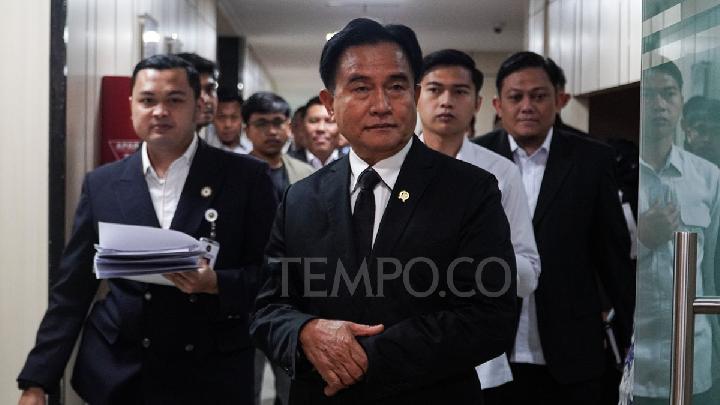
Coordinating Minister for Legal, Human Rights, Immigration, and Correction, Yusril Ihza Mahendra, revealed that the proposed bill would serve as a counter-propaganda mechanism against negative narratives that affect Indonesia’s economic interests. The minister specifically highlighted ongoing campaigns against palm oil as a primary motivation behind the new regulation.
“The goal is to prevent the planting of new palm oil because of this propaganda,” Yusril stated in a video message obtained by Tempo. He argued that certain foreign entities have launched these campaigns because their commercial interests are threatened by Indonesia’s substantial palm oil production capabilities.
Indonesia remains the world’s largest producer of palm oil, an industry that employs millions of workers and contributes significantly to the country’s export earnings. The sector has faced persistent international criticism over deforestation, habitat destruction, and sustainability concerns, which Indonesian officials increasingly view as commercially motivated rather than environmentally driven.
“Their products are unable to compete with coconut oil, and especially not when compared to palm oil,” Yusril noted, suggesting that economic competition underlies many of the negative campaigns.
Beyond palm oil, the minister pointed to other sectors of Indonesia’s economy facing similar challenges. The fishing industry, for instance, has encountered what Yusril characterized as smear campaigns alleging that fish caught in Indonesian waters are hazardous to consumers. Such assertions, if left unchallenged, could severely impact Indonesia’s seafood exports, which represent a critical source of income for coastal communities across the archipelago.
Yusril framed these propaganda efforts as attempts to keep Indonesia in a subordinate economic position. “What these foreign parties want is for our country to forever be an exporter of raw materials without producing anything,” he said, emphasizing the government’s desire to move up the value chain in global markets.
The proposed legislation is currently under development by the Minister of Law, Supratman Andi Agtas. Yusril admitted he had not yet reviewed the draft personally, stating, “I haven’t read it myself, so I can’t answer any questions,” in a message delivered on Tuesday.
The bill, however, has already drawn criticism from civil society organizations. The Indonesian Legal Aid Foundation (YLBHI) has voiced strong opposition, arguing that the legislation contradicts the country’s constitutional principles. According to YLBHI, the government’s proposed measures threaten to restrict freedom of expression, which is explicitly protected under Articles 28F and 28E of Indonesia’s 1945 Constitution.
Critics fear the legislation could be employed to silence legitimate criticism rather than exclusively targeting foreign disinformation. Indonesia’s civil society has expressed concerns that broadly defined “disinformation” laws could potentially be weaponized against environmental advocates, journalists, or others raising valid concerns about industrial practices.
The proposed bill emerges amid growing global tensions over disinformation and information warfare, with many nations developing regulatory frameworks to address these challenges. For Indonesia, striking a balance between protecting vital economic interests and maintaining constitutional freedoms will likely prove challenging as the legislation moves forward.
The government has yet to announce a timeline for when the draft will be completed or submitted to parliament for consideration.
Fact Checker
Verify the accuracy of this article using The Disinformation Commission analysis and real-time sources.

6 Comments
Interesting move by Indonesia to counter foreign propaganda targeting its key industries. Protecting domestic economic interests is understandable, but the proposed legislation raises concerns about free speech and transparency.
This is a complex issue. While Indonesia has a legitimate interest in protecting its economic interests, anti-disinformation laws can also be abused to suppress legitimate criticism. Transparency and independent oversight will be key.
Combating foreign disinformation is understandable, but Indonesia must be careful not to overstep and infringe on free speech. Striking the right balance will be crucial as this legislation takes shape.
Indonesia is right to be concerned about the impacts of foreign disinformation campaigns on its vital palm oil industry. However, any new regulations should balance legitimate interests with protecting freedom of expression.
I agree, striking the right balance will be critical. Overly restrictive laws could backfire and amplify the very narratives they aim to counter.
The palm oil industry is hugely important for Indonesia’s economy, so I can understand the government’s motivation to push back against what it sees as unfair foreign propaganda. Still, the details of this proposed legislation will be crucial.