


Listen to the article
In a significant shift in American public opinion, a recent Gallup survey reveals that Americans now sympathize more with Palestinians than with Israelis for the first time in polling history. This dramatic reversal signals not only changing attitudes toward the Middle East conflict but may also indicate deeper concerns about anti-American sentiment growing domestically.
The survey results come amid ongoing coverage of the Israel-Hamas conflict, where claims of genocide—though widely debunked by military and legal experts—have gained traction in mainstream discourse. Analysts note that the shift in public opinion reflects the effectiveness of narrative-shaping across social and traditional media platforms.
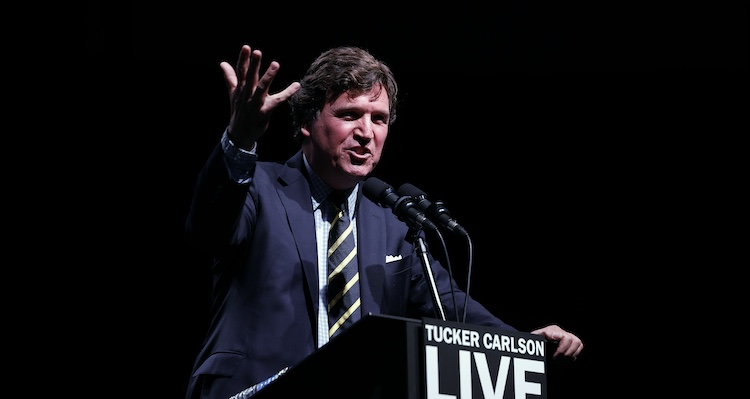
Political observers point to influential figures on both ends of the political spectrum who have contributed to this shift while simultaneously promoting anti-American viewpoints. On the conservative side, former Fox News host Tucker Carlson has emerged as a controversial voice. In February 2024, Carlson traveled to Moscow where he conducted an interview with Russian President Vladimir Putin that many critics viewed as overly sympathetic to the Kremlin’s position.
Carlson has explicitly stated his preference for Putin over Ukrainian President Volodymyr Zelensky, saying: “I am definitely more sympathetic to Putin than Zelensky for the following reason: I think it’s fair to judge leaders on how they do for their country. They have one job. Do a good job for your country. Make it better.”
His platform has since been used to amplify messaging from Qatar—a key financial supporter of Hamas—and Iran, even as Iranian-backed militias have killed American service members in Jordan and Iraq. Security experts note that Carlson’s reach makes him an effective messenger for nations hostile to U.S. interests.
Meanwhile, on university campuses across America, anti-Israel protests have frequently featured explicitly anti-American messaging. At encampments from Michigan to Yale, observers documented signs bearing slogans such as “Death to America” and pamphlets declaring “our main task as revolutionaries in the United States remains to be the unmaking of the American empire.”
The movement has included incidents of protesters removing or burning American flags at prominent institutions like Yale and during demonstrations in Washington D.C. These actions have alarmed national security experts who see parallels to historical anti-American movements.
Dr. Sarah Klein, professor of international relations at Georgetown University, told reporters, “What we’re witnessing isn’t just about the Israel-Palestine conflict. These movements are increasingly adopting rhetoric that fundamentally challenges American legitimacy and interests globally.”
Foreign influence appears to be amplifying these messages. Intelligence officials have expressed concern about Chinese Communist Party-affiliated entities promoting divisive content through social media platforms. This echoes Cold War-era tactics where foreign powers exploited domestic divisions to weaken American society from within.
“The convergence of far-right and far-left anti-Americanism creates a particularly dangerous moment,” notes former State Department official Robert Jensen. “When figures like Carlson promote the same fundamental narrative as campus protesters—that America is an imperial force for evil—it normalizes what would once have been fringe positions.”
The Gallup poll results, therefore, represent more than just shifting sympathies in a distant conflict. They potentially signal a broader acceptance of narratives hostile to American interests and values—narratives being promoted by America’s geopolitical competitors.
Political analysts suggest that addressing this trend requires renewed focus on civic education and media literacy. Without such efforts, foreign influence operations and domestic extremism may continue to find fertile ground in an increasingly polarized information environment.
As one national security analyst put it: “When Americans increasingly view their own country through the same lens as our adversaries, that’s not just a public relations crisis for Israel—it’s a fundamental challenge to American resilience and national cohesion.”
Fact Checker
Verify the accuracy of this article using The Disinformation Commission analysis and real-time sources.

16 Comments
The role of influential media figures in shaping public discourse on international affairs is a complex issue. Their commentary should be scrutinized for potential biases or agendas.
Promoting balanced, fact-based reporting and analysis is crucial in navigating these sensitive geopolitical issues and avoiding the pitfalls of polarization.
The influence of media figures in shaping public opinion on international affairs is concerning. It’s important to critically evaluate the objectivity and agendas behind their commentary.
Promoting anti-American sentiment, regardless of one’s political leanings, can have far-reaching consequences and undermine constructive dialogue.
This is concerning if anti-American sentiment is indeed growing. I wonder what factors are contributing to this shift in public opinion and if it’s a broader global trend or specific to certain regions or demographics.
It will be important to analyze this issue objectively and avoid knee-jerk partisan reactions. Promoting mutual understanding and respect should be the goal.
The Israel-Hamas conflict is a complex and long-standing geopolitical issue. Claims of genocide require rigorous scrutiny and validation from credible military and legal experts.
Inflammatory rhetoric and one-sided narratives can exacerbate tensions and undermine efforts towards a peaceful resolution. A balanced, fact-based approach is crucial.
I’m curious to see how this trend in public opinion towards the Israel-Palestine conflict evolves over time, and what implications it might have for US foreign policy.
Maintaining a nuanced understanding of these complex geopolitical issues is crucial, rather than resorting to simplistic narratives or partisan allegiances.
Anti-American sentiment is a global challenge that warrants careful study and a nuanced, multi-faceted approach. Fostering greater mutual understanding and respect should be a priority.
Ultimately, addressing this issue will require sustained effort and cooperation from various stakeholders, both within the US and internationally.
The growth of anti-American sentiment globally is concerning, as it can undermine international cooperation and stability. Understanding the root causes is important.
Addressing this issue will require a multifaceted approach, including improving US diplomacy, addressing perceived grievances, and promoting cultural exchange and mutual understanding.
The survey results highlighting Americans’ increased sympathy for Palestinians over Israelis are intriguing. It would be valuable to analyze the demographic and geographic patterns behind this shift.
While public opinion can evolve, care must be taken to ensure that policy decisions are grounded in a comprehensive understanding of the conflict, not just short-term political calculations.