


Listen to the article
Review: “In the Blink of An Eye” Falls Short of Expectations at Sundance
Andrew Stanton’s latest live-action feature “In the Blink of An Eye” made its debut at the 2026 Sundance Film Festival to muted reception, marking a disappointing return to non-animated filmmaking for the acclaimed Pixar director.
The film, which interweaves three distinct timelines spanning from prehistoric times to the far future, struggles to find cohesion despite its ambitious scope. This marks Stanton’s first live-action project since 2012’s commercially unsuccessful “John Carter,” and unfortunately appears to continue that trajectory rather than recapture the magic of his animated classics like “WALL-E.”
Based on Colby Day’s 2016 Black List script, the film feels notably out of step with current perspectives on technology and artificial intelligence. Where contemporary narratives often approach AI with nuanced skepticism, “In the Blink of an Eye” presents technology with an almost religious reverence that feels jarringly outdated in 2026.
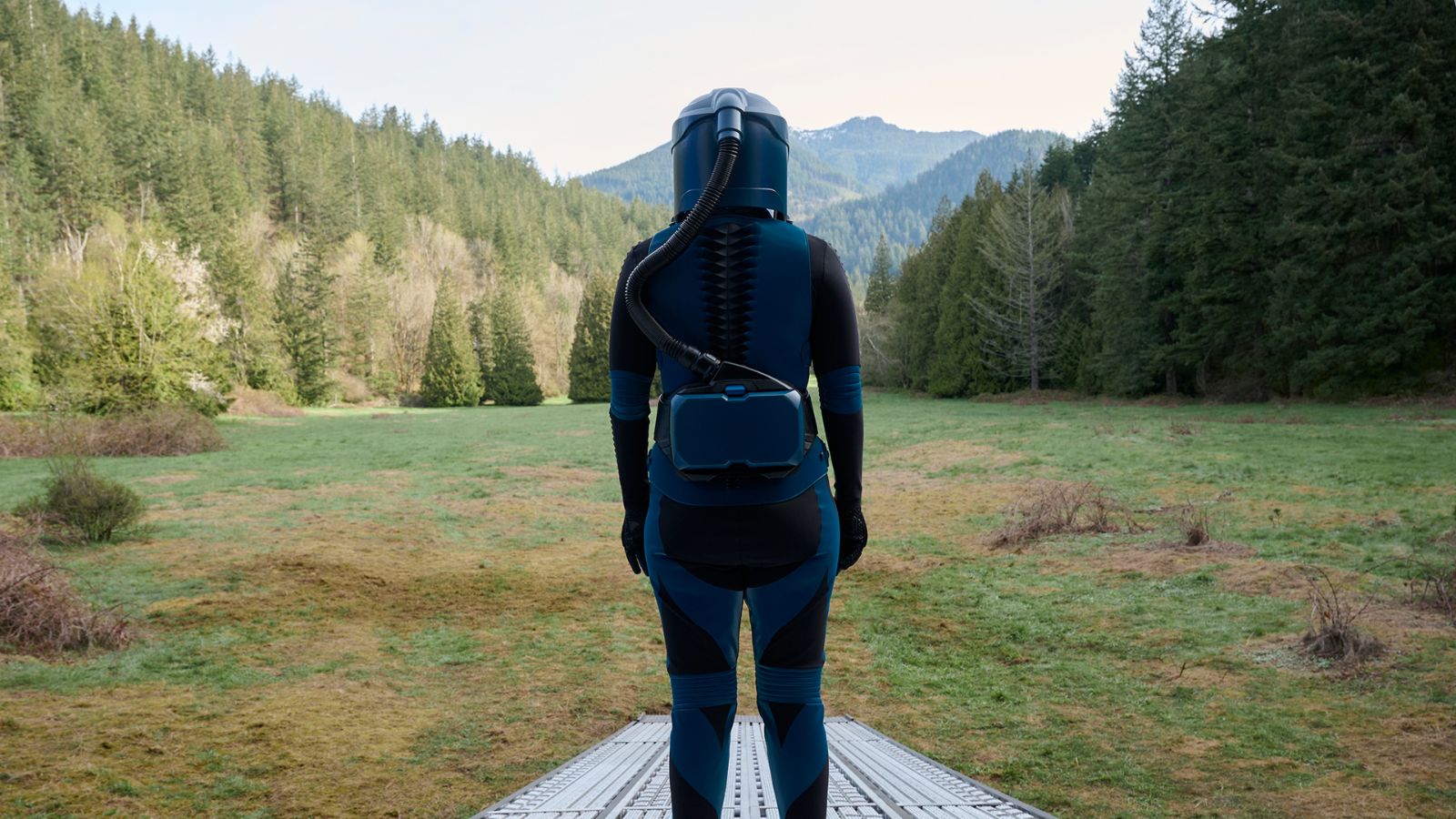
The narrative unfolds across three timelines: one following Neanderthals in 450,000 BC struggling for survival, another centered on Claire (Rashida Jones), a present-day university researcher excavating ancient remains, and a futuristic storyline featuring Kate McKinnon as Coakley, the sole human passenger on a spacecraft bound for a distant planet.
The prehistoric segments emerge as the film’s strongest, capturing the fundamentals of early human existence while thoughtfully suggesting that art, play, and humor existed even during humanity’s most basic survival stages. These scenes carry authentic stakes and emotional resonance that the other timelines fail to match.
Jones delivers a committed performance as Claire, whose budding relationship with statistics student Greg (Daveed Diggs) provides the film’s emotional core. Their connection develops from an initial awkward courtship to a supportive long-distance relationship when Claire returns to Canada to care for her ailing mother. Diggs particularly shines, bringing warmth and authenticity to what could have been a standard supportive partner role.
However, the portrayal of their technology-mediated relationship feels curiously promotional rather than critical, resembling extended advertisements for video conferencing or AI assistants. One scene involving Greg using the internet to navigate a parenting challenge feels particularly on-the-nose, suggesting benefits of AI without exploring any downsides.
The futuristic storyline featuring McKinnon suffers from significant logical inconsistencies. When a mysterious parasite threatens the spacecraft’s oxygen supply—critical for preserving human embryos—the absence of any contingency plan stretches credibility beyond reasonable limits. The narrative culminates in a reverent “thank you” to the ship’s AI system that plays like technological worship, creating an uncomfortable thematic contradiction with Stanton’s previous work.
Stanton’s direction betrays his animation background, relying on visual gags and cutesy moments that would feel more at home in a Pixar production. The film’s polished aesthetic lacks personality, while persistent background music works overtime to emphasize the intended emotional gravity of each scene.
Perhaps most disappointing is the film’s muddled stance on technological progress. When humanity achieves immortality in one timeline, the film simultaneously presents this as both triumphant and problematic, with Claire choosing natural death despite her son leading the breakthrough research. This philosophical conflict remains frustratingly unexplored.
For Searchlight Pictures and parent company Disney, the film’s underwhelming reception likely won’t cause significant concern, as Stanton remains at the helm of the upcoming “Toy Story 5,” virtually guaranteed to be a commercial success. However, it represents a missed opportunity for a filmmaker who was granted considerable creative freedom and resources to pursue a passion project.
“In the Blink of an Eye” arrives on Hulu on February 27, where viewers can judge for themselves whether this ambitious but flawed film deserves attention despite its shortcomings. For now, it stands as an unfortunate reminder that even the most talented filmmakers can stumble when venturing outside their comfort zones.
Fact Checker
Verify the accuracy of this article using The Disinformation Commission analysis and real-time sources.

9 Comments
I appreciate the filmmaker’s desire to grapple with weighty topics like technology and humanity’s evolution. But if the treatment of AI comes across as overly reverent, that’s a concern. I’ll wait to see if critics feel the film offers a more nuanced perspective.
As an avid sci-fi fan, I’m disappointed to hear this film doesn’t seem to live up to its potential. The scope is certainly ambitious, but the critique of its technofuturist leanings is concerning. I’ll reserve judgment until I can see it for myself.
As someone who generally enjoys Pixar’s work, I’m disappointed to hear this film is not living up to expectations. The premise sounds intriguing, but the critique of its technofuturist bent is concerning. I’ll have to wait and see if it offers any fresh insights or just retreads familiar tropes.
It’s a shame when a filmmaker with a strong track record struggles to capture the magic of their previous work. The scope of this film sounds captivating, but the muted reception and critique of its technofuturist leanings are worrying. I’ll reserve judgment until I can see it for myself.
A Pixar director tackling live-action sci-fi is an interesting proposition, but the muted reception at Sundance doesn’t bode well. The premise of spanning prehistoric to future timelines is bold, but it sounds like the execution falls flat. I’ll temper my expectations.
Hmm, it’s disappointing to hear that the film seems out of touch with more nuanced perspectives on technology. AI deserves a more balanced portrayal these days. I hope the visuals and performances at least make it an interesting watch, even if the themes fall short.
This film sounds like it tackles some big themes, though the critique of its technofuturist bent is concerning. I’m curious to see how the different timelines are woven together and whether the treatment of AI feels thoughtful or overly reverential.
As someone interested in the intersection of technology and society, I’m intrigued by this film’s ambition. But the criticism of its technofuturist leanings raises flags. I’ll have to see if it offers any fresh insights or just retreads outdated tropes.
Hmm, it’s a shame this film appears to struggle with its themes and messaging. Blending prehistoric and future timelines is a bold creative choice, but if the treatment of technology comes across as outdated, that’s a major misstep. I’m curious to see how critics respond.