


Listen to the article
US Government Utilizes Social Media to Shape Public Perception of Iran War
The U.S. government has launched an unprecedented media campaign to bolster public support for its military operations against Iran, employing stylized videos and meme-like content across social media platforms in what critics describe as war propaganda.
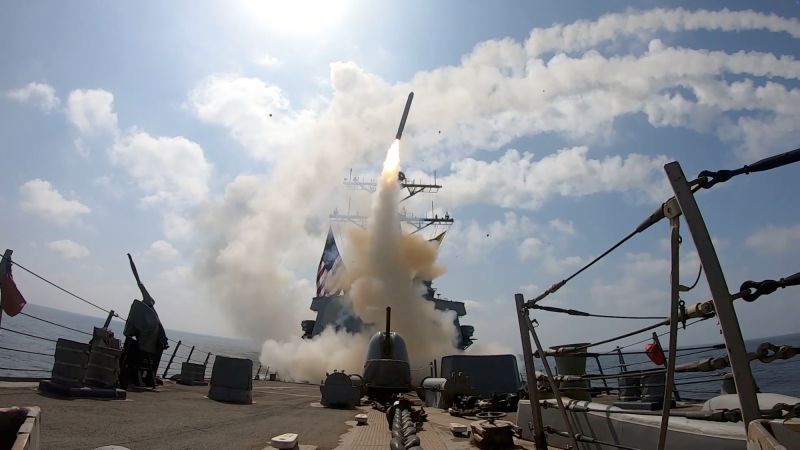
Pentagon, White House, and U.S. Central Command accounts are distributing highly produced videos featuring military hardware, explosions, and dramatic music to create enthusiasm for the conflict. One video, set to an updated version of John Lee Hooker’s “Boom Boom,” splices together statements from President Donald Trump, Defense Secretary Pete Hegseth, and Secretary of State Marco Rubio with footage of weapons systems and explosions.
The videos showcase B-2 bombers, High Mobility Artillery Rocket Systems (HIMARS), F-18 fighters, and other military assets alongside administration officials. Many clips are edited in a movie-trailer style, with one notable video featuring the official “Operation Epic Fury” logo—suggesting the war has been branded as a product.
Defense Secretary Hegseth has taken a particularly aggressive stance in these communications. “We are punching them while they’re down,” he states in one video showing an explosion in what appears to be a hangar. “Which is exactly how it should be.” Another post on the Defense Department’s Instagram account declares: “This is NOT a fair fight. Our capabilities are overwhelming—and we will not stop until Iran surrenders unconditionally.”
The White House communications strategy has come under scrutiny for incorporating video game footage into war reporting. When CNN’s Jake Tapper reported on the use of Grand Theft Auto imagery in official military videos, White House Communications Director Steven Cheung responded by thanking the network “for covering all of our banger videos” and posting what appeared to be video game cheat codes.
This media approach echoes tactics used by the administration in other controversial policy areas, such as when the Department of Homeland Security produced Hollywood-style action videos depicting mass deportation operations.
Meanwhile, the administration faces growing challenges in controlling the conflict’s narrative. CNN analysis suggests an American Tomahawk missile struck a girls’ school in Iran, killing 168 children and 14 teachers according to Iranian state media. While the U.S. military says an investigation continues, CNN reported Wednesday that the strike may have been ordered based on outdated intelligence about a nearby naval base.
Trump has attempted to deflect questions about the school bombing, suggesting the missile might have originated from Iran itself. “The fact that it’s Tomahawk — a Tomahawk is very generic. It’s sold to other countries,” Trump said at a Monday press conference, although he added he would ultimately “live with” the outcome of the ongoing military investigation.
Verifying information has become increasingly difficult as social media platforms are flooded with both official propaganda and fake, AI-generated content. Iran has circulated obviously fabricated videos claiming to show captured American soldiers and bombs hitting Tel Aviv, neither of which is accurate.
CNN remains one of few Western news organizations reporting from inside Iran. Correspondent Frederik Pleitgen and photojournalist Claudia Otto witnessed waves of heavy airstrikes in Tehran on Tuesday. CNN maintains editorial independence while operating with required Iranian government permission.
The administration’s promotional war content stands in stark contrast to somber footage released of Trump attending the dignified transfer of remains of six American servicemembers killed in the conflict’s early days. That video was set to “Amazing Grace” with the caption “Freedom is never free.”
Despite the extensive media campaign, polls suggest most Americans disapprove of the war, though it maintains majority support among Republicans. Trump has expressed concerns about the conflict’s effect on gas prices and has made contradictory statements about when it might end.
The elevation of Mojtaba Khamenei, son of the assassinated Ayatollah Ali Khamenei, as Iran’s new supreme leader further complicates matters. Trump has called the succession “unacceptable” but declined to say whether the younger Khamenei now faces assassination threats as well.
Fact Checker
Verify the accuracy of this article using The Disinformation Commission analysis and real-time sources.

18 Comments
While the government has a right to share information, this ‘boom boom’ campaign feels more like a recruitment video than a sober analysis of a potential conflict. I hope the public can see through this manipulative messaging and demand a more responsible approach.
Absolutely, the slick production values and militaristic imagery are clearly designed to generate enthusiasm rather than foster critical thinking. This is deeply concerning.
The use of branded logos and movie-trailer styles in these social media posts is extremely troubling. This is not how serious foreign policy should be communicated. I worry this could have dangerous consequences by desensitizing people to the realities of war.
Agreed, the sensationalized visuals and dramatic music are completely inappropriate for discussions of armed conflict. This is blatant propaganda, not informative policymaking.
While the U.S. government has the right to communicate its policies, this style of social media blitz feels more like recruitment for a video game than a serious discussion of foreign policy. I hope the public sees through this manipulative messaging.
Exactly, this is war propaganda masquerading as entertainment. It’s deeply concerning to see such blatant attempts to distort public perception of a potential conflict.
The use of dramatic music, explosions, and military hardware in these social media videos is deeply troubling. This is not how responsible governments should communicate about the prospect of armed conflict. I worry this could have dangerous consequences.
Agreed, the ‘movie trailer’ style of these communications is completely inappropriate for matters of war and peace. This is blatant propaganda, not informative policymaking.
This ‘boom boom’ propaganda campaign seems like a desperate attempt to rally public support for military action. Portraying war as an entertainment product is deeply troubling and shows a callous disregard for the human cost of conflict.
Agreed, the militaristic tone and glossy visuals are clearly designed to whip up fervor rather than foster sober reflection on the consequences of war.
While the government has a responsibility to inform the public, this ‘boom boom’ campaign feels more like a recruitment video than a balanced discussion of a complex geopolitical situation. I hope the public can see through this manipulative messaging and demand a more responsible approach.
Absolutely, the slick production values and militaristic imagery are clearly designed to whip up enthusiasm rather than foster nuanced debate. This is deeply concerning.
The ‘Operation Epic Fury’ branding and movie-trailer style of these social media posts is extremely troubling. This is not how serious foreign policy should be communicated. I worry this could have dangerous consequences by trivializing the gravity of war.
Agreed, the sensationalized visuals and dramatic soundtrack are completely inappropriate for discussions of armed conflict. This is blatant propaganda, not informative policymaking.
While the government has a right to share information, this ‘boom boom’ campaign feels more like a marketing ploy than a sober discussion of complex geopolitics. I hope the public can see through this manipulative messaging.
Absolutely, the sensationalized visuals and militaristic soundtrack are clearly designed to whip up support rather than foster nuanced debate. This is deeply concerning.
The ‘Operation Epic Fury’ branding is disturbingly reminiscent of Hollywood action movies. This isn’t how serious foreign policy should be communicated. I worry this could desensitize people to the gravity of war.
Agreed, the slick production values and militaristic imagery are more akin to recruitment videos than responsible government communications. This is deeply troubling.