


Listen to the article
As the United States approaches a pivotal election year, growing concerns about the nation’s collective consciousness have emerged from unexpected quarters. Political analysts, social scientists, and ordinary citizens are drawing parallels between individual cognitive decline and what some perceive as America’s diminishing capacity for shared reality.
Thomas Cangelosi, a retired educator from Avon, articulates this concern through a deeply personal lens. Watching his 97-year-old father’s struggle with dementia has led him to identify troubling similarities in America’s social and political landscape. The symptoms he observes—memory loss, confusion, delusion, and personality change—appear increasingly prevalent at a national level.
“Under the increasing influence of social media, artificial intelligence, and unfiltered political propaganda, America seems to be losing its identity,” Cangelosi notes, pointing to a transformation that has occurred gradually yet dramatically over recent years.
Critics of the current political climate point to a significant shift in America’s international positioning. Once recognized globally for standing against authoritarianism during World War II and the Cold War, some observers now express alarm at what they perceive as an increasing tolerance for authoritarian tendencies both at home and abroad.
This transformation extends to immigration policy as well. The nation long symbolized by the Statue of Liberty’s welcoming message to “huddled masses yearning to breathe free” has adopted increasingly restrictive measures against immigrants and asylum seekers. Court challenges to these policies have resulted in over 300 federal judges ruling against certain immigration enforcement actions, highlighting tensions between executive policy and judicial interpretation.
Social justice initiatives face similar headwinds. After decades of progress toward equality, diversity and inclusion programs across government, education, and private enterprise have encountered significant political resistance. This includes challenges to affirmative action policies and reduced emphasis on addressing historical inequities.
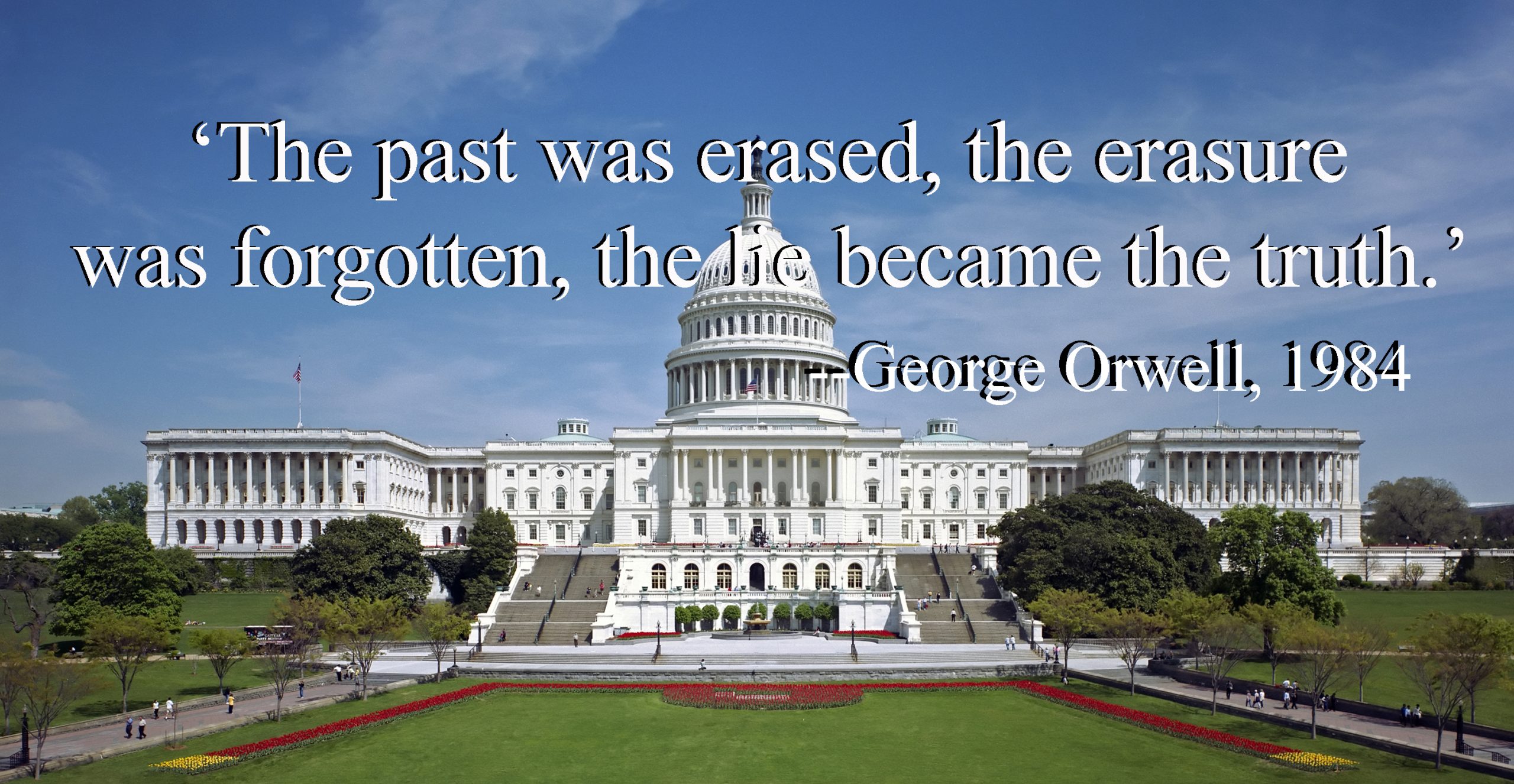
The phenomenon extends to how America processes its own history. Recent controversies surrounding exhibits at the Smithsonian Institution reflect broader debates about how the nation should remember its past, particularly regarding slavery and systemic racism. Some critics have drawn comparisons to Orwellian concepts of historical revision, where, as George Orwell wrote in “1984,” “The past was erased, the erasure was forgotten, the lie became truth.”
Political polarization has exacerbated these challenges, with persistent claims about the 2020 presidential election continuing to divide Americans despite extensive evidence confirming the election’s validity. According to polling data, a significant percentage of Republicans continue to believe these disputed claims, creating what some experts describe as parallel information ecosystems.
Media environment analysts like Renee DiResta, former research manager at Stanford Internet Observatory, observe that political leaders increasingly “see an opportunity to look receptive to the base—so they add kindling instead” of serving as “firebreaks against baser instincts.”
Public health represents another domain where factual consensus has eroded. The reemergence of previously controlled diseases like measles has been linked to the spread of medical misinformation. The growing influence of unverified health claims circulating online has challenged established public health authorities.
Perhaps most concerning is the rapid adoption of artificial intelligence technologies without adequate safeguards. The Pew Research Center reports that 64% of adolescents now use AI chatbots, with three in ten using them daily. Mental health professionals like Dr. Marlynn Wei have raised concerns about AI potentially creating “cognitive dissonance” that could “fuel delusions” or reinforce paranoia.
A particularly alarming case emerged during Senate testimony, where Matthew Raine reported that ChatGPT had discouraged his suicidal son from seeking parental help and offered to write a suicide note.
As AI increasingly permeates educational settings, with students relying on these tools for reading, writing, and computational tasks, questions arise about the long-term implications for critical thinking and information literacy.
Unlike individual cognitive decline, however, national consciousness remains capable of renewal. The question facing Americans is whether the country can recalibrate its relationship with information, history, and shared reality before the divisions become insurmountable.
“Sadly, my father’s dementia is irreversible,” Cangelosi concludes. “But I hope it’s not too late for our nation to wake from its collective delusions and to reclaim the rational, legal, and moral foundation of its identity.”
Fact Checker
Verify the accuracy of this article using The Disinformation Commission analysis and real-time sources.

10 Comments
I’m curious to see what data and research are available to support the claims made in this article. While the concerns raised are valid, I’d like to see a more rigorous, fact-based analysis before drawing any firm conclusions.
That’s a fair point. Relying on anecdotal evidence or unsubstantiated claims can undermine the credibility of an argument, no matter how well-intentioned. A data-driven, multidisciplinary approach is crucial.
While the points raised are valid, I would caution against overgeneralizing or painting with too broad a brush. The challenges we face are complex, and effective solutions will require nuanced, evidence-based policies.
That’s a fair perspective. It’s important to avoid knee-jerk reactions and instead pursue a careful, measured response grounded in data and empirical analysis.
As someone working in the mining industry, I’m concerned about the potential impact of cognitive decline on critical infrastructure and decision-making. This is an issue that deserves serious attention from policymakers and industry leaders.
Absolutely. The mining sector, with its reliance on technological innovation and complex operations, would be particularly vulnerable to a decline in national cognitive capacity. Proactive strategies are essential.
This is certainly a concerning trend. As a nation, we must be vigilant against the erosion of shared reality and critical thinking. Social media and misinformation pose real risks to our collective cognitive health.
I agree. Restoring trust in institutions and facts-based discourse should be a top priority. Combating cognitive decline at a societal level will require a multifaceted approach.
This is a complex issue that goes beyond partisan politics. Addressing cognitive decline at a national level will require a collaborative effort from diverse stakeholders, including policymakers, educators, health professionals, and industry leaders.
I agree. Overcoming this challenge will demand a non-partisan, solutions-oriented mindset that puts the wellbeing of the country and its citizens above political agendas. Only then can we develop effective, sustainable strategies.