


Listen to the article
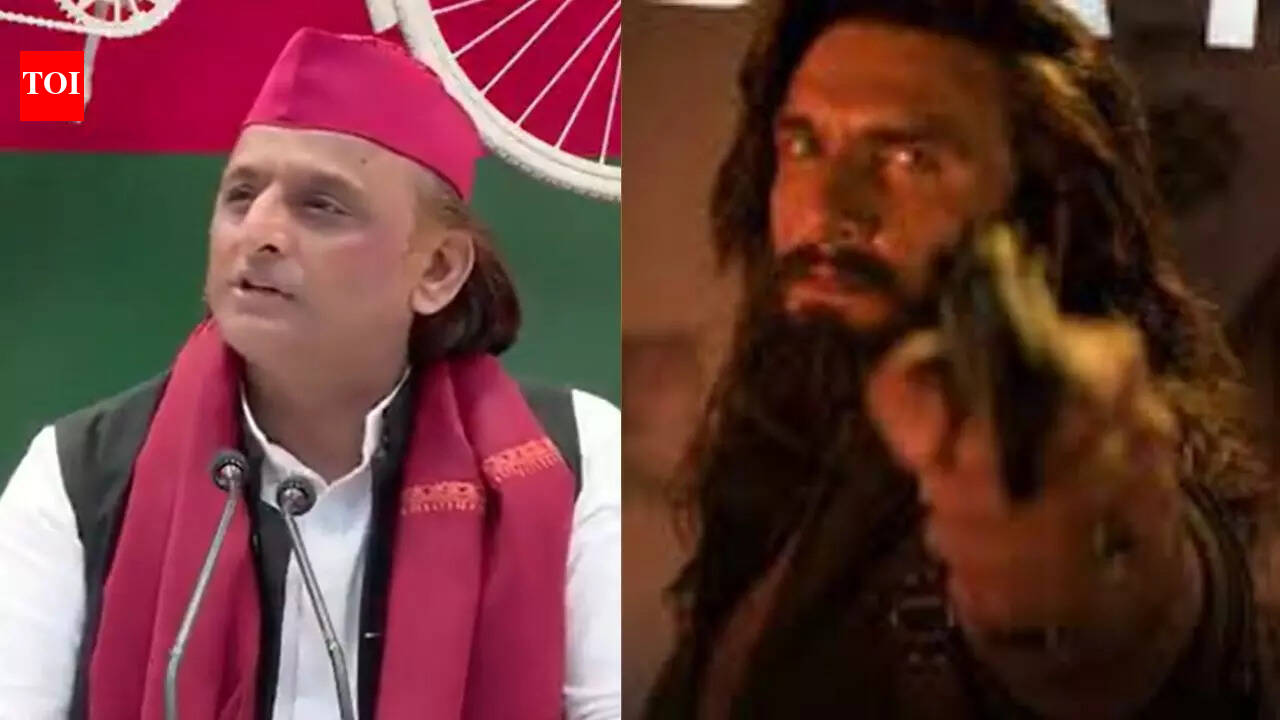
Samajwadi Party chief Akhilesh Yadav has launched a scathing critique of the blockbuster film “Dhurandhar: The Revenge,” labeling it as “paid propaganda” allegedly financed with public funds to discredit opposition political parties.
“You’re making films by spending money to defame other parties; I think too much money has reached these people,” Yadav remarked, taking aim at the ruling establishment. The opposition leader went further, alleging that the government was not only funding such projects but also covering their release expenses.
Yadav’s comments come as the Ranveer Singh-starrer continues to dominate the box office, amassing over Rs 300 crore domestically within just three days of its release. The film, directed by Aditya Dhar, has quickly established itself as one of the year’s biggest commercial successes in Indian cinema.
“Dhurandhar: The Revenge” serves as a sequel to Dhar’s 2025 film “Dhurandhar” and features an ensemble cast including R Madhavan, Arjun Rampal, Sanjay Dutt, Sara Arjun, and Rakesh Bedi. The franchise has garnered significant attention for its portrayal of covert intelligence operations against the backdrop of major historical events.
Set primarily in Karachi’s Lyari neighborhood, notorious for its gang violence, the film chronicles the rise of Ranveer Singh’s character Hamza Ali Mazari in the Pakistani city’s criminal underworld. The narrative simultaneously explores his origins as Jaskirat Singh Rangi and his transformation into a covert operative for Indian intelligence.
The film’s storyline weaves together fictional narratives with references to several high-profile incidents that have defined Indo-Pakistani relations over the past decades, including the Kandahar plane hijacking, the 2001 attack on India’s Parliament, and the 26/11 Mumbai terror attacks of 2008.
Film industry analysts note that the movie’s portrayal of cross-border terrorism and intelligence operations reflects a growing trend in Indian cinema toward nationalistic themes. Such films have proven increasingly popular with audiences in recent years, often receiving tacit support from government institutions.
Produced by Jyoti Deshpande and Lokesh Dhar, the film has been released in multiple languages to maximize its reach across India’s diverse linguistic landscape, including Hindi, Telugu, Tamil, Kannada, and Malayalam versions.
Yadav’s accusations reflect growing concerns among opposition figures about the potential influence of entertainment media on political narratives. Several opposition leaders have previously raised questions about the timing of patriotic or security-themed films released close to election periods.
The controversy surrounding “Dhurandhar: The Revenge” highlights the increasingly blurred lines between entertainment, politics, and national security narratives in India’s media landscape. Film industry representatives have yet to respond directly to Yadav’s allegations.
Media experts point out that the success of such films often stems from their ability to tap into public sentiment around national security issues while delivering high-octane entertainment. The “Dhurandhar” franchise has particularly resonated with audiences through its stylized action sequences and dramatized portrayals of intelligence operations.
Neither the filmmakers nor government representatives have issued formal responses to Yadav’s claims about public funding or political motivation behind the film.
As “Dhurandhar: The Revenge” continues its successful theatrical run, the debate over the political implications of its content and financing seems likely to intensify, adding another layer to India’s ongoing discussions about media influence and political messaging in popular culture.
Fact Checker
Verify the accuracy of this article using The Disinformation Commission analysis and real-time sources.

14 Comments
It’s understandable that a film perceived as propaganda would be met with skepticism and criticism, especially from political opponents. The key is to assess the claims objectively and not let partisanship cloud the discussion.
Agreed. A nuanced, fact-based approach is essential when evaluating the merits and potential biases of any politically-charged creative work.
I’m curious to learn more about the allegations of public funds being used to finance this film. If true, that would be concerning and deserves further investigation. The line between propaganda and artistic expression can be blurry.
Valid point. The use of public funds for potentially partisan purposes is a serious issue that warrants close scrutiny.
The box office success of this film suggests it has resonated with audiences. However, that alone doesn’t negate the concerns raised about its political agenda. Healthy debate on such topics is important for a functioning democracy.
Agreed. Commercial success doesn’t automatically equate to truthfulness or impartiality. The substance of the film’s messaging deserves close examination.
This debate highlights the importance of maintaining a healthy, vibrant democracy where diverse perspectives can be expressed and scrutinized. Healthy discourse, not suppression, is the best way to address concerns about potential propaganda.
Well put. A robust public discourse, underpinned by transparency and accountability, is crucial for a functioning democracy to thrive.
The portrayal of covert intelligence operations in this film franchise is certainly intriguing from a storytelling perspective. However, the political overtones raised by the opposition leader are worth taking seriously and investigating further.
Well said. The artistic and entertainment value of a film should be considered separately from any potential political agenda or bias, which requires careful examination.
Interesting take on this film. It’s always important to scrutinize movies that seem to have political agendas, regardless of which side they are on. A balanced and nuanced perspective is needed when examining such issues.
I agree, it’s crucial to look at the motivations and funding behind films that appear to be politically charged. Transparency and objectivity are key.
As an observer, I’m interested in hearing more details about the alleged government funding and coordination behind this film. Transparency around the production and financing would help assess the validity of the claims.
Absolutely. Without a clear understanding of the film’s origins and backing, it’s difficult to evaluate the merits of the political critiques being leveled against it.