


Listen to the article
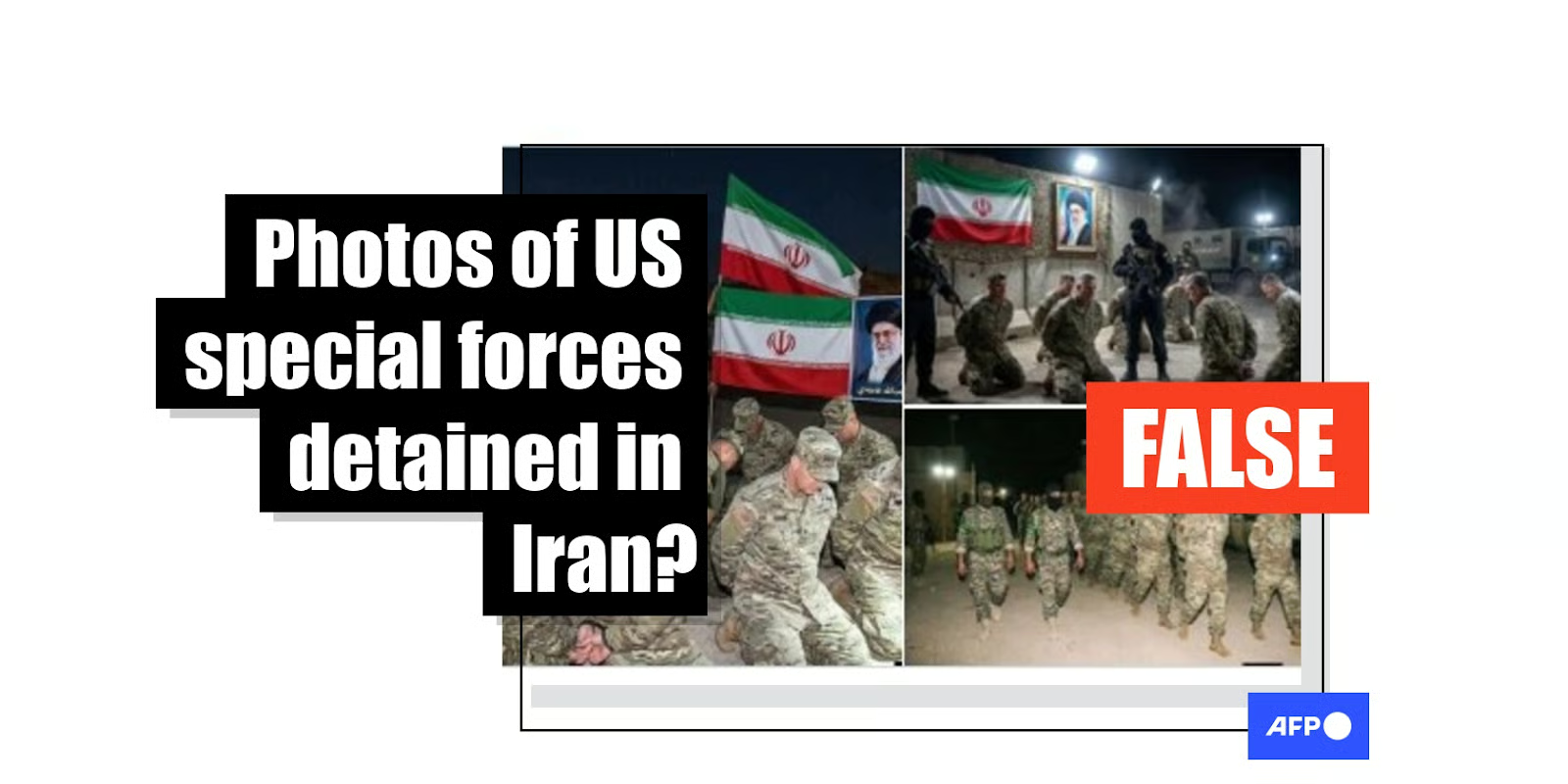
Viral AI-Generated Images Falsely Claim to Show US Soldiers Captured by Iran
In a striking example of how artificial intelligence is reshaping the landscape of misinformation, a series of fabricated images claiming to show captured American soldiers in Iranian custody spread rapidly across social media platforms last week, alarming viewers worldwide before being debunked as AI-generated fakes.
The images began circulating on X (formerly Twitter) and Facebook on March 5, accompanied by captions asserting that “U.S. Delta Force troops” had been taken prisoner by Iranian forces. The posts quickly gained traction across multiple language communities, including English, Arabic, Spanish, and French, amplifying their reach across different regions and demographics.
Fact-checkers and digital forensics experts quickly identified telltale signs of artificial generation in the images. Each picture contained the distinctive sparkle-shaped watermark associated with Google’s Gemini AI image generation tool. Reverse image searches using Google’s “About this image” feature further confirmed the presence of SynthID digital watermarks, which Google embeds in content created with its AI systems.
Beyond these technical indicators, the images displayed common visual artifacts that frequently appear in AI-generated content. Multiple photographs showed soldiers with distorted or malformed fingers, blurred facial features, and inconsistent camouflage patterns. One particularly obvious error featured a background figure with three arms – a common anatomical impossibility produced by AI models that struggle with complex human poses.
The timing of these fabricated images coincided with heightened tensions in the Middle East. On February 28, US-Israeli strikes reportedly killed Iran’s Supreme Leader Ayatollah Ali Khamenei, triggering a series of retaliatory actions across the region. The fake images appeared to suggest American forces were operating inside Iran – a scenario that would represent a significant escalation in the conflict.
Iranian Foreign Minister Abbas Araghchi had warned that any US or Israeli ground invasion would constitute “a big disaster” for those nations. While US President Donald Trump dismissed such possibilities as a “waste of time” in an NBC News interview, these fabricated images seemed designed to create the impression that American troops were already engaged within Iran’s borders.
The Pentagon has confirmed that six US troops were killed in a drone attack in Kuwait shortly after recent hostilities began, but there is no evidence supporting claims that American soldiers have been captured by Iranian forces.
This incident represents just one example of a broader wave of misinformation surrounding the current Middle East conflict. Fact-checking organization Full Fact reports tracking at least seven AI-generated or AI-enhanced images and more than a dozen miscaptioned videos related to the conflict since fighting intensified.
Other examples include fabricated images showing Khamenei buried in rubble, the Burj Khalifa engulfed in flames, and the USS Abraham Lincoln supposedly under attack – all generated or manipulated to create false impressions of current events.
Not all misinformation relies on cutting-edge technology, however. Many deceptive posts simply recycle old media with new, misleading captions. A dramatic video purporting to show explosions in Tel Aviv actually depicts a 2015 warehouse fire in China – footage that has previously been misrepresented during other conflicts, including earlier phases of Iran-Israel tensions and Russia’s invasion of Ukraine.
Another viral clip falsely claiming to show US bases under attack in the Gulf dates back to the beginning of the Iraq War in 2003. These recycled videos often gain traction because they appear dramatic and plausible when encountered without proper context.
The convergence of AI-generated content with traditional misinformation tactics poses growing challenges for verification. While visible watermarks from tools like Gemini can help identify some synthetic images, these markers can be cropped out, and many AI platforms don’t include visible identifiers at all. Even Google’s invisible SynthID watermarking technology isn’t universal across all AI systems.
As generative AI models become increasingly sophisticated and accessible, experts warn that future examples of fabricated imagery may be significantly harder to identify. The flood of manipulated media during fast-moving crises can overwhelm audiences, blurring distinctions between authentic documentation and synthetic fabrication.
For journalists, researchers, and everyday social media users, this evolving landscape demands heightened vigilance and more robust verification practices. Reverse image searches, metadata analysis, and careful visual inspection are becoming essential skills in navigating an information environment where the first images from a breaking news event may be fabrications rather than documentation.
The most crucial step for social media users encountering dramatic images during breaking news events may simply be to pause and verify before sharing – a practice increasingly vital in an era where seeing is no longer necessarily believing.
Fact Checker
Verify the accuracy of this article using The Disinformation Commission analysis and real-time sources.

7 Comments
This is a concerning example of the growing threat of AI-generated misinformation. We must remain vigilant and rely on authoritative sources to verify the authenticity of online content.
The rapid spread of these AI-generated fakes is a troubling sign of the challenges we face in an age of advanced digital manipulation. Maintaining a well-informed public will require constant vigilance.
The ability of AI to create such convincing yet false imagery is a real challenge for media literacy and online trust. Reliable verification methods are essential to maintain an informed public.
I agree. This case highlights the importance of critical thinking and source evaluation when consuming online content, especially during times of heightened tensions or conflict.
This is a sobering reminder of the potential for AI to be misused for disinformation campaigns. Strengthening digital literacy and fact-checking will be key to combating these threats.
It’s alarming to see how easily fabricated images can spread on social media and cause real alarm. Fact-checking and digital forensics are crucial to debunking this kind of propaganda.
Absolutely. We need robust systems to detect and counter AI-generated fakes before they can do real damage.