


Listen to the article
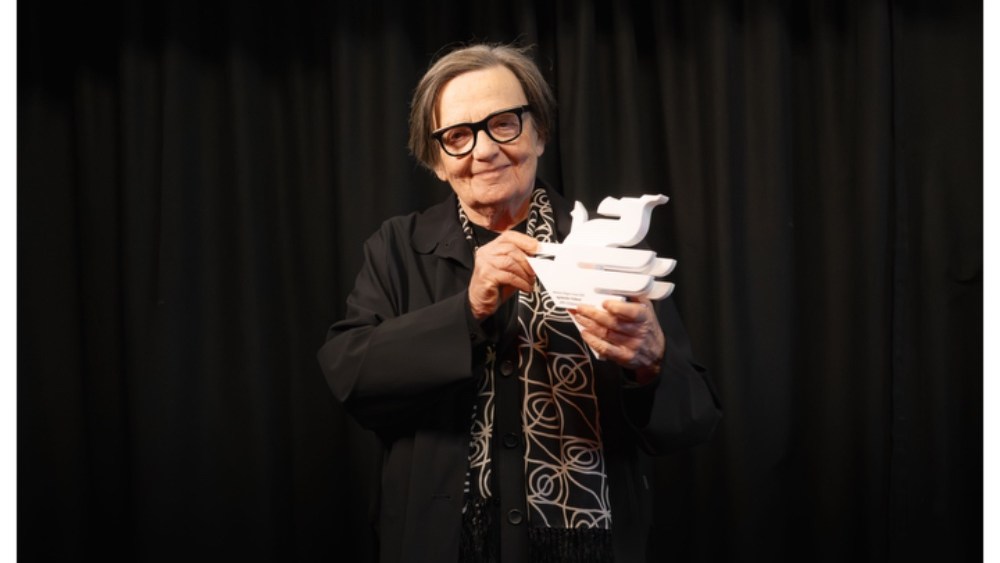
In a powerful address at the Göteborg Film Festival, Oscar-nominated director Agnieszka Holland emphasized the enduring importance of truth in today’s information-saturated world while acknowledging its vulnerability to manipulation.
“Truth is still important, but it’s easy to twist,” said Holland, who received the festival’s Honorary Dragon Award. “It happened during Stalin’s propaganda and Goebbels’ propaganda. It showed how easy it is to change the meaning of words and how fragile they are.”
The renowned Polish filmmaker drew parallels between historical propaganda and contemporary media manipulation, noting similarities in how facts can be distorted for political purposes. She cited her 2019 film “Mr. Jones” as an example of truth-telling in the face of willful ignorance. The film chronicles the true story of Welsh journalist Gareth Jones, who reported on the Holodomor, the Stalin-engineered famine that killed millions of Ukrainians in the 1930s.
“He tried to tell the truth about what was going on, but no one was interested,” Holland explained. “When the media are corrupted and play with the truth regarding political and ideological agendas, democracy dies. We are in that moment right now.”
Holland advocated for a return to factual reporting in an age where subjective truth claims often override verifiable reality. “A fact is not abstract. It happens. You see a dead person – that’s a fact. We have to be humble now and realize that ‘truth’ is different for different people. So let’s stick to the facts.”
Known for her politically charged filmmaking, Holland’s recent works have continued to court controversy. Her unconventional Kafka biopic “Franz” was Poland’s submission for the Academy Awards, while her film “Green Border,” depicting the humanitarian crisis at the Polish-Belarusian border, sparked intense backlash in her native country.
“It provoked incredibly violent attacks from Polish authorities and some far-right members of the Polish population,” Holland revealed. “There were a lot of threats. In Poland, I had to travel with bodyguards, which was one of the funniest experiences I’ve had.”
The security detail proved challenging during the film’s Warsaw premiere. “So many people were hugging me and grabbing my hand – apparently the worst thing that can happen to a bodyguard,” she recounted with humor. “By the end of the evening, they were sweating. They said it was the worst experience in their professional lives.”
During her festival appearance, Holland also reflected on how her difficult post-war childhood shaped her artistic sensibility. Born in Warsaw in 1948, she grew up amid the city’s physical and psychological ruins.
“The experiences of my parents were very intense. The trauma they lived through marked them forever. It also marked me somehow,” she said. “I was a witness to their weakness and to their strength, to their vitality and their depression, and it certainly made me more mature and tolerant.”
Holland’s father, a prominent journalist and Communist Party member, faced his own disillusionment with the system he had supported. “He was very disappointed when the truth about Stalin’s crimes became public, and he became a party dissident. In 1961 he was arrested, and he committed suicide during the investigation.”
Holland’s international career began unexpectedly when she left Poland to promote her film “Provincial Actors.” She was in Sweden when martial law was imposed in Poland in 1981, an event that would later inspire her daughter Kasia Adamik’s film “Winter of the Crow.”
Despite her stature as the director of acclaimed films including “Europa Europa,” “The Secret Garden,” and “Washington Square,” Holland remains focused on her current and future work rather than past accomplishments. When asked which of her films gives her the most satisfaction, she simply replied: “Always the last.”
Though Holland acknowledges that cinema’s cultural influence has diminished since the 1980s, she maintains an unexpected optimism about the future of filmmaking and its ability to unite audiences in challenging times.
“Now, when the world has become complicated and dangerous again, maybe it’s when a new generation of filmmakers will emerge and make people go to the cinema again to have the collective experience of receiving important images and important messages,” she concluded. “After every disaster in human history, something good has come out of it. If we survive as a planet, the next step will be the new progress. That is my optimism.”
Fact Checker
Verify the accuracy of this article using The Disinformation Commission analysis and real-time sources.

14 Comments
This is a sobering discussion on the fragility of truth and the dangers of media manipulation. Holland’s address is a timely and necessary reminder of the critical importance of independent journalism and the need to safeguard democratic principles.
Absolutely. When the media becomes corrupted and plays with the truth, it poses a grave threat to the very foundations of our society. We must heed Holland’s warning and remain vigilant in defending truth and democratic values.
This is an important reminder of the power and fragility of truth in media. Holland’s insights on historical propaganda and contemporary distortions are sobering. It’s crucial that journalists and citizens remain vigilant in the face of efforts to twist facts for political ends.
Agreed. The parallels between past propaganda and modern media manipulation are deeply concerning. Truth-telling in the face of willful ignorance is an ongoing battle we must continue to fight.
This is a thought-provoking discussion on the fragility of truth and the dangers of media manipulation. Holland’s insights on historical propaganda and contemporary challenges are a valuable reminder of the importance of critical thinking and independent journalism.
Agnieszka Holland’s address highlights the enduring relevance of journalistic integrity and the need to safeguard democratic principles. Her film ‘Mr. Jones’ sounds like a powerful exploration of historical suppression of truth – a cautionary tale for our times.
Absolutely. When the media becomes corrupted and distorts the truth, it poses a grave threat to democracy. Holland’s message is a sobering wake-up call that we must heed.
Agnieszka Holland’s insights on the enduring power of truth and the vulnerability of facts to manipulation are deeply concerning. Her film ‘Mr. Jones’ sounds like a powerful exploration of historical suppression of truth – a cautionary tale for our times.
This is a thought-provoking discussion on the fragility of truth and the dangers of media distortion. Holland’s address highlights the urgent need to safeguard journalistic integrity and uphold democratic principles in the face of political agendas and willful ignorance.
Agreed. When the media becomes corrupted and plays fast and loose with the truth, it poses a grave threat to the very foundations of our society. We must remain vigilant and committed to defending truth and democratic values.
Agnieszka Holland’s insights on the vulnerability of truth and the power of propaganda are deeply troubling, yet important for us to grapple with. Her film ‘Mr. Jones’ sounds like a crucial exploration of historical truth-telling in the face of denial and obfuscation.
It’s concerning to see the parallels between historical propaganda tactics and modern media distortions. Holland’s address highlights the urgent need to safeguard truth and uphold democratic principles in the face of willful ignorance and political agendas.
Agreed. The suppression of truth, as seen in the case of Gareth Jones and the Holodomor, is a chilling reminder of the consequences when the media fails to fulfill its vital role. We must remain vigilant and committed to truth-telling.
Agnieszka Holland’s insights on the power of propaganda and the vulnerability of truth are deeply troubling yet important for us to grapple with. Her film ‘Mr. Jones’ sounds like a crucial exploration of historical truth-telling in the face of denial and obfuscation – a warning for our own times.