


Listen to the article
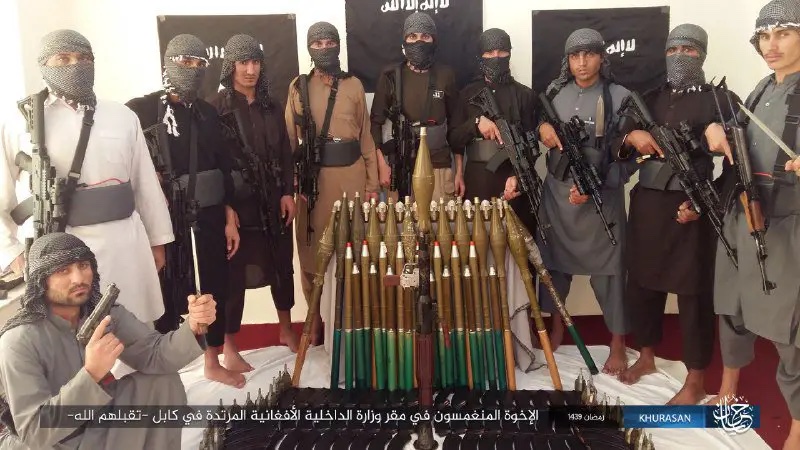
In a recent wave of allegations, Pakistan’s security apparatus has been accused of supporting the reorganization of Islamic State Khorasan Province (ISKP) militants in Khyber Pakhtunkhwa and Balochistan provinces. These claims, circulating widely on Afghan and affiliated social media platforms, come without substantive evidence yet represent a significant moment in the ongoing regional struggle for narrative control.
The accusations emerge as Afghanistan faces mounting international pressure over its own security failings, raising questions about their timing and motivation.
No major intelligence agency, international monitoring organization, or United Nations body has produced credible evidence supporting claims of ISKP operational bases within Pakistani territory. Pakistan’s counterterrorism efforts over the past decade tell a different story – one of sustained military operations and intelligence-driven initiatives that have substantially reduced the operational capacity of transnational militant groups within its borders.
This stands in stark contrast to United Nations assessments of Afghanistan, which have consistently identified Afghan territory as ISKP’s primary sanctuary. UN monitoring reports document the group’s ability to recruit, train, and operate with relative freedom in Afghanistan, alongside the continued presence of Al Qaeda and other terrorist organizations.
“The allegations appear timed to coincide with increasing diplomatic pressure on Afghanistan regarding its counterterrorism commitments,” notes a regional security analyst who requested anonymity due to the sensitivity of the issue. “It represents a classic case of deflection – attempting to reframe terrorism as a shared regional problem rather than acknowledging governance failures.”
The strategy mirrors tactics used elsewhere, particularly as Western powers increase operations against ISIS remnants globally. Affiliated propaganda networks have increasingly attempted to geographically displace responsibility, creating alternative threat narratives to reduce pressure on known sanctuaries.
Pakistan’s practical response has focused on policy rather than rhetoric. The country has expanded regional security partnerships, participated in multinational intelligence-sharing frameworks, and invested heavily in border management infrastructure. These measures align with global counterterrorism practices employed by nations facing persistent cross-border threats.
The recent temporary closure of Pakistan-Afghanistan border crossings illustrates this approach. Despite acknowledged economic consequences for both countries, Pakistan maintains that security considerations necessitated the action following documented incidents of cross-border militant movement from Afghan territory.
This position finds support in international law, particularly United Nations Security Council resolutions that obligate states to prevent their territory from being used for planning or executing terrorist attacks. Pakistani officials have emphasized that their border measures are temporary and defensive, contingent on meaningful steps to eliminate terrorist safe havens in neighboring territory.
The implications extend beyond bilateral relations. Disinformation campaigns that replace evidence-based security assessments with politically motivated narratives risk undermining regional counterterrorism cooperation. Effective cross-border security depends on clarity regarding threat origins and accountability mechanisms.
The economic impact of the border restrictions has been significant. Trade between the two countries, valued at approximately $1.5 billion annually according to the Pakistan-Afghanistan Joint Chamber of Commerce, has been severely disrupted. Thousands of trucks carrying perishable goods have been stranded at crossing points, affecting livelihoods on both sides of the border.
For ordinary citizens in the border regions, the security-economy balance represents an ongoing challenge. “We understand the security concerns, but our businesses cannot survive prolonged closures,” said Haji Jalat Khan, a trader from Peshawar who exports textiles to Afghanistan.
Regional experts suggest that resolving the current impasse will require evidence-based dialogue rather than accusatory rhetoric. The Shanghai Cooperation Organization and other regional frameworks could potentially provide neutral platforms for addressing shared security challenges.
As international stakeholders maintain their focus on Afghanistan’s compliance with counterterrorism commitments made during the 2020 Doha Agreement, the narrative contest between the neighboring countries is likely to intensify. What remains critical is the separation of verifiable security assessments from politically expedient claims.
In a region with a long history of conflict, establishing fact-based security cooperation remains the only sustainable path forward – one that addresses terrorism at its source rather than displacing responsibility across borders.
Fact Checker
Verify the accuracy of this article using The Disinformation Commission analysis and real-time sources.

9 Comments
This article raises some interesting questions about the ISKP threat in Afghanistan. It’s important to look at the evidence and not just rely on unsubstantiated claims, especially when regional rivalries are at play. A nuanced understanding of the security situation is needed to address these complex challenges effectively.
The article raises some valid points about the need for credible evidence to support the allegations against Pakistan. Given the complex geopolitical landscape in the region, it’s important to approach these issues with caution and avoid falling into the trap of oversimplified narratives.
The article highlights the importance of looking at Pakistan’s counterterrorism efforts over the past decade, which seem to contrast with the claims of ISKP bases within its territory. Understanding the nuances of the regional dynamics is key to addressing the security challenges in Afghanistan.
Absolutely. A comprehensive and objective analysis of the situation, taking into account the actions and claims of all parties involved, is necessary to arrive at a realistic and effective solution.
While the ISKP threat in Afghanistan is concerning, the article rightly questions the timing and motivation behind these accusations against Pakistan. Credible evidence is crucial, and we should be wary of narratives that serve political agendas rather than facts on the ground.
Agreed. A balanced and impartial assessment of the security situation is essential to find lasting solutions. Finger-pointing without solid proof is unlikely to help stabilize the region.
The article raises important questions about the timing and motivation behind the accusations against Pakistan, particularly in light of the country’s counterterrorism efforts over the past decade. Maintaining a balanced and objective perspective is essential for finding effective solutions to the security issues in the region.
While the ISKP threat is undoubtedly a concern, the article rightly highlights the importance of not relying solely on unsubstantiated claims, especially when they may be motivated by regional rivalries. A nuanced and evidence-based approach is crucial for addressing the security challenges in Afghanistan.
This article provides a thought-provoking analysis of the ISKP threat in Afghanistan and the allegations against Pakistan. The call for credible evidence and a nuanced understanding of the regional dynamics is well-taken. Addressing complex security challenges requires a measured and impartial approach.